








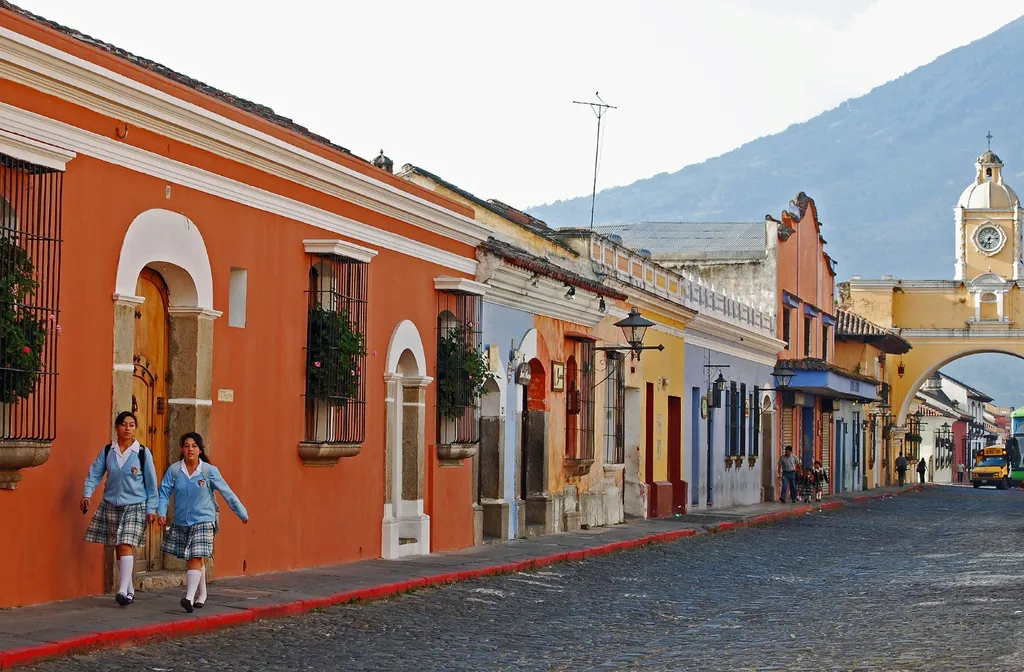
From scenic coffee plantations, volcanoes, colonial architecture, and ancient Mayan ruins, Guatemala is as interesting as it gets. Guatemala has one of the region’s largest Indigenous populations, and with fewer visitors than countries like Mexico or Argentina, it offers a glimpse into a more authentic and preserved Latin American culture.
But it’s so much more than just a quiet route through the Americas — it offers just as much (if not more) than its neighbours, and English teachers can find work opportunities in this idyllic spot. Read on for The TEFL Org’s guide on teaching English in Guatemala, from the top jobs, salary expectations, requirements, and more.
Key Takeaways
- There’s a high demand for English teachers in Guatemala.
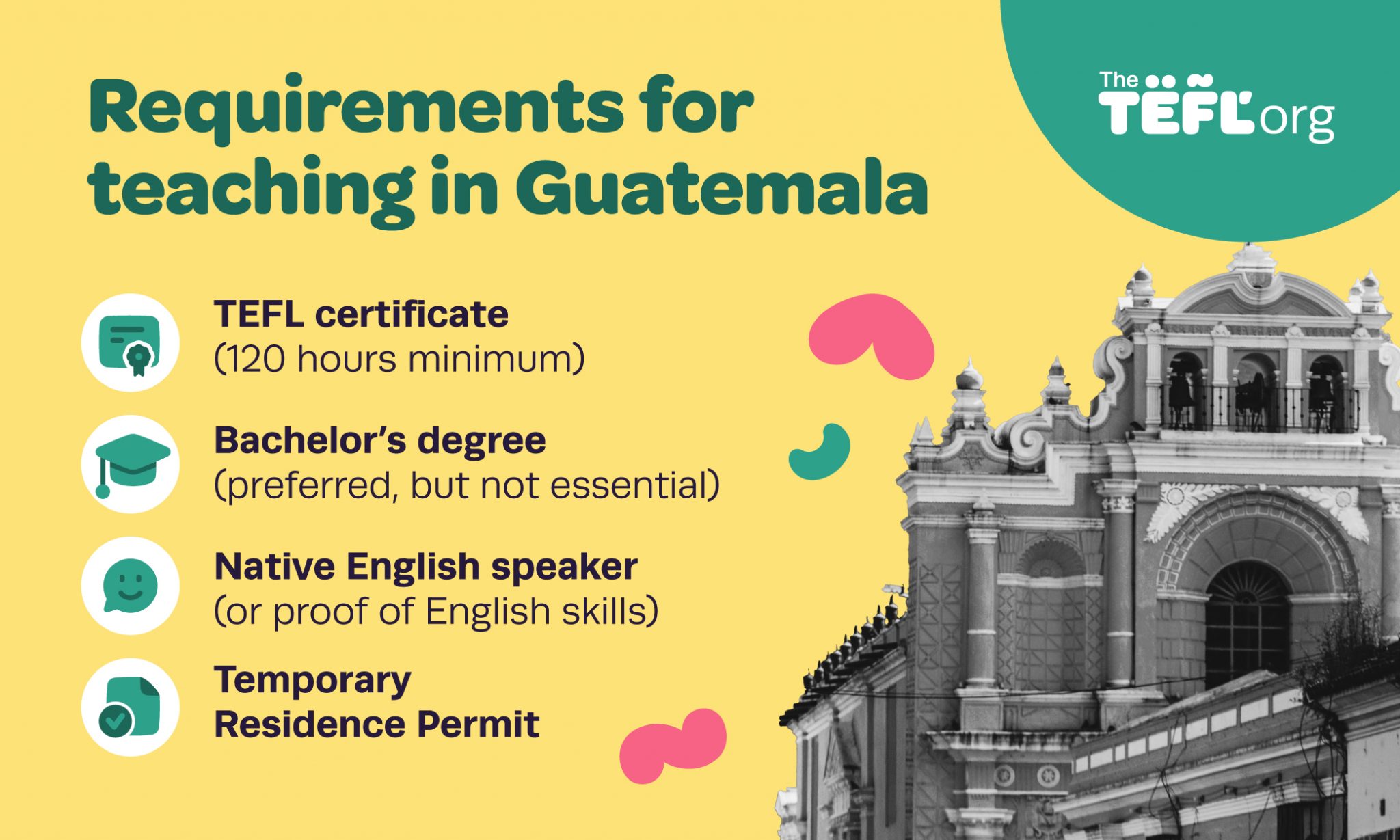
- The requirements for teaching in Guatemala include TEFL certification and English proficiency (native or non-native speakers), while a bachelor’s degree and experience are preferred.
- English teachers in Guatemala typically earn around Q2,280–11,500 ($300–$1,500 / £225–£1,115) depending on whether they teach at language schools or international schools.
- Most teaching jobs are found in private language schools, international schools, or on volunteer programmes.
- Teachers need a temporary residence permit to teach in Guatemala legally, but many schools have teachers working on a tourist visa (which is illegal).
- Top locations include the capital city, Guatemala City, and Quetzaltenango (Xela).
Requirements for Teaching English in Guatemala
Guatemala has one of the lowest literacy rates in Latin America, and English proficiency varies across the country. Students at private schools with more income often have stronger English skills thanks to greater access to language education. Many young Guatemalans see English as a pathway to better career opportunities, so students are often motivated and eager to learn.
So the demand is high, but low job visibility and salaries mean that the teacher requirements are generally flexible for English teachers.
Do I need a TEFL certificate to teach English in Guatemala?
It’s not a legal requirement, but you won’t have much luck as a teacher without a TEFL certificate in Guatemala. Most employers require teachers to have a 120-hour TEFL certificate (at minimum) because it shows that you’ve covered the basics in your training, from grammar, managing large classrooms, planning lessons, and so on.
Can I teach English without a degree in Guatemala?
It’s definitely possible to teach English without a degree in Guatemala. The demand for English teachers is very high, so many employers are welcoming of non-graduates as long as they’re TEFL certified.
Just bear in mind that if you’re looking for the highest paid jobs, you’ll need at least a bachelor’s degree.
Do I need teaching experience to teach in Guatemala?
Similar to not having a degree, not having teaching experience isn’t a deal breaker — especially if you’ve studied how to teach English with a TEFL course. But while it’s possible to teach English without experience in Guatemala, the highest paying jobs require teachers to have previous experience.
Tip: Consider volunteering in Guatemala — this can help you gain in-class experience, network, and also adapt to the culture before you move on to a paid job.
Can I teach in Guatemala as a non-native speaker?
Yes, you can teach English as a non-native speaker in Guatemala, especially if you can speak Spanish (but that’s not essential). But you’ll need to prove to employers that your English skills are strong enough to lead the classroom, with a language certificate such as TOEFL or IELTS (or proof of your CEFR level) alongside your TEFL certificate.
Visa requirements for teaching English in Guatemala
To teach in Guatemala legally, you’ll need a Temporary Residence Permit, which is valid for 1–5 years. You can get this once you’ve successfully found a teaching job, and then your employer will sponsor your application through the Ministry of Labour.
If you’re a digital nomad, you can also get the temporary residence permit as a remote worker (if you meet the requirements).
For the temporary residence visa, you’ll need to submit the following documents for your application to be approved:
- Proof of signed contract with a Guatemalan employer (for employed teachers)
- Or, minimum monthly income of $2,000 (£1,485) and contracts with foreign clients (for remote workers)
- Clear criminal background check
- Proof of academic or professional qualifications
Important: Many employers want teachers to work on tourist visas (which are valid for 90 days). This is technically illegal, but commonly encouraged in many schools even though it could lead to fines or deportation.
Download our Teaching English in Latin America guide
Everything you need to know about teaching English in Latin America
Salary and Cost of Living
Knowing the figures for teaching salaries means nothing without understanding the living costs. Here’s everything you need to know about how much you can earn and how much you might spend as a teacher living in Guatemala.
How much can you earn teaching English in Guatemala?
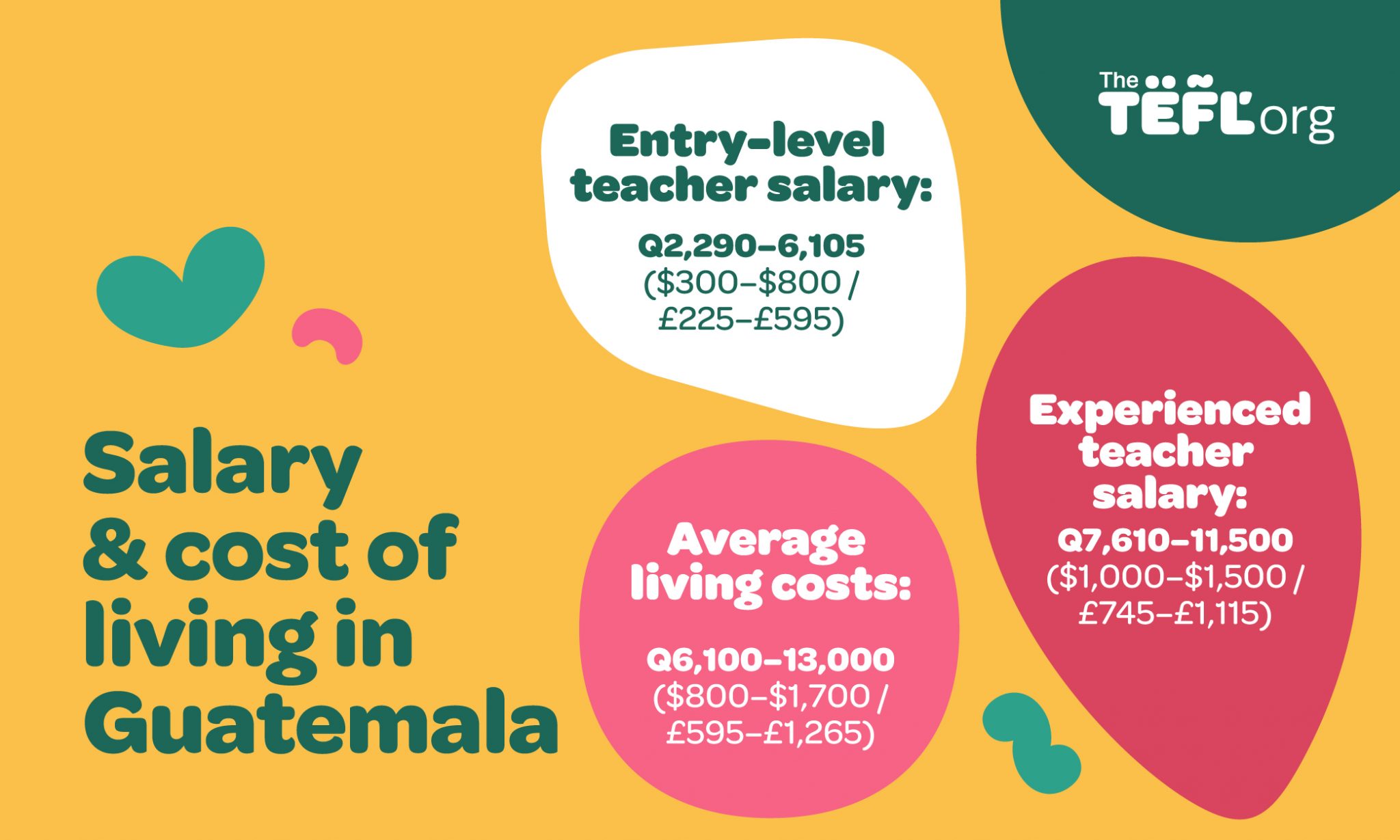
English teachers in Guatemala earn from Q2,280–11,500 ($300–$1,500 / £225–£1,115) depending on their level of experience and job type.
Most entry-level teaching positions offer salaries ranging from Q2,290–6,105 ($300–$800 / £225–£595), whereas advanced teachers at international schools or reputable language schools can earn around Q7,610–11,500 ($1,000–$1,500 / £745–£1,115) but require a degree, TEFL or teaching licence, and years of teaching experience.
Many inexperienced teachers teach English privately or teach online to supplement their income. Just a few extra hours a week can cover basic costs like your weekly food shop or other expenses.
When it comes to working at private language schools, general English lessons are in demand but you could earn higher salaries teaching specialist subjects like teaching Business English — especially at corporate language schools.
How much does it cost to live in Guatemala?
Although it’s one of the lesser explored countries in Latin America, Guatemala relies on imports so its cost of living might surprise you. But it’s still possible to live comfortably on a low budget.You can expect to spend around Q6,100–13,000 ($800–$1,700 / £595–£1,265) per month — which is a big range, but it ultimately depends on your lifestyle and location.
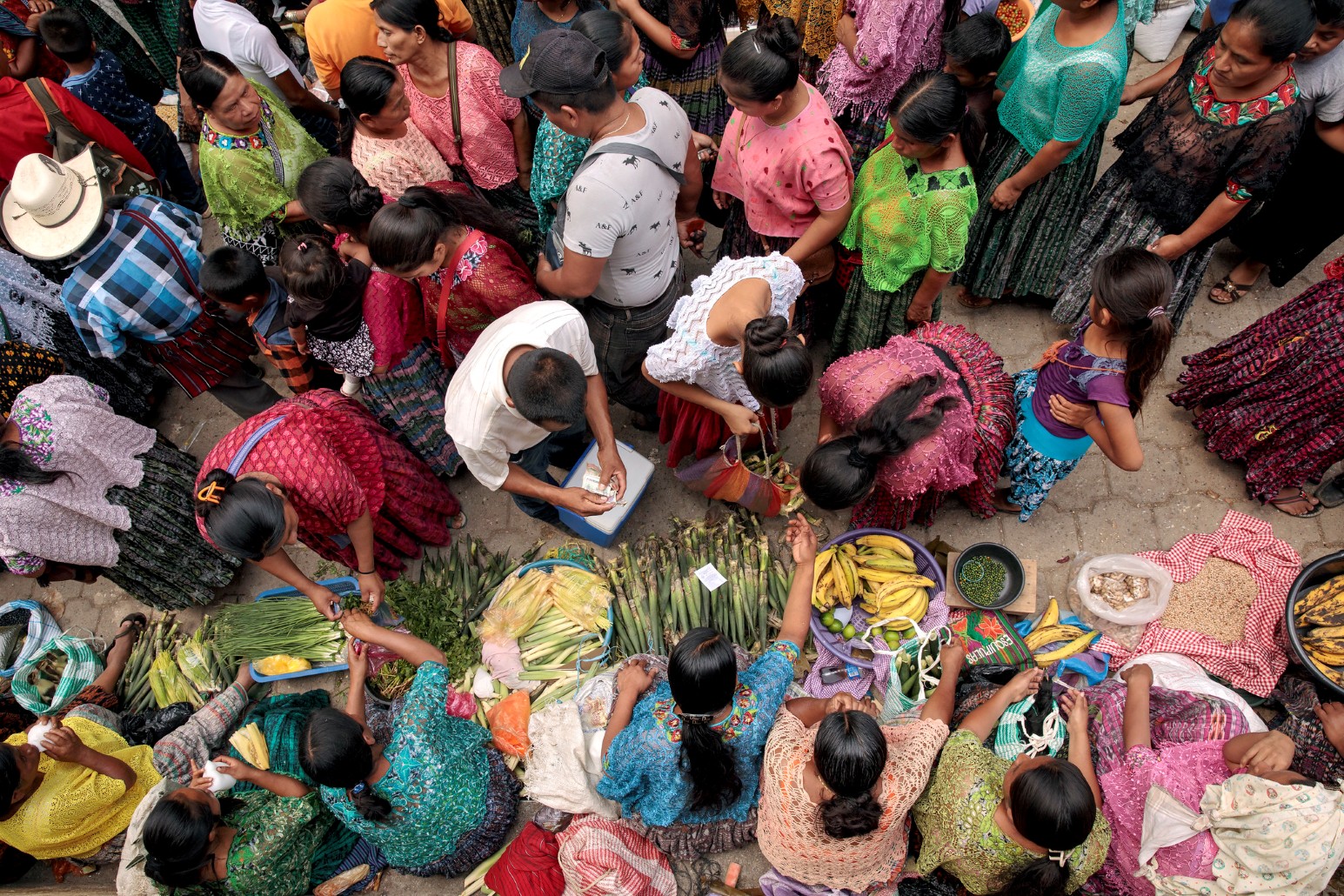
Here are some tips to live comfortably on a budget in Guatemala:
- Look beyond the capital: Guatemala City is much more expensive than Quetzaltenango (Xela), Panajachel (Lake Atitlán), or Flores, where you can save ~Q2,000–3,000 ($260–$395 / £195–£295) per month.
- Eat like a local: Don’t buy imported food — head to local markets or comedores (family-run eateries) to find delicious dishes of meat, soup, rice, beans, and more for as little as Q25–40 ($3.30–$5.25 / £2.45–£3.90).
- Take the “chicken bus” (and tuk tuks): Local “chicken buses” — or camionetas — and shared tuk tuks are a great way to get around without spending too much money.
- Learn Spanish: You don’t need to be fluent, but learning some Spanish can go a long way at local markets. From showing your integration in the community to playfully bartering, you’ll be surprised at how much it can help reduce prices.
| Restaurants | GTQ | USD | GBP |
|---|---|---|---|
| Inexpensive restaurant meal | |||
| Domestic beer (0.5 litre) | |||
| Regular cappuccino | |||
| Water (0.33 litre) | |||
| Markets | GTQ | USD | GBP |
| Regular milk (1 litre) | |||
| Loaf of white bread | |||
| Regular eggs (1 dozen) | |||
| Apples (1 kg) | |||
| Transportation | GTQ | USD | GBP |
| One-way ticket (local transport) | |||
| Monthly pass (regular price) | |||
| Taxi start (normal tariff) | |||
| Gasoline (1 litre) | |||
| Utilities | GTQ | USD | GBP |
| Electricity, heating, cooling, water, and garbage (for a regular apartment) | |||
| Regular prepaid monthly mobile tariff with 10GB+ data | |||
| Internet (60 Mbps, unlimited data, cable/ADSL) | |||
| Clothing and shoes | GTQ | USD | GBP |
| Pair of jeans (Levis 501 or something similar) | |||
| Summer dress in a chain store | |||
| Nike running shoes (mid-range) | |||
| Men's leather business shoes |
English Teaching Jobs in Guatemala
Unless you already speak Spanish and have the right to work in Guatemala, most English teaching jobs in Guatemala are in the private sector. The school year runs from January–October, which applies to public schools and international schools. But private language schools usually hire year-round due to steady demand.
Most jobs are advertised locally rather than online, so it’s generally easier to find jobs in-country if you can afford to travel early. But if you’re adamant about finding a job before entering the country, you can visit job boards like The TEFL Org Job Centre.
Public schools
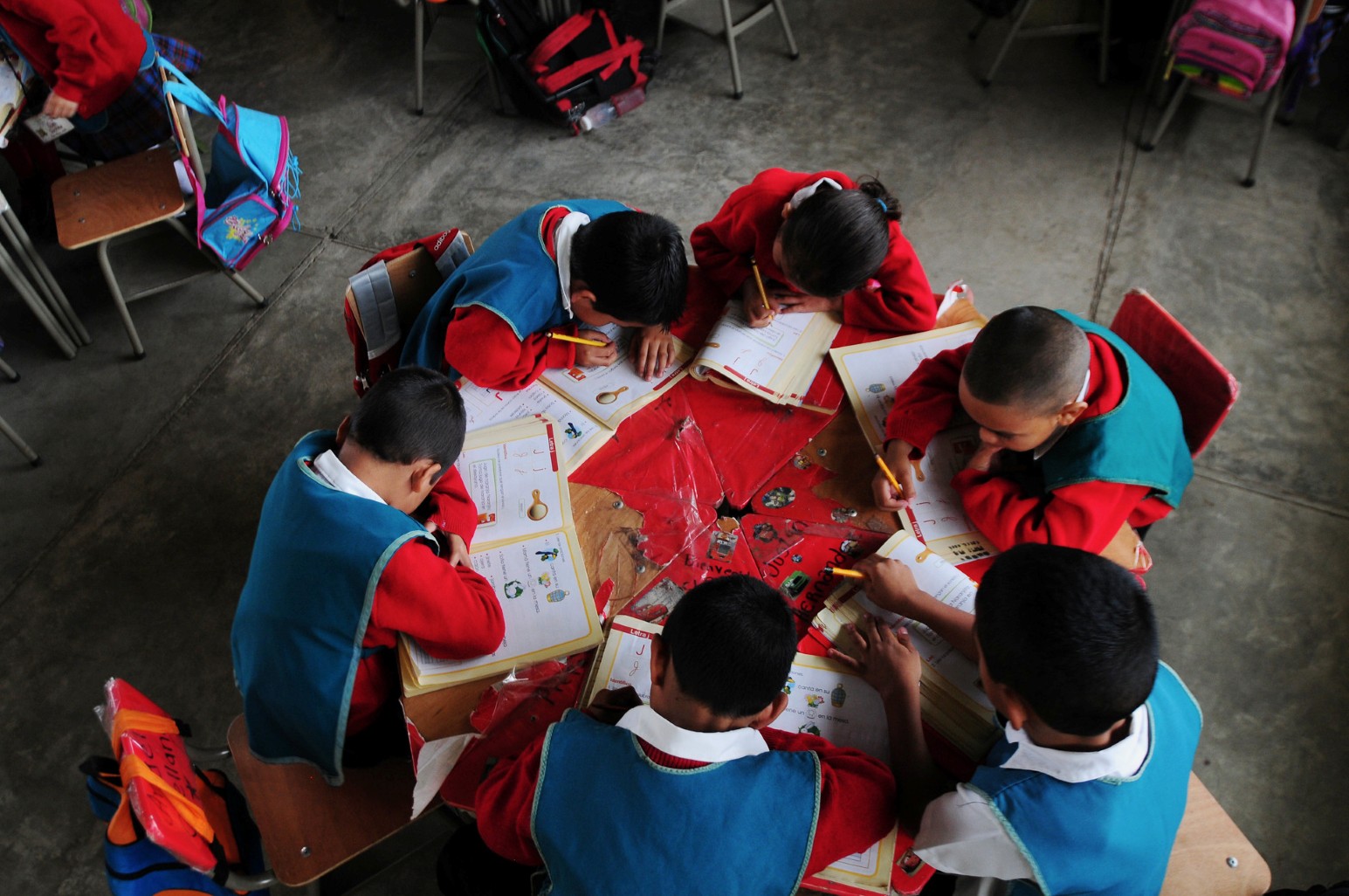
Public school jobs usually go to local teachers or foreign teachers who can speak Spanish and have a legal right to work in Guatemala. English is a part of the national curriculum, but low resources and little time spent on the language mean that most students don’t leave school with English proficiency. Class sizes can be large and resources limited, especially in more rural areas.
What to expect at public schools in Guatemala:
- Large class sizes and lower standards of English
- Modest classroom resources
- School year runs from January–October
- Following English lessons in the national curriculum
Private language schools
Private language schools are a common path for TEFL teachers because they usually hire year-round and are welcoming of inexperienced teachers. At language schools, you’ll teach a wide age range of students, from young and teenage learners studying general English or exam preparation to professionals studying corporate English.
The Instituto Guatemalteco Americano (IGA) is a popular example that offers both online and in-person positions.
What to expect at private language schools in Guatemala:
- Evening and weekend classes
- Year-round hiring and flexible requirements for entry-level teachers
- Teaching young learners, teenagers, and adult professionals
- Focus on ESP (English for Specific Purposes) subjects like Business English or Exam Preparation
International schools
If you’re after some of the highest salaries and benefits, you’ll find them at international schools in Guatemala. But competition is high, and teachers typically need a master’s degree, teaching licence, and previous teaching experience.
Most international school jobs exist in big cities and expat hubs like Guatemala City or Antigua because most students at these schools are foreign. English is usually taught as the main language — unless it’s a bilingual school which also offers Spanish — and classrooms have modern facilities. Teachers might follow the national school calendar or American school timelines depending on the school.
What to expect at an international school:
- Smaller class sizes and higher standard of English
- Modern facilities and resources
- Teaching English as a main language on an international curriculum
- Excellent salary and benefits, but teachers usually need a degree, TEFL or teaching licence, and years of teaching experience
Private tutoring
Private tutoring is a great way to supplement your income or work independently in Guatemala, but you’ll also need to market yourself to students to make enough money. While there’s a demand for general English, unique subjects like Business English or exam preparation are especially valuable. But before you start teaching privately, check whether your contract states that you can’t teach outside of your current employer.
What to expect as a private tutor:
- Flexible hours and schedule
- Wide range in hourly rates depending on your experience and qualifications
- You’ll need to market yourself and find your own students
- General English, Business English and exam preparation are popular
Teaching English in Major Cities
Guatemala’s biggest cities offer the widest range of teaching jobs, from private language schools to international schools and private tutoring opportunities. Here’s what you can expect in some of the country’s most popular destinations.
Teach English in Guatemala City
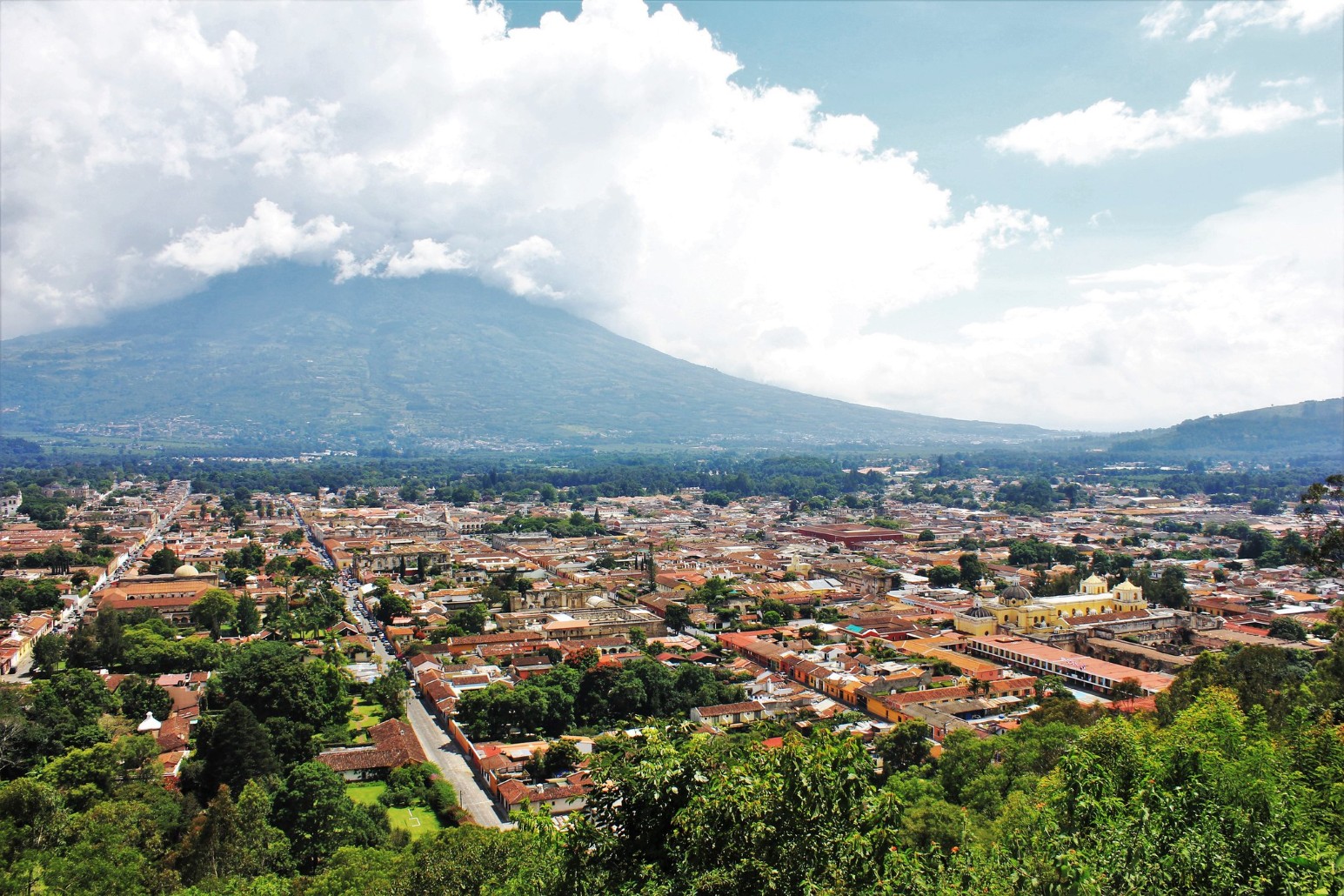
As a political centre, business hub, and the most populous city with around 1.2 million people (or 3+ million across the metropolitan area), Guatemala City is where you’ll find most teaching opportunities. With openings in private language schools, international schools, universities, and private lessons, this is where you’ll find the widest choice of jobs.Life here moves at a faster pace than elsewhere in Guatemala, and while traffic can be heavy, there’s plenty to explore in this busy city. When you’re not teaching, head to Zone 1 and the Plaza Mayor, visit the ancient Maya site of Kaminaljuyú, or spend a weekend embracing Antigua’s UNESCO World Heritage sites.
Teach English in Quetzaltenango (Xela)
Quetzaltenango (better known as Xela) is Guatemala’s second-largest city and one of its biggest education centres. Despite being much smaller than Guatemala City, it offers a steady supply of teaching opportunities and a lower cost of living.
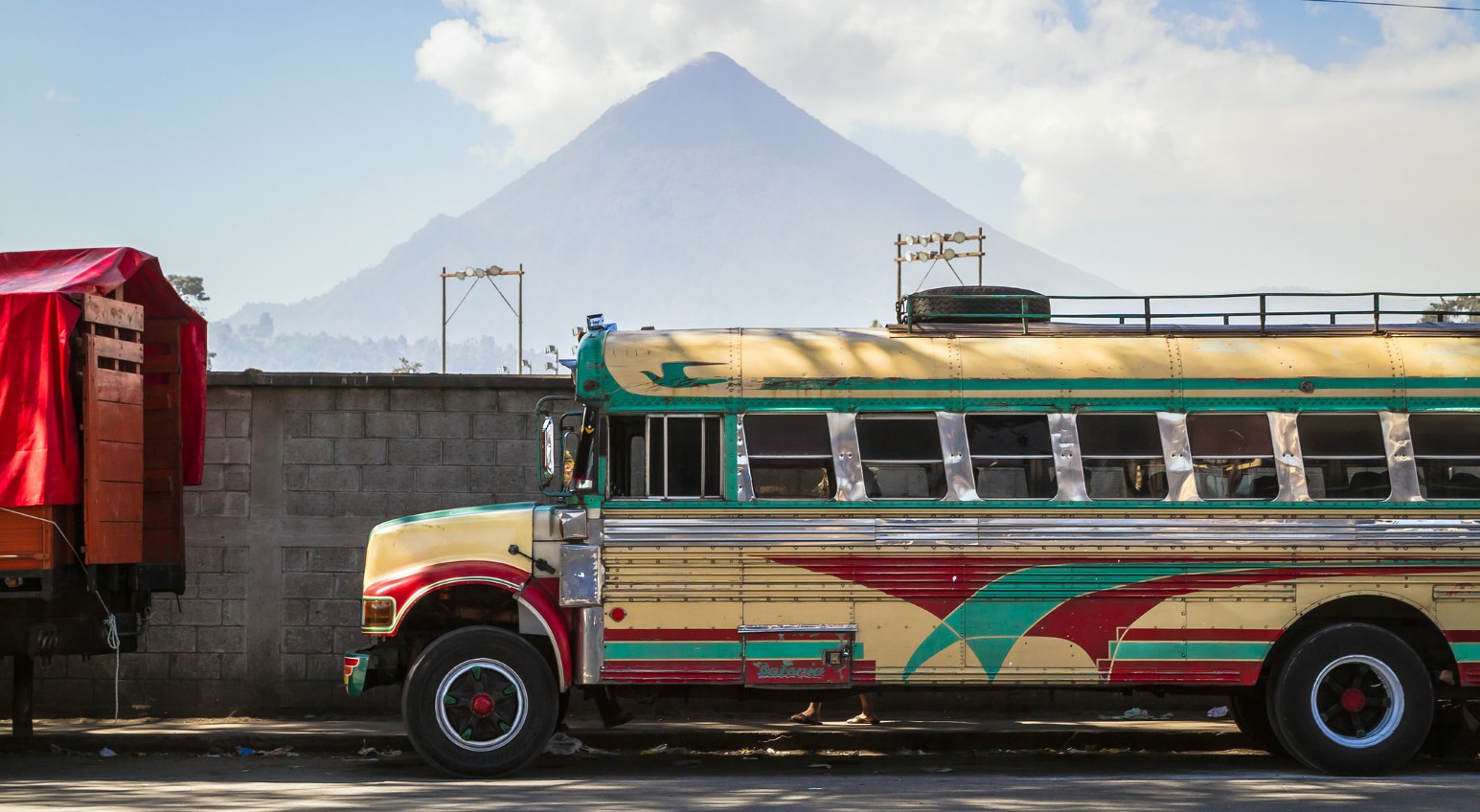
Xela has a dramatic backdrop, surrounded by six volcanoes, from Volcán Santa María to Santiaguito Mirador and more. Whether you’re an adventurer or looking for a peaceful hike, there are plenty of volcanoes and other mountain trails to suit every need.
Beyond hiking and rugged terrain, you can grab a Guatemalan coffee and stroll through Xela’s central plaza, or soak in the Fuentes Georginas hot springs.
Ready to Teach English Abroad? Don’t Forget Your TEFL Certificate
Whether you’re hoping to teach in Guatemala City, Xela or somewhere else in Latin America, a recognised TEFL certificate is one of the most important qualifications you can have. It’ll help you stand out from afar and also thrive inside the classroom.
A TEFL course gives you the practical skills you’ll use every day in the classroom, from planning lessons and managing large groups to teaching complex grammar structures.If you’re ready to launch your career teaching English abroad, why not get started with our 120-hour TEFL course?
Frequently Asked Questions
Q. How much do English teachers make in Guatemala?
Guatemala isn’t somewhere you’d choose if your main priority is making money, but you can still live comfortably here. TEFL teachers make between Q2,280–11,500 ($300–$1,500 / £225–£1,115), with lower salaries at language schools and higher salaries at international schools.
Q. Can I teach English in Guatemala?
Yes, you can teach English in Guatemala if you have English proficiency and a TEFL certificate. Finding jobs can be difficult because most are advertised locally, so you might have more luck by applying for jobs in-country.
Q. Is Guatemala safe?
Millions of people visit Guatemala every year, but it’s still important to exercise caution wherever you are in Latin America.
Q. Do I need to speak Spanish to teach in Guatemala?
No, you don’t need to speak Spanish to teach in Guatemala. But it can benefit your application (especially if you want to work in public schools), and speaking basic Spanish can help your cultural immersion.