








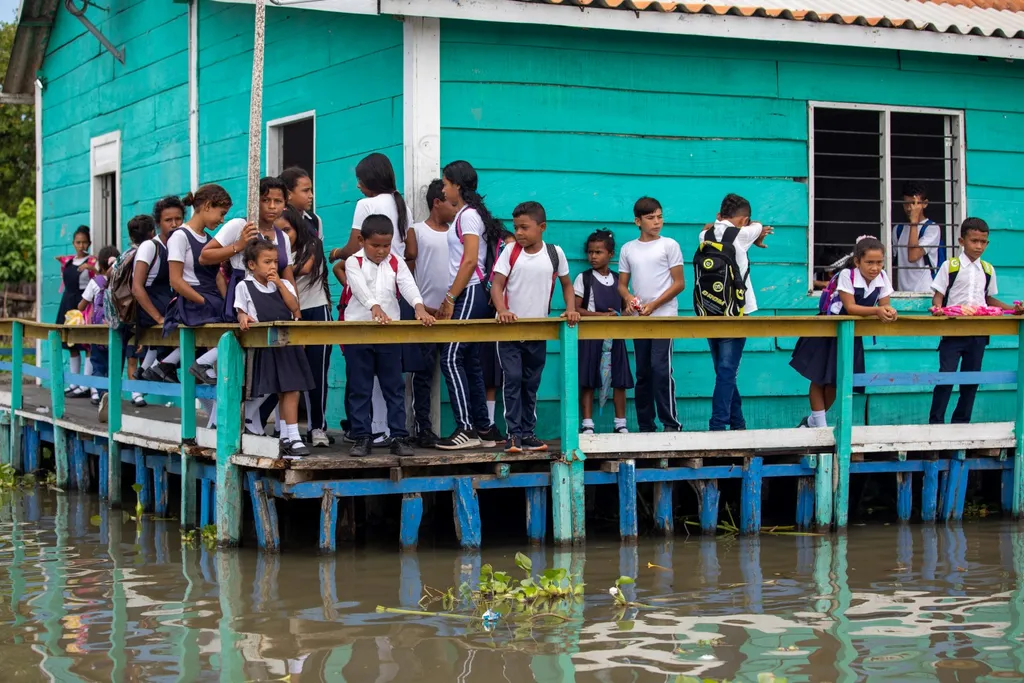
Colombia has major selling points from the Amazon rainforest to the colourful streets of Bogotá, Medellín, and Cartagena, but there’s so much more to it than its stunning views. With a national ambition to become bilingual, the government has made English a priority in education (which is great news for TEFL teachers).
Whether you’re an entry-level teacher or you’ve got years of experience, you can find plenty of opportunities in the gateway to South America. Read on for The TEFL Org’s guide to teaching English in Colombia, from the top jobs, average salary, requirements, visa process, and more!
Key Takeaways
- Colombia has a low English proficiency score and a high demand for English teachers in both public and private schools.
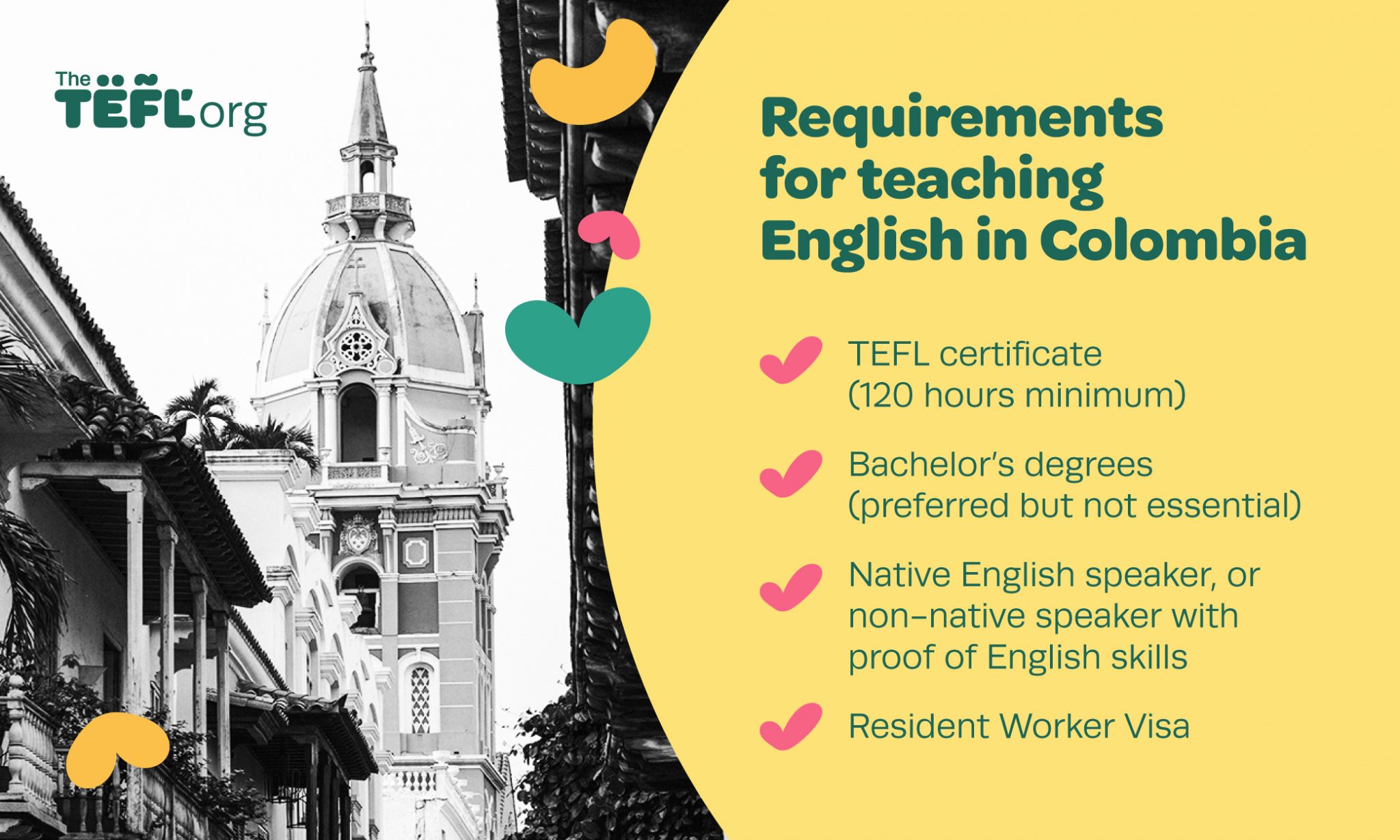
- TEFL teachers need a 120-hour TEFL certification; most employers prefer a bachelor’s degree but it’s not essential at some private language institutes.
- The average TEFL salary in Colombia ranges from Col$2.26–3.55 million ($700–$1,100 / £520–£815) per month; licensed teachers at international schools can earn upwards of Col$ 6 million ($1,885 / £1,395).
- You can find most jobs in private language schools, but experienced teachers can also work at international schools.
- English teachers need a confirmed job offer to get the Migrant (M) Visa.
- Most teaching positions are in large cities like Bogotá and Medellín.
Requirements for Teaching English in Colombia
While schools teach English and you’ll hear it spoken in tourist hotspots, Colombia’s proficiency score is still low.
The Ministry of Education has improved English language standards, but access to quality education still varies across the country. In rural areas, poverty levels remain high, and English instruction is often limited or completely unavailable, so there’s a high demand (and flexible teaching requirements) wherever you land.
Can I teach in Colombia with a TEFL course?
Employers will notice a huge gap in your resume if you don’t have a TEFL certificate. Most employers in Colombia require teachers with at least 120 hours of TEFL training because it shows that you’ve already studied the basics and are ready for the classroom.
With a TEFL course, you’ll learn the essentials of teaching English as a foreign language, from classroom management skills, learning how to plan and present engaging lessons, catering to different learning styles, and so much more.
Can non-degree holders teach English in Colombia?
It’s possible to teach English without a degree in Colombia. But most employers look for teachers who have university degrees (in any subject), so you’ll need to make up for this with a TEFL certificate.
Private language schools usually advertise teaching jobs without listing a degree as a requirement, but the catch is that salaries are lower. If you don’t have a degree, try to gain some teaching experience beforehand (even if it means volunteering).
Do I need teaching experience to teach in Colombia?
Experience helps, but plenty of schools also hire newly qualified TEFL teachers. While it’s true that experienced teachers can find higher paying jobs, you can still teach abroad without experience in Colombia and work from the ground up towards higher salaries.
A TEFL course shows that you have both the knowledge and interest in teaching English as a foreign language. But if you want a job at the highest paying international school, you’ll need previous teaching experience.Tip: During your interview, be sure to mention any experience you have working with children, whether or not it’s related to teaching English.
Can I teach in Colombia as a non-native speaker?
You don't necessarily have to be a native English speaker to teach English in Colombia. As long as you have a bachelor’s degree (in most cases) and a TEFL certificate, you can teach English as a non-native speaker in Colombia.
You’ll also need proof of fluency through an IELTS, TOEFL, or CEFR certificate, or a degree from an English-speaking university.
Visa requirements for teaching English in Colombia
You’ll need the right working visa to teach in Colombia legally. Some employers might ask teachers to enter on a tourist visa to start “working off the books” and paying them cash-in-hand. This isn’t uncommon, but it is illegal and you could be fined or even deported.
To teach legally, you’ll need to apply for the Temporary Resident Visa with Work Authorization. But you’ll need to secure a job first. That way, your employer can sponsor your application and help you enter the country as a worker.
Here’s everything you need to apply for the visa.
- A confirmed job offer from a registered Colombian employer
- A valid passport (with at least 6 months remaining)
- Proof of academic and professional qualifications (TEFL certificate, bachelor’s degree etc.)
- Health insurance
- Proof of accommodation in Colombia (hotel or long-term accommodation)
Download our Teaching English in Latin America Guide
Everything you need to know about teaching English in Latin America

Salary and Cost of Living
South America generally offers a low cost of living, but you need to consider the teacher salary to know how much it costs to live comfortably or whether you can save up.
How much can you earn teaching English in Colombia?
Teaching English in Colombia isn’t a pursuit that will have you saving up mounds of cash. The good news? You can still get by and live comfortably on low salary in Colombia.
English teachers in Colombia can expect to earn around Col$2.26–3.55 million ($700–$1,100 / £520–£815) per month if you’re TEFL certified and have a bachelor’s degree.
But it also depends on the job itself. Jobs at private language schools vary from one to another, and you can expect to make more if you’ve got experience in ESP (English for Specific Purposes) subjects. Licensed teachers at international schools can earn upwards of Col$ 6 million ($1,885 / £1,395) per month, including benefits like housing allowance and flight reimbursement.
Tip: Teachers often boost their income by private tutoring or teaching English online in their spare time. You can earn around Col$ 32,300–80,800 ($10–$25 / £7–£19) per hour as a private tutor in Colombia.
How much does it cost to live in Colombia?
The cost of living in Colombia is relatively low compared to many western countries, making it an attractive option for TEFL teachers. You can expect to spend around Col$ 3.5 million per month (including rent) in Colombia, with cities like Cartagena, Medellin, or Bogotá costing more.
But again, you’ll still need to be mindful if you’re an entry-level teacher on a low salary. Here’s how you can get more bang for your peso in Colombia.
- Be flexible with location: Don’t rule out teaching in any other cities if you have the chance. While you may have your eyes set on Medellin or Cartagena, these cities are more expensive than others.
- Live outside the city center: Teachers don’t need to worry about cramming in tourist attractions and landmarks, so consider living outside the city center. Not only can you save up to Col$ 400,000 ($125 / £90) per month, but you’ll live in a neighbourhood where it’ll feel more like a community.
- Split rent: Living with other teachers or expats is a great way to make friends and save money on rent. While a 1-bed apartment in Bogotá costs Col$ 1.8 million ($555 / £410), a 3-bed apartment costs Col$ 1.2 million ($370 / £275) per person per month.
- Eat like a local: Staple Colombian dishes like bandeja paisa, arepas and empanadas aren’t only delicious but can cost around Col$ 13,000–19,000 ($4–$6 / £3–£4.50) if you look in the right spots. Western meals at restaurants in Colombia are much more expensive because they use imported ingredients.
| Restaurants | COP | USD | GBP |
|---|---|---|---|
| Inexpensive restaurant meal | |||
| Domestic beer (0.5 litre) | |||
| Regular cappuccino | |||
| Water (0.33 litre) | |||
| Markets | COP | USD | GBP |
| Regular milk (1 litre) | |||
| Loaf of white bread | |||
| Regular eggs (1 dozen) | |||
| Apples (1 kg) | |||
| Transportation | COP | USD | GBP |
| One-way ticket (local transport) | |||
| Monthly pass (regular price) | |||
| Taxi start (normal tariff) | |||
| Gasoline (1 litre) | |||
| Utilities | COP | USD | GBP |
| Electricity, heating, cooling, water, and garbage (for a regular apartment) | |||
| Regular prepaid monthly mobile tariff with 10GB+ data | |||
| Internet (60 Mbps, unlimited data, cable/ADSL) | |||
| Clothing and shoes | COP | USD | GBP |
| Pair of jeans (Levis 501 or something similar) | |||
| Summer dress in a chain store | |||
| Nike running shoes (mid-range) | |||
| Men's leather business shoes |
English Teaching Jobs in Colombia
English teaching jobs in Colombia come in different forms in the public to private sector. From language assistant jobs to teaching positions that come with more hands-on responsibility, it’s important to understand what environment and role suits you best.
You can find teaching jobs on The TEFL Org Job Centre or on other platforms like Serious Teachers and Tes.
Or, take the old-school route by arriving in Colombia to hand out your CV/resume directly to schools (but there’s no guarantee that you’ll find a job before running low on savings).
Public schools
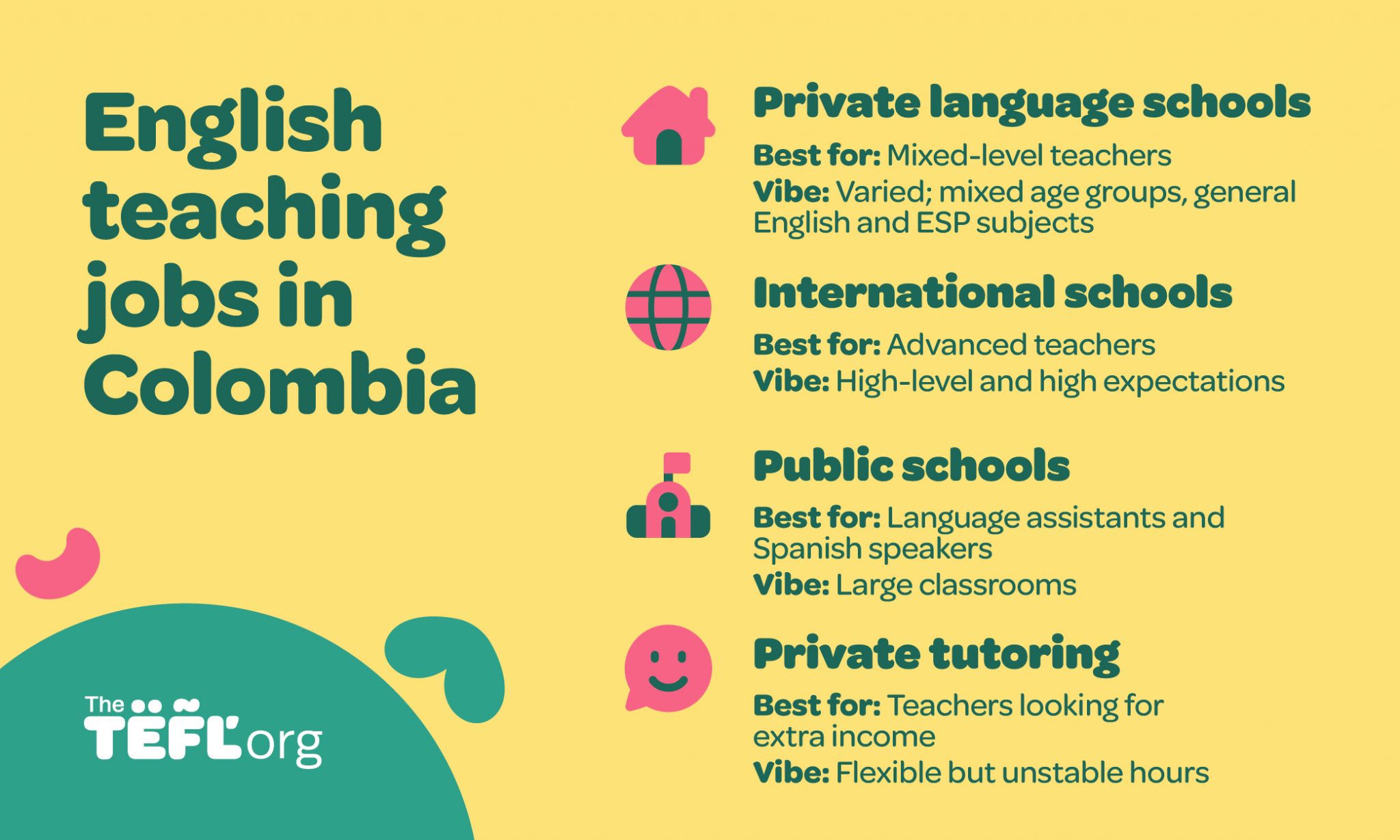
Most job opportunities in Colombia's public schools come through government-programmes, like the Peace Corps, and TEFL teachers work as a language assistant supporting the main teachers. Because of the lower level of responsibilities and working hours, these roles are a great way to gain classroom experience. The academic year at public schools goes from January–November.
What to expect teaching at public schools in Colombia:
- Working as a language assistant
- Teaching larger classrooms with modest teaching resources and materials
- Following the national curriculum
Private language schools
Foreign teachers can find most opportunities at private language schools due to their year-round hiring and flexible entry requirements. You can find most private school jobs found in cities like Bogotá, Medellín and Cali, and they cater to students studying outside of school or professionals learning English with a specific goal in mind.
What to expect teaching at private language schools in Colombia:
- Teaching evening and weekend classes
- Year-round hiring
- Teaching young learners, teenagers, or adults depending on the course
- Smaller classrooms with a focus on general English or ESP subjects like business English and exam preparation
Tip: Specialist courses are useful – teaching Business English or English for Academic Purposes is popular in cities like Bogotá and Medellín, where competition is high and Colombian students and professionals have a specific goal in mind.
International schools
International schools in Colombia offer some of the highest salaries and best benefits, but it’s not an easy gig to break into. These schools teach local and international students from an international curriculum with English as a main language. Teachers need to teach English in multiple subjects, so employers are looking experienced teachers with strong academic and professional qualifications.
What to expect teaching at private international schools in Colombia:
- Monday to Friday timetable
- Following Calendar B school year from August–June
- Teaching an international curriculum (US, UK, or IB) in English
- Smaller classroom sizes with students of diverse backgrounds
- Excellent classroom facilities

Volunteering
If you want to gain experience or see if teaching abroad is for you, volunteering is a great way to teach English in Colombia. Many charities and nonprofit organisations seek English-speaking volunteers to promote cultural exchange and improve access to English education, especially in disadvantaged communities where education is limited.
What to expect volunteering in Colombia:
- Short-term positions
- Working with children and young people in disadvantaged communities
- Projects focusing on not just teaching English but also community development, childcare, and environmental awareness
Teaching English in Major Cities
English education is more accessible, and the demand for teachers is higher in cities like Bogotá and Medellín. While teaching jobs also exist in more rural areas, the resources, support, and teacher salaries are limited.
Here are some of the most popular spots for English teachers to consider in Colombia.
Teach English in Bogotá

If you love panoramic views, Bogotá’s geography is sure to entice you, as the city is nestled in the Eastern Hills of the Andes at 2,640 metres above sea level. When you’re not teaching in the classroom, you can hike up Monserrate to get a full view of the city.
But beyond rugged green landscapes, you’ll find plenty of things to do in Bogotá. From strolling by colonial architecture and open-air amphitheatres like Centro Cultural Gabriel García Márquez to taking graffiti tours and hitting salsa clubs, you’ll have no shortage of options when you’re living life to the fullest in Bogotá.
Teach English in Medellín

Medellín has become one of Latin America’s most welcoming and culturally essential destinations. Due to its mild, welcoming climate, Colombia’s second city is called the “City of Eternal Spring,” but the city’s qualities go way beyond its geography.
Medellín transformed from one of the most dangerous areas in the world to a stylish and creative hub, and was designated by UNESCO as the World Book Capital for 2027. When you’re not teaching English, you can embrace its resilient street art, colourful nightclubs, hole-in-the-wall eateries, and so much more.
Despite its size, getting around isn’t a problem for English teachers – the reliable Metrocable connects hillside neighbourhoods to the city centre so you can head straight from the classroom to the coolest neighbourhoods and the best hiking spots with ease. If you want to up the tempo, head to underground Caleña salsa bars or take a day trip to the Jurassic looking Piedra de Peñol.
Ready to Teach English Abroad? Don’t Forget Your TEFL Certificate
Before you gear up to teach English abroad in Colombia, you'll need your TEFL certification! A TEFL course isn't just a way for you to find a job teaching English in Colombia and beyond, it's an essential step towards your goal of becoming an English teacher. With a TEFL course, you'll learn how to control large classrooms, engage students, and deliver lessons with confidence in your abilities.
Get started today with our 120-hour TEFL course to find English teaching jobs abroad.
Frequently Asked Questions
Q. Do I need Spanish to teach English in Colombia?
You don’t need to speak Spanish to teach English in Colombia. But some basic Spanish language abilities will help you settle into any Spanish-speaking country. If you're a Spanish speaker, then your job prospects will be far greater.
Q. How long does the visa process take to teach English in Colombia?
The Migrant work visa in Colombia takes around 2–4 weeks to process, but there’s more that you need to consider. You’ll need to find a job first, and only then can your employer sponsor your work visa for you. Be sure to anticipate any delays due to national holidays when timing your application.
Q. How long are typical teaching contracts for when you teach English in Colombia?
Contracts to teach English in Colombia usually last at least a year, and you can renew them after completion if your employer agrees. The academic calendar typically goes from January–November (Calendar A) or from August–June (Calendar B). Public schools go by Calendar A, whereas some private schools and most international schools go by Calendar B.