











Dramatic landscapes, unrivalled cuisine – Vietnam also offers solid benefits and pay for foreign English teachers (or giáo viên tiếng Anh, as they're known locally.)
With a booming tourist industry and ambitions to become a high-income country by 2045, Vietnam requires an English-speaking workforce. The Ministry of Education is turning English into a compulsory subject in Vietnamese public schools from Grade 1 onwards by 2030, and TEFL teachers can find an excellent salary and a low cost of living in the country.
Read on for The TEFL Org’s guide on teaching English in Vietnam, from the job requirements, salary, visa, top locations, and more.
Key Takeaways
- The demand for English teachers is high in Vietnam; with strong teaching job markets in Ho Chi Minh City (Saigon), Hanoi, Da Nang, and Hai Phong.
- Foreign teachers in Vietnam are legally required to have a university degree, TEFL certificate, and clear background check.
- The average salary for English teachers in Vietnam ranges from ₫30–₫40 million ($1,140–$1,520 / £860–£1,150) at public schools and language centres.
- International school teachers can earn upwards of ₫50 million ($1,900 / £1,435) per month.
- The cost of living is incredibly low — a local meal or coffee costs as little as ₫30,000 ($1.15 / £0.85).
- Teachers are required to obtain a business visa and work permit to teach in Vietnam legally.
Requirements for Teaching English in Vietnam
Although Vietnam already has a moderate English proficiency score, their objectives are ambitious — and they're looking for qualified teachers to achieve these goals.
Can I teach English in Vietnam without a TEFL certificate?
No, you can't legally teach English in Vietnam without a TEFL certificate. These are government and employer requirements; a 120-hour TEFL certificate from an internationally recognised provider like The TEFL Org is the minimum requirement to get a work permit for teaching in Vietnam.
Tip: While the 120-hour TEFL is enough to teach in Vietnam, advanced courses like the Level 5 course, or specialised courses in teaching business English or young learners can strengthen your application.
Do I need a degree to teach English in Vietnam?
Yes, you need a bachelor's degree (in any subject) to teach English in Vietnam. Without a degree, you can't get the work permit for teaching English, and you'll also need to notarise, legalise, and authenticate your degree to prove that it's authentic.
If you want to teach English without a degree in Southeast Asia, consider Vietnam's neighbouring country, Cambodia. While they have very distinct cultures, both countries offer similarly rewarding TEFL experiences.
Can I teach English in Vietnam without experience?
Many employers in Vietnam welcome first-time teachers with the right qualifications, so you’ll have no issues teaching English without experience, especially if you’ve got a university degree, TEFL certificate, and you’re a native English speaker.
Visa requirements for teaching English in Vietnam
To work in Vietnam legally, you'll need to secure a teaching job and visa before entering the country.
Once you've been offered a job teaching English in Vietnam, your employer will sponsor your DN1 Business visa, or an invitation letter allowing you to get the business visa on-arrival. This visa is valid for 90 days, but is extended in-country by your employer.
Once you're in Vietnam, your employer will submit your work permit application to the Ministry of Labour, and you can choose between a single-entry or a multiple-entry visa.
To apply for the correct visa and work permit, you'll need the following:
- Notarised, authenticated, and legalised documents, including your bachelor's degree, TEFL certificate and criminal background check
- Visa application form
- Full clean health check (carried out in Vietnam)
- Passport & passport-sized photos
- $35 visa fee
Important: Immigration rules can change, and the information above is not intended as legal advice. Be sure to check the official Vietnam government website or embassy in your region for updated visa rules.
Download our guide to teaching English in Asia
The ultimate guide to culture, life and work as a TEFL teacher in Asia.
Salary and Cost of Living
Although still a developing country, the teaching salary in Vietnam and low cost of living makes for an excellent combination for TEFL teachers.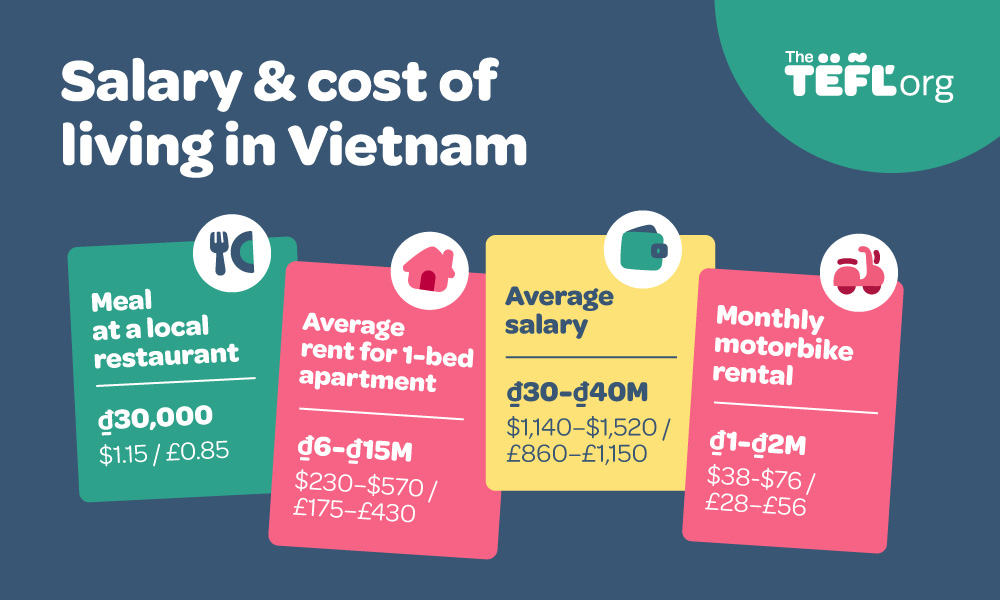
How much can you earn teaching English in Vietnam?
With low living costs, you might expect the teacher salary to be low, but English teachers earn around ₫30–₫40 million ($1,140–$1,520 / £860–£1,150) alongside benefits like health insurance and visa reimbursement.
This salary is typical for teaching in public schools and private language schools in Vietnam, but international school teachers can earn upwards of ₫50 million ($1,900 / £1,435) after tax per month.
Want to see how Vietnam's teaching salary compares to other countries? Check out The TEFL Org Salary Guide!
Find out how much you can earn as an English teacher abroad

How much does it cost to live in Vietnam?
While the salary isn't as high as teaching in South Korea, China, or Hong Kong, it'll go much further with Vietnam's cost of living. In Vietnam, you can live a very comfortable lifestyle without spending much, allowing for great saving potential.
An English teacher spends around ₫10 million ($380 / £285) per month on living expenses excluding rent. In popular cities like Hanoi and Ho Chi Minh City, rent typically ranges from ₫6–₫15 million ($230–$570 / £175–£430) per month. This means that you can easily save $500+ / £375+ per month while still living an excellent lifestyle.| Restaurants | VND | USD | GBP |
|---|---|---|---|
| Inexpensive restaurant meal | |||
| Domestic beer (0.5 litre) | |||
| Regular cappuccino | |||
| Water (0.33 litre) | |||
| Markets | VND | USD | GBP |
| Regular milk (1 litre) | |||
| Loaf of white bread | |||
| Regular eggs (1 dozen) | |||
| Apples (1 kg) | |||
| Transportation | VND | USD | GBP |
| One-way ticket (local transport) | |||
| Monthly pass (regular price) | |||
| Taxi start (normal tariff) | |||
| Gasoline (1 litre) | |||
| Utilities | VND | USD | GBP |
| Electricity, heating, cooling, water, and garbage (for a regular apartment) | |||
| Regular prepaid monthly mobile tariff with 10GB+ data | |||
| Internet (60 Mbps, unlimited data, cable/ADSL) | |||
| Clothing and shoes | VND | USD | GBP |
| Pair of jeans (Levis 501 or something similar) | |||
| Summer dress in a chain store | |||
| Nike running shoes (mid-range) | |||
| Men's leather business shoes |
Want to save up as a teacher in Vietnam? Here are The TEFL Org's go-to budgeting tips:
- Eat like a local: Among Anthony Bourdain's favourites, Vietnamese cuisine is not only delicious but affordable. Choosing local food over western food will save you plenty of money, with meals and coffee costing as little as ₫30,000 ($1.15 / £0.85).
- Dine out: Rarely are people encouraged to save money by dining out. But, Vietnam's culinary scene is thriving in flavour and availability. From a streetside bánh mì (Vietnamese sandwich) to eateries serving phở (noodle soup) and bún chả (grilled pork and noodles), eating out is affordable and time-efficient.
- Live outside the centre: Hanoi and Ho Chi Minh City are fantastic cities, and their magic goes way beyond tourist attractions. While there are tourist hotspots in each city, like Hanoi's Old Quarter or District 1 in Ho Chi Minh City, living outside the centre can save English teachers up to ₫4 million ($150 / £120) per month.
- Rent a motorbike: If you have a motorbike licence from home and an international driving permit, renting a motorbike costs around ₫1–2 million ($38–$76 / £28–£56) per month. Many teachers rent motorbikes without licences, but this is illegal.
- Private tutoring: Teachers can earn around ₫500,000 ($19 / £14) per hour tutoring young learners or adults in the evenings, which could cover most of weekly meals and coffee if you're frugal.
English Teaching Jobs in Vietnam
From public and private school jobs to international institutions, there are many different English teaching jobs in Vietnam to consider. The most fitting position depends on your experience and preference.
Public schools
Public schools offer a Monday to Friday schedule from 8am–5pm with a three-hour lunch break (yes, three). Classes are large — up to 40–50 students in some cases — but lessons are fun and animated. Most foreign teachers at public schools emphasise spoken English skills to help Vietnamese students with their pronunciation, while the Vietnamese teacher focuses more on reading and writing.
Public school jobs are entry-friendly and common for new teachers, and can be found through TEFL programmes or agencies.
What to expect teaching in public schools in Vietnam:
- Teaching from Monday to Friday, 8am–5pm, academic year from August to May
- 15–25 hours of teaching per week, activity-based lessons, strong emphasis on practising spoken English skills
- Working with a Vietnamese teaching assistant in large classrooms of 40–50 students
- Working at multiple schools throughout the week

Private language schools
At a private language school in Vietnam, students learn English in addition to their current studies. These lessons can range from spoken English, reading and writing, to exam preparation. Schools often provide materials and training, and teachers usually work in the evenings and on weekends.You can find private language school jobs through agencies and employers such as ILA Vietnam, Apollo, VUS, and Language Link.
What to expect teaching in private language schools in Vietnam:
- Working evenings and weekends, year-round schedule
- Teaching smaller classrooms
- Delivering lessons on a range of English subjects
- Working with a Vietnamese teaching assistant
International schools
International school teachers deliver lessons to local and international students from an American or British curriculum. While international schools offer some of the best salaries, benefits, and classroom facilities for English teachers, they require advanced qualifications and previous teaching experience. Teachers have much more responsibility and higher expectations than teachers at public or private schools.
What to expect teaching in international schools in Vietnam:
- Working Monday to Friday schedule
- Excellent classroom facilities and an international curriculum
- Teaching smaller classrooms
- Higher requirements, such as an education degree, advanced TEFL or teaching licence, or teaching experience
Universities
University roles are available for teachers with excellent academic qualifications like a master's or PhD and teaching experience. With fewer teaching hours, more emphasis is placed on preparing materials, researching, and mentorship. You can find teaching positions by directly applying to universities such as RMIT, BUV, VIN University, or on teaching boards like THE and Vietnam Teaching Jobs.
What to expect teaching at universities in Vietnam:
- Fewer teaching hours with a stronger focus on lesson preparation
- Opportunities to contribute to research and academic partnerships
- Acting as a mentor through guidance and career-focused support
- High entry requirements, including advanced qualifications (such as a master's or PhD) and experience
Teaching English in Major Cities
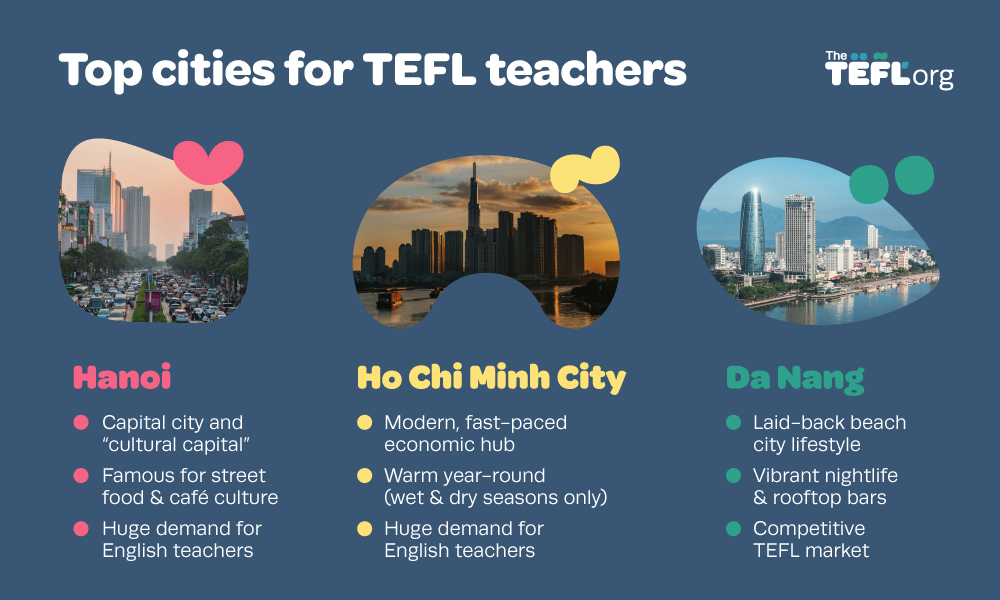
From north to south, Vietnam is home to thriving cities that have their own unique histories, attractions, and cultures. Here are the top locations for TEFL teachers to consider for launching their career in Vietnam.
Teach English in Hanoi

From the Ho Chi Minh Mausoleum, French colonial architecture, Hỏa Lò Prison, and the B-52 wreckage, Hanoi is brimming with ornaments of history. With a thriving expat community, there are plenty of teaching opportunities in the form of public schools, private language centres, and international schools. And, while the salaries are high for teachers in Hanoi, the cost of living is incredibly low for a capital city.
When you're not teaching or embracing Hanoi's history, you can enjoy roadside beers, wander around Hoan Kiem lake, or watch the cultural cogs tick while sipping on your invigorating cà phê.
Teach English in Ho Chi Minh City

If you want to live and teach somewhere warmer, consider Ho Chi Minh City, formerly Saigon. While Hanoi experiences all four seasons, Ho Chi Minh City only has two; wet season and dry season. With a warmer climate, an illuminating skyline and high-energy nightlife, Ho Chi Minh City is Hanoi's more modern equivalent.
Located in the south, Ho Chi Minh City is Vietnam's economic hub. With finance and tech giants, start-up companies, and the highest prevalence of English speakers, you'll have no shortage of career opportunities in this international hub.
During your free time, you can barter at Bến Thành Market, sip at rooftop bars, take a day trip to Cu Chi Tunnels, or spend the weekend on the idyllic island of Phu Quoc.
Teach English in Da Nang
With busy markets, beach bars, and a strong expat scene, Da Nang is a go-to for backpackers, digital nomads, and TEFL teachers.
From summer camps, private schools, and international schools, TEFL teachers can find plenty of opportunities in Da Nang. However, as a booming coastal destination with a lower population than Hanoi and Ho Chi Minh City, teaching jobs are competitive.
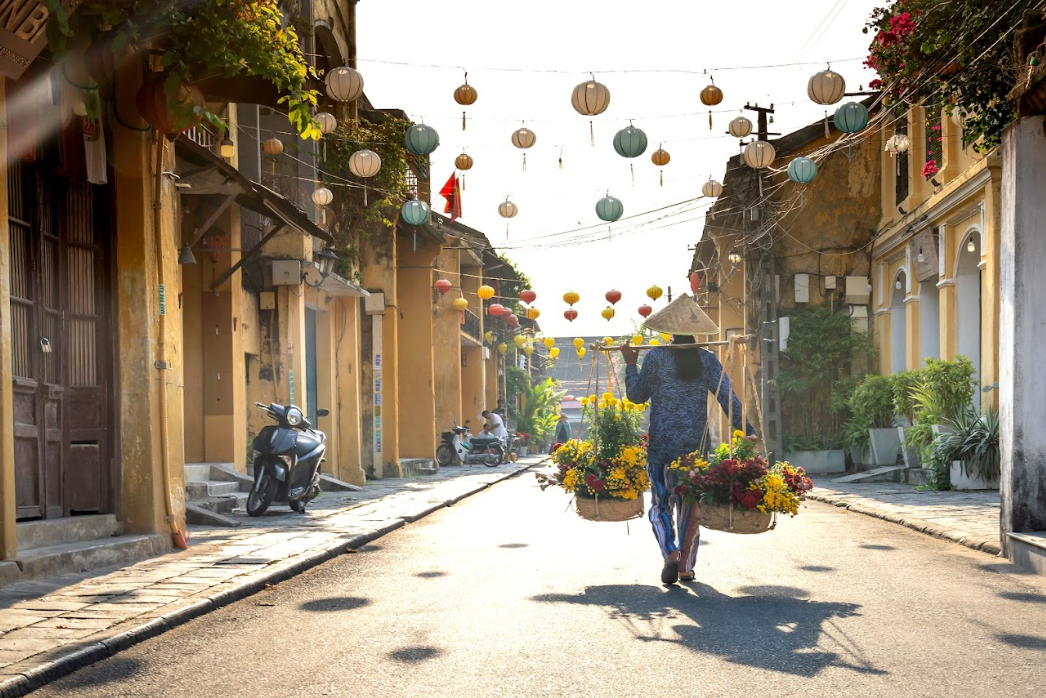
When you've clocked out of the classroom, you can embrace its long coastlines, Lady Buddha, Golden Bridge, or even head over to idyllic Hội An.
TEFL Org Teacher Stories
Don't just take it from us — hear from our TEFL Org graduates who used their TEFL certificate as a passport to teach English in Vietnam!
Frances, Ho Chi Minh City
Here's what Frances had to say about her experience of teaching English in Vietnam's largest city, Ho Chi Minh City.
"I moved to Vietnam in 2016 to start my TEFL career and haven't looked back. I had few expectations of Vietnam before I moved to Saigon but it is safe to say that I am head-over-heels in love with life here. While I've worked in the public school system, the majority of my experience in Vietnam has been in a language centre.
Maybe I'm a little biased — as I'm lowkey obsessed with Vietnam — but life here is so vibrant! Between the abundance of epic street eats, friendly locals, mountain scenes to awe at, and unreal travel experiences on your doorstep, it's hard to not see the appeal of living and working in Vietnam.
Not to mention, students are driven and have a great balance between studying and having fun. As a bonus, average wages are high enough to save money while still living a comfortable lifestyle."
Want to hear more from TEFL Org graduates? Check out our student stories for first-hand insight on living in southeast Asia and beyond!

Ready to Teach English in Vietnam? Don't Forget Your TEFL Certificate!
Not only are TEFL courses a legal requirement for teachers in Vietnam, but they'll help you become a more knowledgeable and confident teacher. Whether you choose an in-person or an online TEFL course, The TEFL Org offers internationally accredited courses that help shape you into a confident teacher.
From understanding classroom management, lesson planning, preparing teaching materials, and common obstacles when learning English as a foreign language, a TEFL course will boost your skills and your students' experience.
Get started with our 120-hour course now.
Frequently Asked Questions
Q. Is there an age limit for teaching abroad in Vietnam?
Typically, the age limit for teaching English abroad in Vietnam is 60 years old, which is also the local retirement age. However, there aren't any strict rules that prohibit older people from teaching abroad; it depends on each school or employer's unique requirements.
Q. Can I teach English in Vietnam without a degree?
Unfortunately, having a degree is essential to obtaining the correct visa and work permit for teaching English in Vietnam. You'll also need to legalise and authenticate your degree, alongside your TEFL certificate and background check.
Q. Are English teachers in demand in Vietnam?
English teachers are in high demand in Vietnam. The Vietnamese Ministry of Education is intensifying English education, making it a nationwide compulsory subject from Grade 1 onwards by 2030, and English teachers are needed to support this initiative.
Read more: Can I teach English abroad as a non-native speaker?
Q. How much do teachers get paid in Vietnam?
English teachers earn around ₫30–₫40 million ($1,140–$1,520 / £860–£1,150) per month working at public schools or language centres. International school teachers can earn upwards of ₫50 million ($1,900 / £1,435) per month!
Q. Can I teach English in Vietnam with just a TEFL?
While a 120-hour TEFL certificate (or a teaching licence) is essential to teaching in Vietnam, you'll also need a bachelor's degree and a clear criminal background check.
Q. Do I need to speak Vietnamese to teach in Vietnam?
No, you don't need to speak Vietnamese to find a teaching job in Vietnam. While English proficiency is enough, learning Vietnamese can improve your cultural experience.