



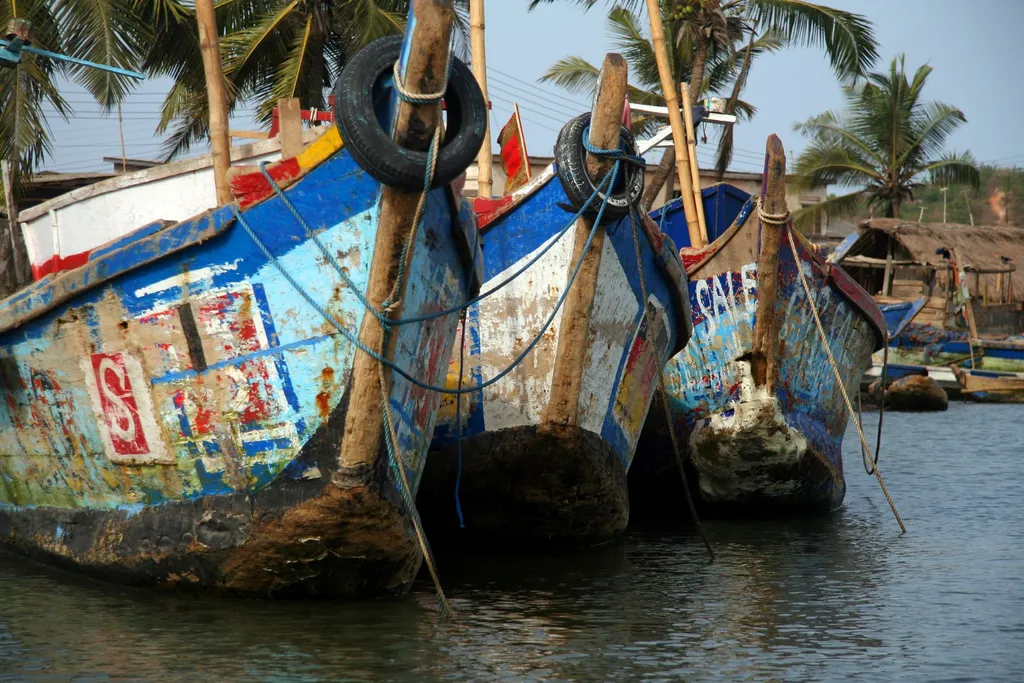
From national parks rich with biodiversity to sandy coastlines and colonial forts, Ghana is an interesting spot for nature enthusiasts, history buffs, and photographers alike. Although it’s a former British colony that gained independence in 1957, English is the national language (with 80 other native languages like Twi, Ewe, Fante and Ga).
But beyond indigenous culture, colonial history, and stunning sceneries, you’re probably wondering how to approach a job market full of English speakers. Read on for The TEFL Org’s guide to teaching English in Ghana, from the job types, requirements, salary expectations, and more.
Key Takeaways
- English is an official language, so there isn’t a high demand for English teachers beyond volunteer opportunities.
- Paid jobs still exist in private schools like language centres or international schools, but they’re competitive.
- Volunteers need to speak English, but paid teachers need a TEFL certificate, bachelor’s degree, and teaching experience is preferred.
- The average monthly salary for English teachers ranges anywhere from ₵2,000–₵13,855 ($170–$1,200 / £130–£900) depending on experience, qualifications, and job type.
- English teachers need a work visa and a residence permit; volunteers typically enter on a tourist visa.
- Top locations include the capital city, Accra.
Requirements for Teaching English in Ghana
With an English-speaking population, Ghana offers an easy transition into daily life. But with an English-speaking public school system, English as a “foreign language” lessons aren’t in demand like they are in other African countries.
This means that the teacher requirements can be quite strict. But it’s not impossible to teach English in Ghana, whether you have your heart set on volunteering or finding paid positions.
Can I teach English in Ghana without a TEFL certificate?
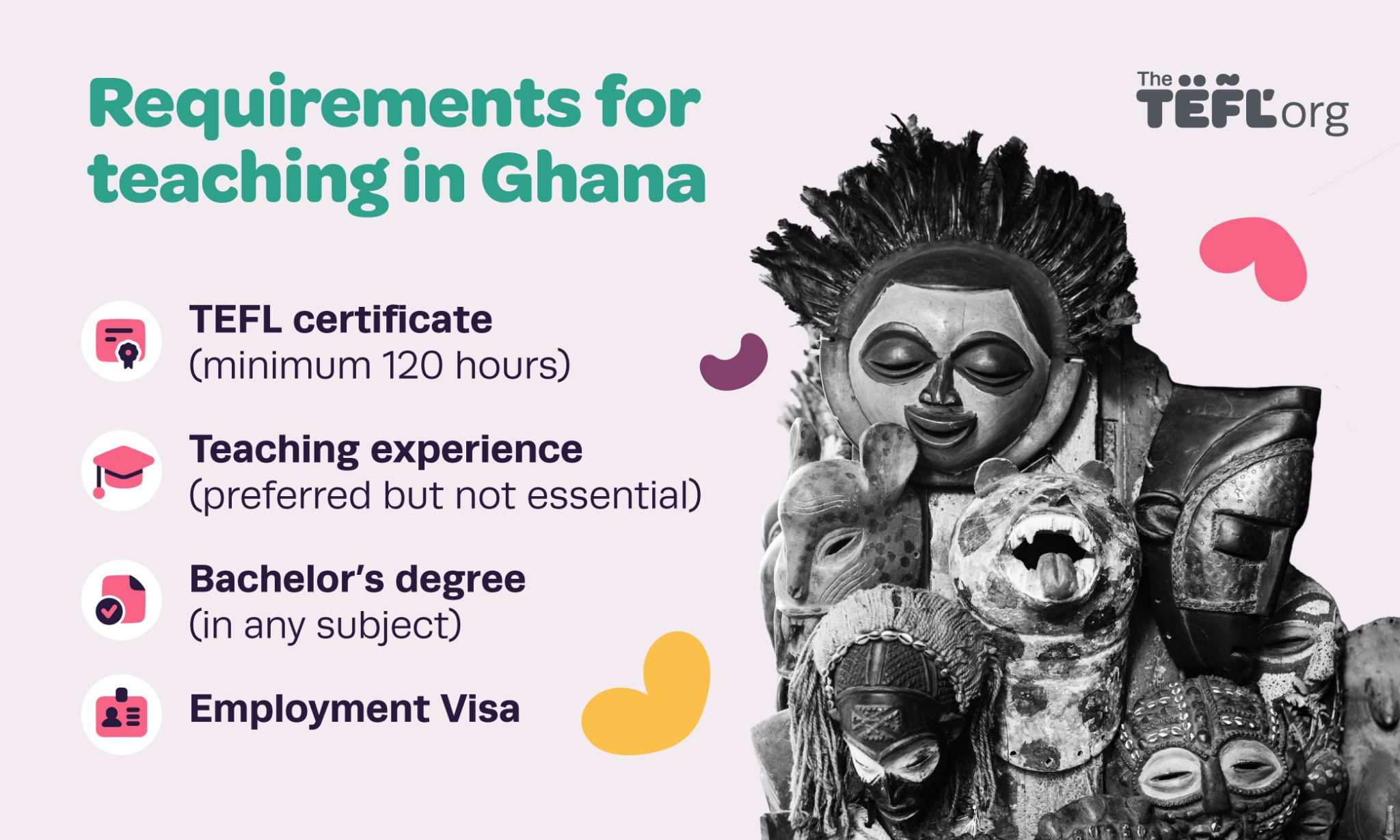
The standard of English is already high, and the market is more competitive than in other African countries. You need a TEFL certificate from an accredited provider (like The TEFL Org!) to teach English in Ghana.
Generally, a 120-hour TEFL certificate is enough for most TEFL jobs in Ghana, but some employers might look for a Level 5 TEFL certificate. Because general English skills are common, there’s a market for teaching English for Specific Purposes (ESP) subjects, like teaching Academic English, Exam Preparation, or Business English.
Do I need a degree to teach English in Ghana?
You need a university degree (in any subject) to teach English in Ghana. This is both an employer requirement and also a legal one for the work visa, so there’s no getting around it. But you can still teach English abroad without a degree, either as a volunteer in Ghana or in another country in Africa, Europe, Asia, or beyond.
Do I need teaching experience to teach in Ghana?
Not having experience won’t necessarily hold you back from teaching in Ghana. Teaching jobs at public schools or international schools often require experienced teachers, but you can still teach English without experience at a private language school, or on a volunteer programme.
Tip: Volunteering as a teacher is a great way to test the waters and gain experience before committing to a long-term job.
Can I teach in Ghana as a non-native speaker?
It’s possible to teach English as a non-native speaker in Ghana as long as you’ve got a TEFL certificate and a degree. But it’s also important to remember that English is many people’s first language in Ghana, so you’re competing against local teachers (as well as foreign teachers) who speak English.
You might also need to show proof of your English proficiency in the form of a language certificate like IELTS, TOEFL, or CEFR. Or, you can show a degree from an English-speaking university.
Visa requirements for teaching English in Ghana
You need a work visa and residence permit to teach in Ghana legally, but you can’t complete this process until you’ve already got a job. Then, your employer can sponsor your work visa for you.
After you’ve interviewed and signed a job contract, your employer sponsors your application, and then you’ll need to submit the following documents on the Ghana Immigration Portal:- Proof of signed job contract with Ghanaian employer
- Invitation from Ghanaian company/employer
- Clear criminal record
- Proof of professional and academic certificates (notarised and legalised)
- Medical certificate
Once you’ve got your work visa approved, you’ll need to get your residence permit after arriving in Ghana.
Short-term volunteers (less than 90 days) usually enter on a tourist visa while the programme provides guidance with the visa application. For the tourist visa, you need to show your travel itinerary (including departure flight) and proof of accommodation.
Download our guide to teaching English in the Middle East & Africa
Everything you need to know about teaching English in the Middle East & Africa

Salary and Cost of Living
Before accepting a job based on its teacher salary, you’ll need to weigh up how it compares to the local cost of living. Here’s everything you need to know about how much you’ll earn, spend, and save as a teacher in Ghana.
How much can you earn teaching English in Ghana?
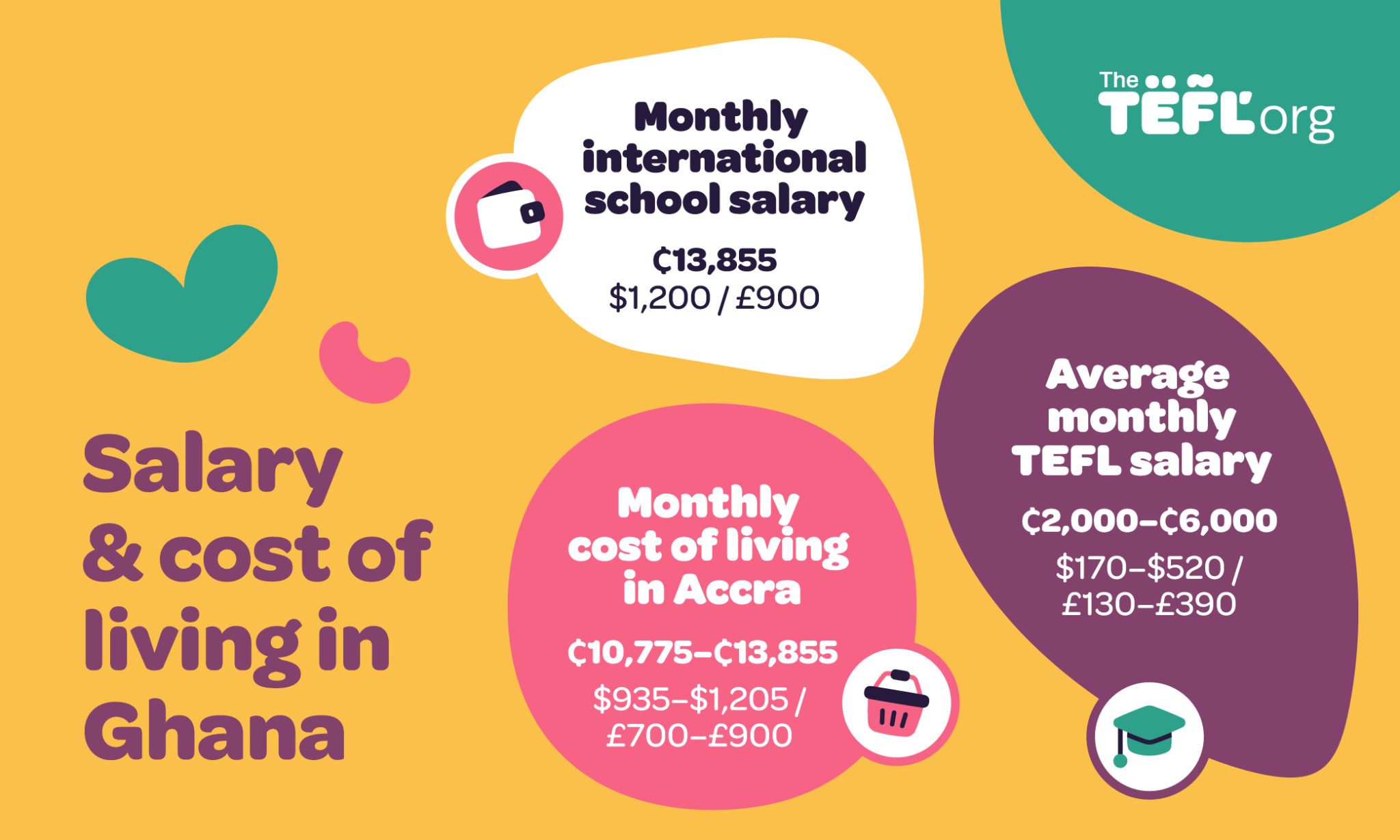
Many positions in Ghana for foreign teachers are on a volunteer basis, but you can still find paid jobs with the right qualifications. The average salary for English teachers in Ghana ranges anywhere from ₵2,000–₵6,000 ($170–$520 / £130–£390) per month depending on your qualifications and experience.
It’s a low salary compared to other TEFL locations, but teachers who have more classroom experience under their belt can negotiate a higher salary. If you’ve got years of experience, a master’s degree, and a teaching licence, you can find a job at an international school which pays upwards of ₵13,855 ($1,200 / £900) per month alongside benefits.
How much does it cost to live in Ghana?
The average teaching salary is low, especially compared to the US or UK, but Ghana imports many of its products, so it’s also not as affordable as other countries in West Africa.
A single person can expect to spend around ₵10,775–₵13,855 ($935–$1,205 / £700–£900) living in the capital city, Accra. Living in any of the cities or towns outside the capital is significantly cheaper — rent in cities like Kumasi, Tamale, Koforidua and so on can be 40–60% lower.So in some cases, the living costs exceed the average English teacher salary. If you’re on an entry-level teacher’s salary in Ghana, here’s how you can live comfortably while stretching your budget:
- Look beyond Accra: Salary isn’t everything — cities like Kumasi, Tamale, Koforidua, and Sunyani are much cheaper than living in Accra while still offering an excellent lifestyle.
- Live outside the city centre: Living outside the city centre can almost halve your rent, and it also means avoiding tourist hotspots that can be busy (and expensive beyond rent).
- Split the rent: A 1-bedroom apartment costs around ~₵4,500, but a 3-bed apartment averages at around ~₵2,000 ($175 / £130) per person.
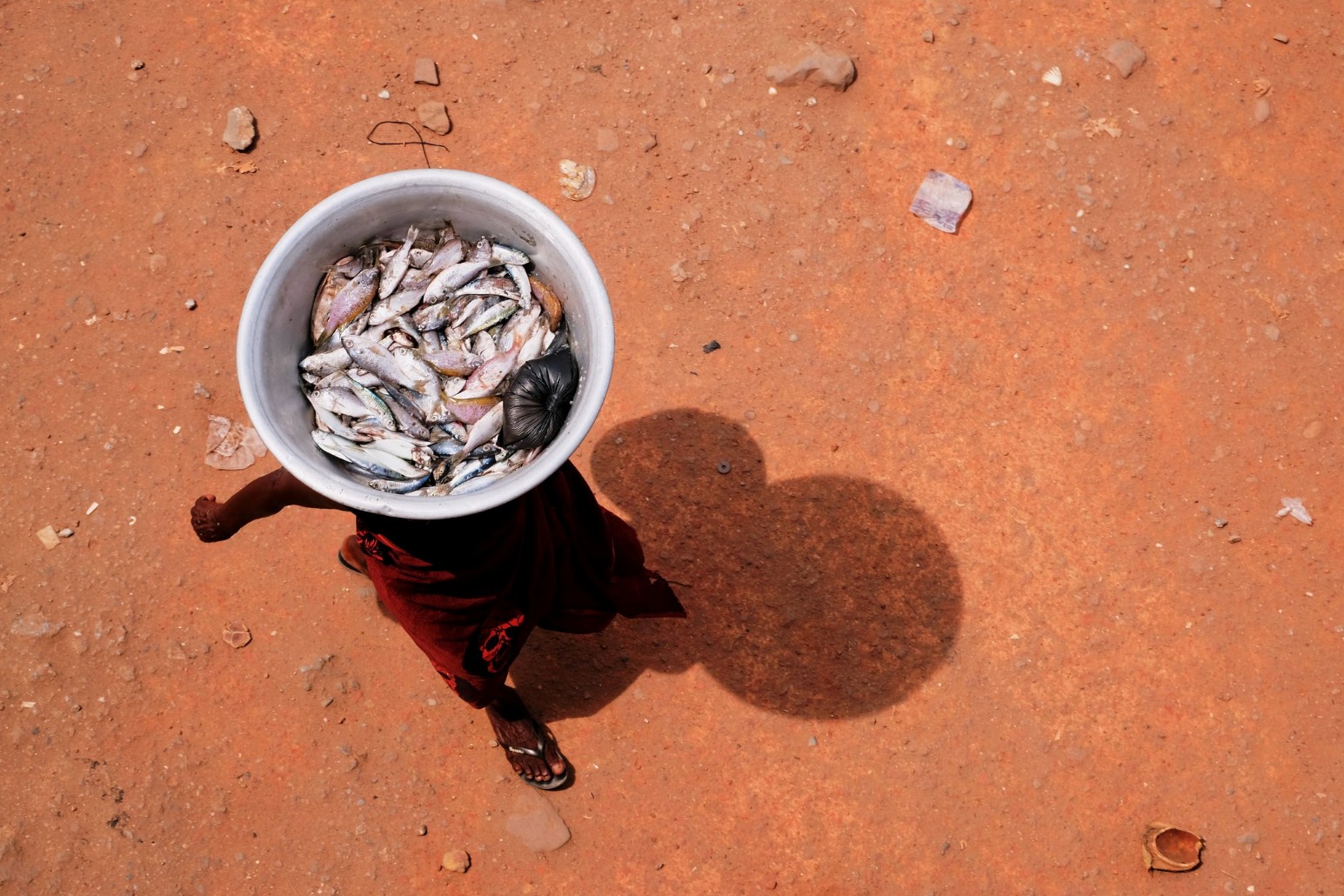
- Eat like a local: Ghanaian cuisine isn’t just delicious but it’s also affordable. Skip the western restaurants and head to local eateries — also known as chop bars — or food stalls.
| Restaurants | USD | GBP | EUR |
|---|---|---|---|
| Inexpensive restaurant meal | |||
| Domestic beer (0.5 litre) | |||
| Regular cappuccino | |||
| Water (0.33 litre) | |||
| Markets | USD | GBP | EUR |
| Regular milk (1 litre) | |||
| Loaf of white bread | |||
| Regular eggs (1 dozen) | |||
| Apples (1 kg) | |||
| Transportation | USD | GBP | EUR |
| One-way ticket (local transport) | |||
| Monthly pass (regular price) | |||
| Taxi start (normal tariff) | |||
| Gasoline (1 litre) | |||
| Utilities | USD | GBP | EUR |
| Electricity, heating, cooling, water, and garbage (for a regular apartment) | |||
| Regular prepaid monthly mobile tariff with 10GB+ data | |||
| Internet (60 Mbps, unlimited data, cable/ADSL) | |||
| Clothing and shoes | USD | GBP | EUR |
| Pair of jeans (Levis 501 or something similar) | |||
| Summer dress in a chain store | |||
| Nike running shoes (mid-range) | |||
| Men's leather business shoes |
English Teaching Jobs in Ghana
The majority of English teaching jobs in Ghana are in big cities like Accra, but you can still find jobs and volunteer opportunities in smaller cities. Foreign teachers find most positions as a volunteer or in a private school since most public schools only hire local teachers.
Most paid teaching jobs exist in private language schools that specialise in Business English and Academic English or at international schools teaching foreign curricula. You can search for work in-country before completing a visa-run, or you can find a job before you reach Ghana with job boards like The TEFL Org Jobs Centre.
Volunteer programmes
Public schools generally hire local teachers instead of foreign teachers, unless you apply through a volunteer programme. But some volunteer programmes also take place in after-school clubs or other extracurricular environments for students. As a volunteer, you might help students develop confidence in speaking, reading, and writing, or you might teach them indirectly through sports, arts and crafts, and other community projects.
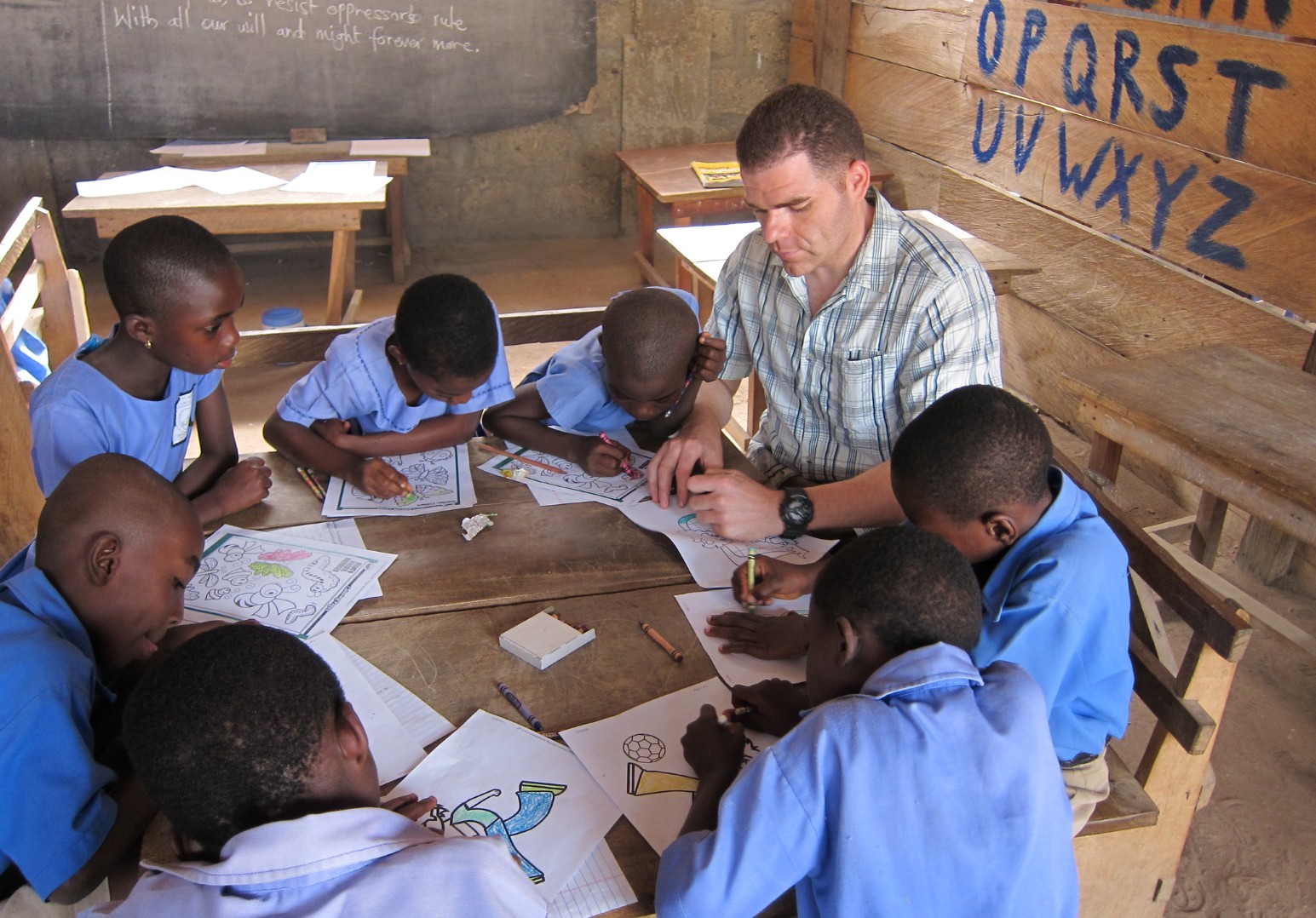
Popular programmes include Projects Abroad and IVHQ, with start dates each month. If you’re from the US, the Peace Corps has projects related to improving English literacy through teaching Maths and Science.
What to expect as a volunteer in Ghana:
- Unpaid, but often comes with benefits like homestay accommodation
- Teaching-specific roles and community development
- Short-term positions, part-time work
Private language schools
Private language schools are popular for students who want to learn English with a specific purpose in mind, with Ghanaian students wanting to learn subjects like Academic English or Business English. These ambitious students want to improve academic and career prospects by studying abroad or working at international companies — which requires excellent English skills.
Generally, lessons take place in the evening and on weekends, and ages vary depending on the course. These schools hire all year-round because they’re not bound by a national curriculum or school year calendar.
What to expect at private language schools in Ghana:
- Weekend and evening classes
- Focus on ESP (English for Specific Purposes) subjects
- Flexible hiring requirements
- Year-round recruiting
International schools
International schools are typically the highest paying schools in the TEFL world. At these schools, teachers deliver lessons to international students (and sometimes local students) who want to learn from a British, American, or other international curriculum. Tuition fees are very high, so expectations of English teachers are also high.
What to expect at an international school in Ghana:
- Teaching international students
- Following a British, American, or IB curriculum
- Excellent salary and benefits
- High requirements: university degree in English or education, teaching licence, and years of previous teaching experience
Private tutoring
Private tutoring is also an excellent way to earn extra income, but you’ll need an employer-sponsored work visa to get into the country first. As a private tutor, you can set your own rates, but you’ll also need to market yourself and find your own students. Much like at private language schools, students are goal-oriented and learn English with a specific goal in mind (rather than just general English).
What to expect as a private tutor in Ghana:
- Focus on ESP subjects
- Setting your own rates
- Marketing yourself to find students
- Flexible but unstable schedule
Teaching English in Major Cities
From surf spots to lush rainforest, gorgeous Ghanaian cuisine and national parks where you can go on safaris, Ghana is full of interesting locations. Here’s where you can expect the best opportunities and lifestyle.
Teach English in Accra
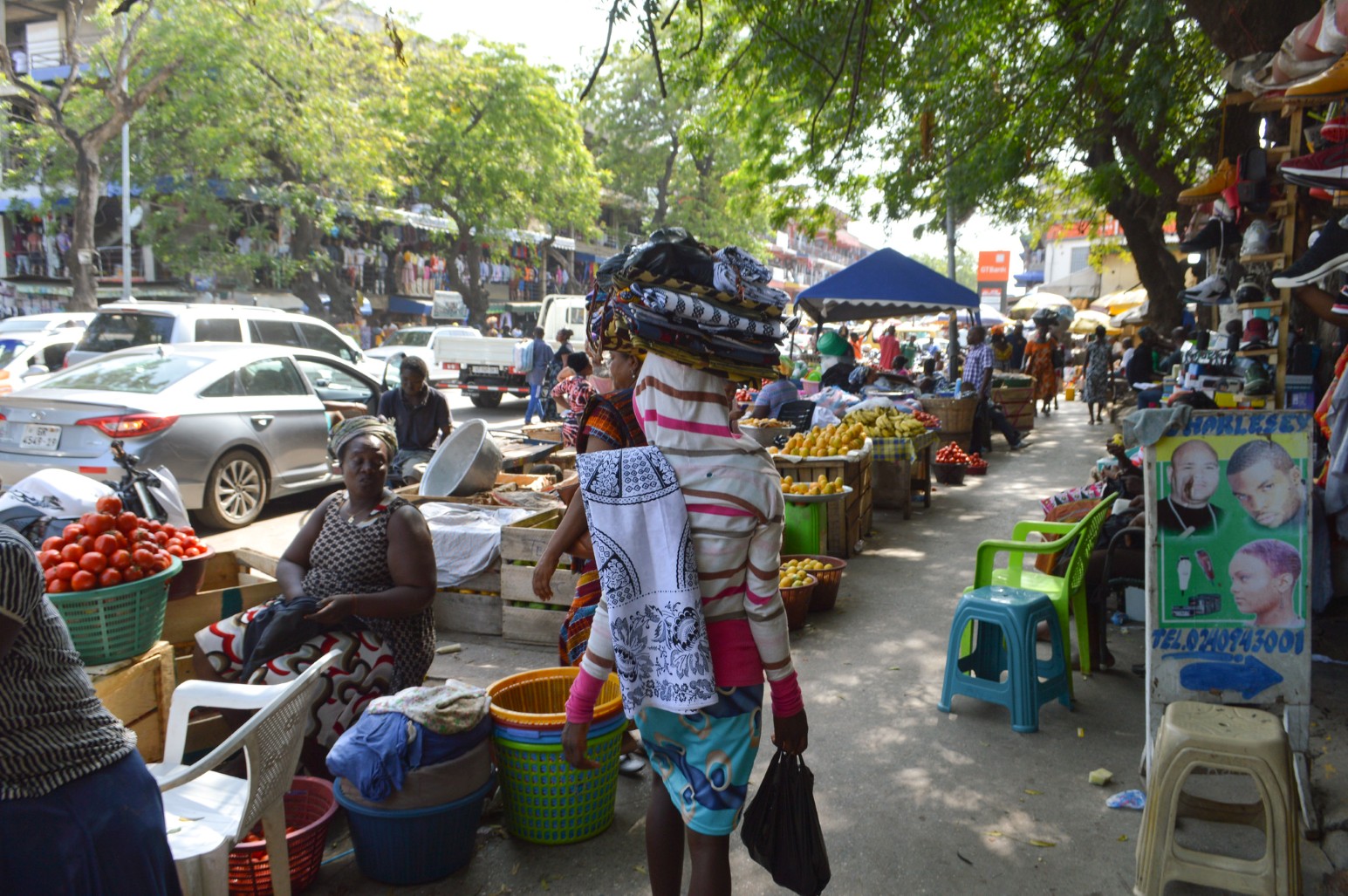
Since the 90s, Accra has seen rapid development in infrastructure, luxury tourism, restaurants, entertainment and so much more. Today, Ghana’s capital city is an artistic and cultural metropolis.
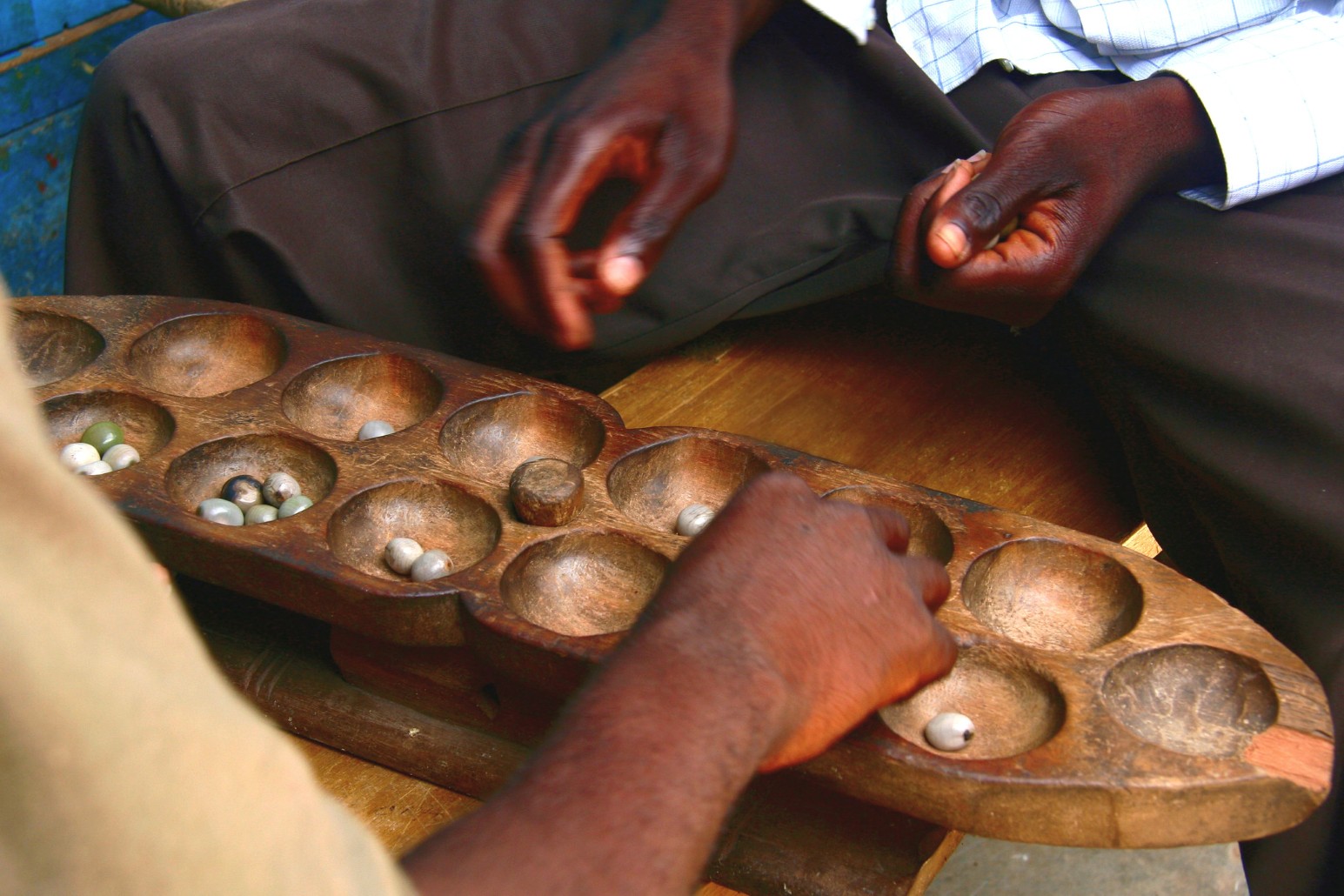
The majority of paid, full-time English teaching opportunities are in the capital city, Accra, where there is a range of private language schools and international schools. And as the business hub, there are also plenty of teaching opportunities through private tutoring.
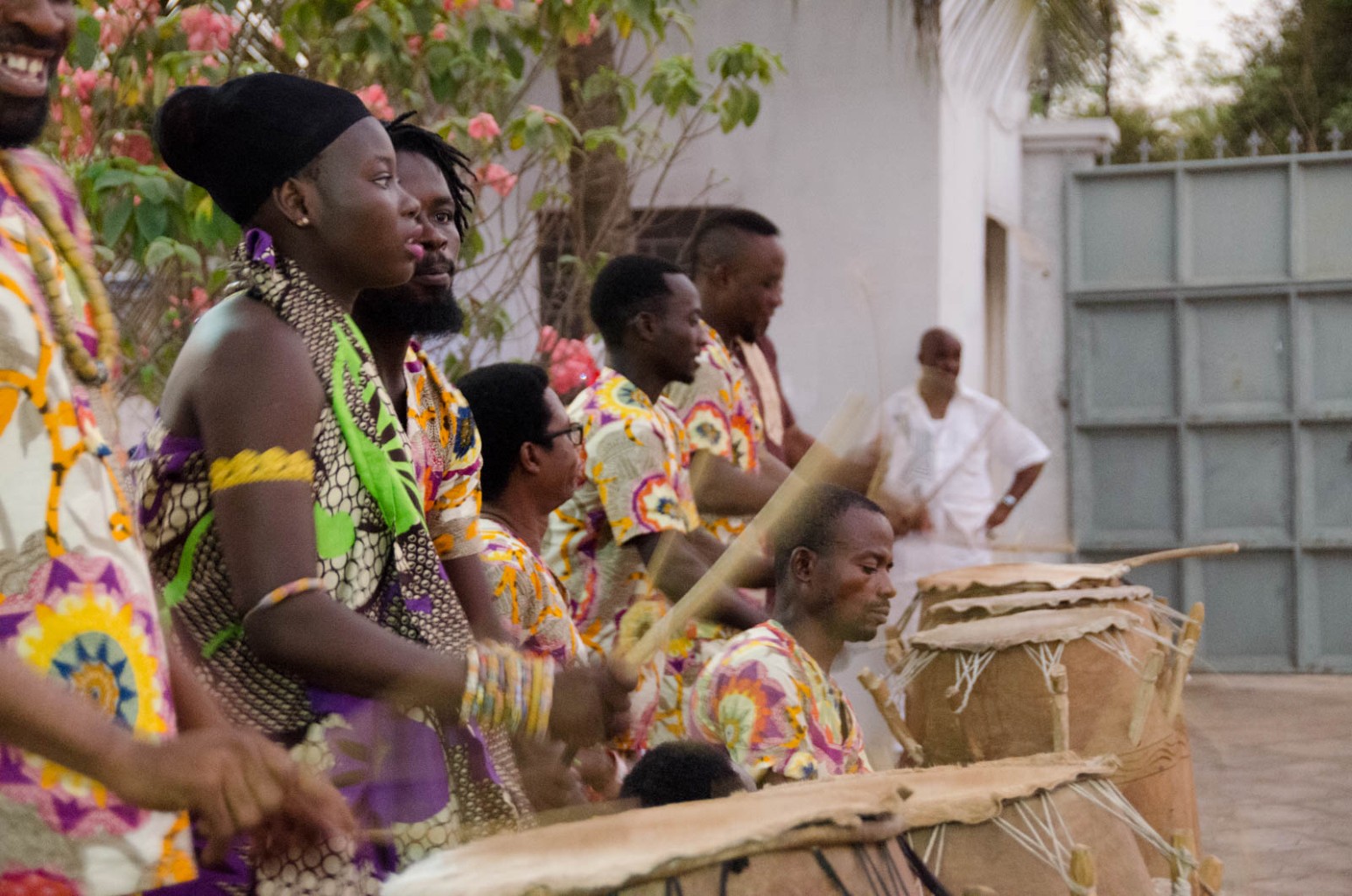
But beyond teaching English, there’s so much to enjoy in Accra. From some of Ghana’s best beaches and skybars, memorial parks and cultural centres to thrifty or aromatic markets, you won’t find a shortage of things to do whatever your tempo.
Ready to Teach English Abroad? Don’t Forget Your TEFL Certificate
Before you head off to Ghana teaching English abroad, you’ll need to become TEFL certified. While employers do look for TEFL certifications on a teacher’s CV/resume, it’s also an essential skill for developing teaching methods. From classroom management skills to lesson planning and teaching grammar, studying a TEFL course will improve your experience teaching and living in Ghana and beyond.
Get started today with our 120-hour TEFL course.
Frequently Asked Questions
Q. How do I become an English teacher in Ghana?
To become a full-time employed English teacher in Ghana, you’ll need a bachelor’s degree, a TEFL certification (of at least 120 hours) and some teaching experience. Alternatively, you’ll only need a TEFL certificate for volunteering opportunities across Ghana.
Q. How much do teachers get paid in Ghana?
The teaching English salary in Ghana isn’t as high as other TEFL locations — teachers earn anywhere from ₵1,000–₵5,770 ($85–$500 / £65–£375) per month depending on their experience and qualifications.
Q. Is English widely spoken in Ghana?
Ghana has many ethnic groups and different languages are spoken throughout the country. Officially, English is the national language of Ghana — it’s the main language in government, business, and education.