
- TEFL Courses TEFL Courses
- View all TEFL courses
- 120-hour Premier Online TEFL Course
- 250-hour Level-5 Online TEFL Course
- Online TEFL Courses
- Classroom TEFL Courses
- Combined TEFL Courses
- Virtual TEFL Courses
- TEFL Course Bundles NEW
- Advanced TEFL Courses
- TEFL Lesson Plans & Resources
- TEFL Gift Vouchers
- Which TEFL course is right for you?

- New to TEFL New to TEFL
- Locations
- TEFL Jobs
- Teach Abroad Teach Abroad
- Teach English Abroad
- Teach English in Japan
- Teach English in South Korea
- Teach English in Spain
- Teach English in China
- TEFL Salaries Abroad
- Requirements for teaching abroad
- Teach English abroad without a degree
- How to find teaching jobs abroad without experience
- Can you teach English abroad as a non-native speaker?

- Teach Online
- About Us
- Blog
- Podcast







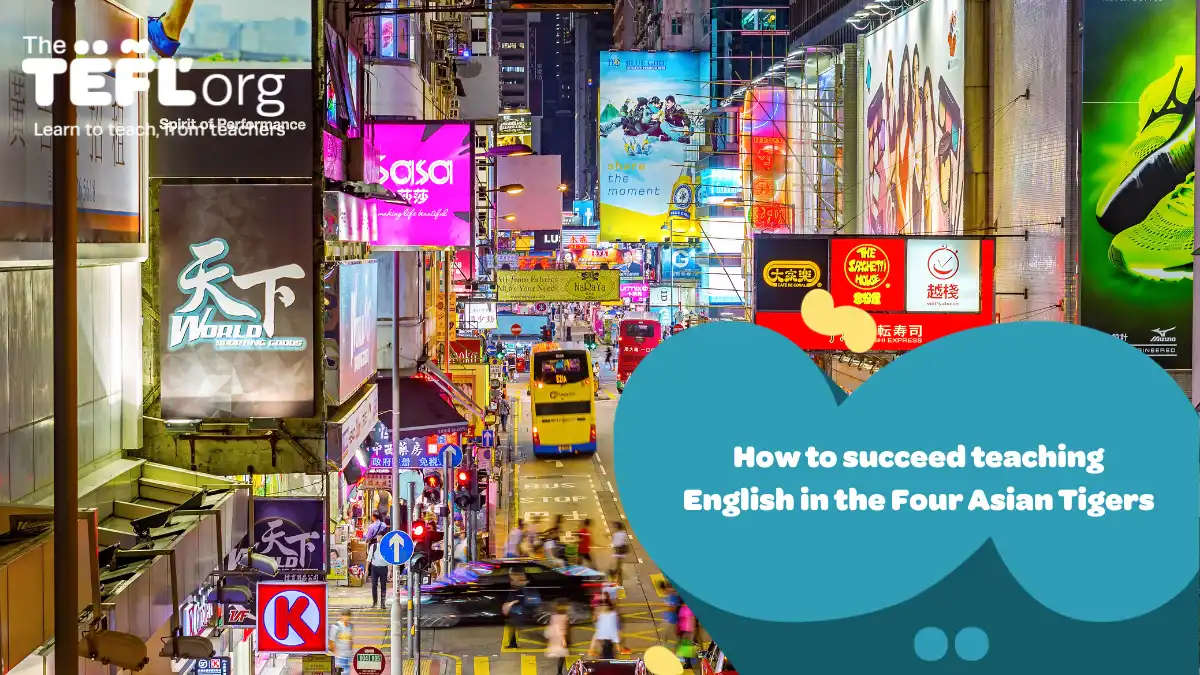
How to succeed teaching English in the Four Asian Tigers
In Asia, there are plenty of exciting options for TEFL teachers, and you can find rewarding work almost anywhere. However, for some of the best salaries, lifestyles, and opportunities, it’s well worth considering The Four Asian Tigers. Hong Kong, Singapore, Taiwan, and South Korea, four nations with strong economies and intense demand for English, are energetic, growing nations, where you can earn serious money and experience culture that’s hard to beat.
The Four Asian Tigers are packed with TEFL opportunities. From Seoul to Taipei , classrooms are bustling with eager learners of all ages, seeking teachers who are committed to constant improvement and meeting the needs of ambitious learners. Outside of work, you can find yourself in ultra-modern metropolises, exploring countries with fascinating histories and exciting futures.
In this blog post, we’re focusing on the Four Asian Tigers - what you need to teach there, how much you can earn, key locations and some insider info on how to earn your stripes as a TEFL teacher.

What are the Four Asian Tigers?
For decades, Asia has been one of the most popular regions for TEFL teachers. Japan and China are especially fruitful nations for English teachers - China has the most English learners on the planet. Outside of those two giants, however, four countries have emerged: the Four Asian Tigers.
South Korea and Taiwan are among the top 25 economies , with Hong Kong and Singapore not far behind. Strong markets have led to significant investment in education, and for teachers, it means high-paying jobs, stable environments, and opportunities for growth and development in some of the world’s most vibrant cultures.
Let’s look at each of the Tigers in more detail:

Singapore
Singapore is only a third the size of London, but it has a sizeable TEFL industry, great wages and immense demand.
A multilingual country, English is Singapore’s primary language for trade and tourism. Singapore’s culture, as reflected in its museums, nature reserves, literature, and several Michelin-starred restaurants, attracts millions of visitors - including TEFL teachers who are charmed by this compact, busy city-state. For many locals, English is a key to earning better wages through tourism and hospitality, as well as international business opportunities.With sky-high English proficiency rates in Singapore, jobs are plentiful but competitive, and you’ll need the right qualifications. Both native and non-native English speakers typically require a degree, a 120-hour TEFL certificate, and relevant experience for permanent teaching jobs. Independent schools pay extremely well, but you’ll need a master’s degree.
For TEFL teachers who want to work freelance and explore Singapore their own way, Digital Nomadism is increasingly popular. Let TEFL teacher Perlie explain:
The cost of living is high, but so are wages, and it’s common to tutor outside of working hours. Across the Asian Tigers, you can find well-paid tutoring jobs in key financial districts .
| Requirements | Average monthly salary | Benefits | Key locations |
|---|---|---|---|
| Degree, 120-hour TEFL certificate, (usually) one year of experience | S$4,713 - S$4,900 (£2,754 - £2,863 / $3,620 - $3,674) | Accommodation,
Medical insurance, Flights, Up to 12 weeks holiday | Singapore City |
Fun fact: Singapore is a city-state, but it’s actually made up of 63 islands .

Taiwan
As a TEFL teacher, you’ll struggle to find a more forward-thinking nation than Taiwan . The country’s Bilingual 2030 project demonstrates a commitment to high-quality English education nationwide. This has created TEFL jobs in Taiwan , including entry-level roles in language schools (known locally as Buxibans or “cram schools”) that can be ideal for newer English teachers.Programmes like the Taiwan Foreign English Teacher Programme (TFETP) put English teachers with degrees, experience (or a teaching licence) and a TEFL certificate in state school positions. Universities and international schools pay long-tenured teachers as much as NT$100,000 to NT$150,000 (£2,445 to £3,670 / $3,045 to $4,570) per month.
Here’s a first-hand look at teaching in Taiwan from Matt and Perlie:
Taiwan has been voted as Asia’s happiest country . The wages probably help - salaries in public schools and language schools comfortably cover the cost of living.
| Requirements | Average monthly salary | Benefits | Key locations |
|---|---|---|---|
| Degree, 120-hour TEFL certificate, experience required except for buxibans/language schools | NT$72,436 - NT$72,667( £1,776 - £1,781 / $2,387 - $2,395) | Airfare,
Accommodation/rent stipend, Performance bonuses, Health insurance, Accident cover, Free meals, Continuous Professional Development (CPD), Contract completion bonus, Mandarin lessons | Taipei City , Kaohsiung City, Tainan City |
Fun fact : If you were wondering how to get around Taiwan, it’ll become obvious when you get there. The country has a scooter for every 1.7 people.

Hong Kong
Hong K ong blends widespread English proficiency with Cantonese culture. Both are official languages, and though Cantonese dominates on the streets, English is the language of business, education and government.
Offering some of the highest TEFL wages in the world, Hong Kong’s job market has opportunities for new and experienced English teachers. The Native-speaking English Teachers (NET) scheme is a well-tread route into public school teaching, while language schools provide a soft landing spot for new TEFL teachers. International schools are widespread, and if you have at least 5 years of teaching experience and a master’s, these jobs pay extremely well.
Many teachers prefer to apply for jobs in person, while others utilise online resources such as Facebook, LinkedIn, and Reddit, as well as local apps like WeChat and Weibo . Either way, networking is essential for finding roles, especially in the private sector, where tutoring can be financially and professionally rewarding.
Tip : To find higher-paid work as a tutor, or in a language school, try specialising in areas like Business English and exam preparation .
| Requirements | Average monthly salary | Benefits | Key locations |
|---|---|---|---|
| Degree, 120-hour TEFL certificate, experience preferred | HKD$28,000 (£2,734 / $3,602) | Accommodation,
Annual bonuses, Flights, Health insurance, Visa coverage, Meals | Hong Kong, Kowloon, Victoria City |
Fun fact : Hong Kong has a Disneyland - and it’s the smallest in the world.
South Korea
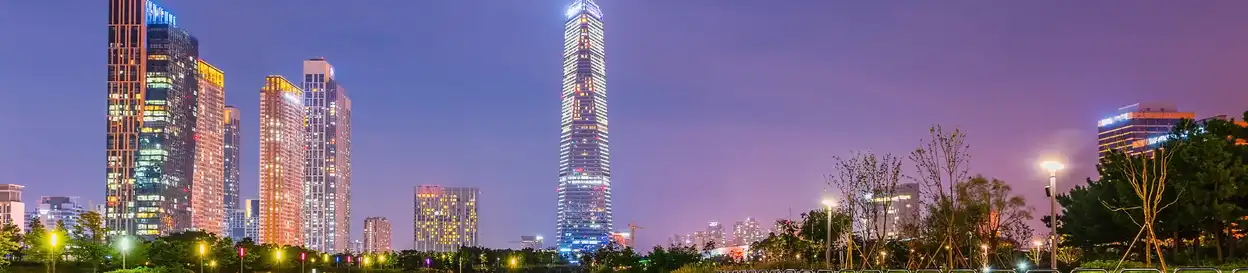
South Korea is one of the world’s most popular TEFL destinations, and its status as a Tiger only adds to South Korea’s appeal. Its well-funded education system means schools are always on the lookout for English teachers, from megacities Busan and Seoul , and idyllic rural areas where you can learn why it’s called The Land of Morning Calm.
For newer TEFL teachers, the best routes are Hagwons (private colleges) and the English Programme in Korea (EPIK) . To land TEFL jobs in South Korea, you’ll need a degree and a TEFL certificate, while experience is preferred. Private colleges are a faster route, but their quality can vary. Both schools and universities offer more job security.
The global growth of South Korean culture has been a massive success story. Korean music (K-pop) has become an international phenomenon, while films like the Oscar-winning Parasite and shows like Netflix’s Squid Game have put Korean art on the map.
Over on TikTok, two of our favourite TEFL teachers, Lydia and Ilsa , have guides to life as a TEFL teacher in South Korea. You can also listen to our podcast with Ilsa , who discusses teaching in Jeonju.
| Requirements | Average monthly salary | Benefits | Key locations |
|---|---|---|---|
| Degree, 120-hour TEFL certificate, experience preferred, must be under 62 years old | ~₩2,679,167 (£1,392 / $1,833) | Accommodation,
Contract completion bonus, Flights, Health insurance, Visa coverage, 18 - 30 days of holiday | Seoul, Busan, Incheon |
Fun fact : As we covered in our blog post, ‘ 5 Key Things TEFL Teachers Need to Know About South Korea ’, red ink is a massive no-no. In Korean culture, red ink is often associated with death!

Work culture in the Four Asian Tigers: key tips
Successful teaching in the Four Tigers isn’t just about qualifications - understanding the culture is hugely important. We’ll get you started with a key tip for each country:
Taiwan - Learn how to give feedback
In Taiwan, ‘face’ and reputation are highly valued, so it’s best to keep your feedback positive and constructive. As a rule, avoid giving negative feedback in a classroom, whatever the age group. Keep it private and constructive, so learners stay motivated and engaged with your classes.
South Korea - Read about Kibun
Dignity and ‘face’ are essential in Korea . Before you teach there, it’s critical to understand and practice Kibun , which involves avoiding confrontation and expressing yourself politely.
Avoid using negative body language, like slouching or fidgeting. Also, remember that when colleagues agree with you in a group situation, harmony is more important than whether or not they actually think you’re right.Tip : When teaching in South Korea, design as many group activities as possible. Collectivism and harmony are crucial, and individual praise isn’t as valuable.
Singapore - Every word counts
Use your words efficiently in Singapore. Often, you might be interrupted by someone saying, “I know” . It might feel a little abrupt, but it’s just about efficiency. Similarly, you’ll notice that Singaporeans take a second before answering your questions - this shows they’re taking the time to respect what you’ve asked, and give an appropriate response. Do the same, and you’ll earn the trust of your colleagues and students.
Hong Kong - Stay cool, calm and collected
In Hong Kong, staying calm is everything, from boardrooms to classrooms. Schools, in particular, can be intense , high-pressure environments. You can enhance the classroom atmosphere by remaining calm and speaking to students with empathy and respect.

Succeeding in the Four Asian Tigers: TEFL takeaways
The Four Asian Tigers pay teachers extremely well, offer a high quality of life, and provide jobs for teachers at various stages of their careers. Here are some key things to know:
- Requirements : Across the Four Asian Tigers, a TEFL certificate and a degree can open the door to well-paid entry-level teaching jobs.
- Jobs : If you’re a new teacher, try private language schools and teaching programmes. If you’re experienced, applying directly to public schools, private institutions, and universities can lead to well-paid jobs.
- Etiquette and culture: Respecting cultural norms will help you grow as a teacher. Remain calm under pressure, avoid confrontation, and provide positive reinforcement to succeed in the Four Tigers.
- Diversity: Be open to working in different environments. While big cities have immense demand, towns and villages also need teachers.
Want to know more about teaching English in Asia? Download our free guide to learn about 16 of Asia’s top TEFL destinations.