










Buddhist temples, food markets and tropical islands; Thailand is one of the world's most desirable destinations for backpackers and TEFL teachers alike.
Whether you're a recent TEFL Org graduate or an experienced teacher, read on to find out how to teach English in Thailand, including what you could earn, how to get a visa, the job types available, top locations, and more.
Thailand at a Glance
From tribal villages to international hubs, scenic mountains to idyllic islands, and ancient temples to atmospheric boxing stadiums, Thailand attracts visitors of a wide range of interests. With a growing international community of backpackers, expats, and businesspeople, Thailand's demand for English education continues to grow.
However, Thailand still ranks as a 'very low' proficiency country when it comes to English skills. While you'll find English speakers in Bangkok, Chiang Mai, Phuket, and other popular cities, most of the local population only speak Thai.
Salary for English teachers is low compared to other Asian countries, but so is the cost of living. Thai culture is embodied by the phrase mai bpen rai — or no worries — and living in this laid back country will surely offer one of the best lifestyles if saving up isn't a priority.
With the right TEFL certificate (Teach English as a Foreign Language), research, and planning, you can become an English teacher — or kru ang-grit — in the Land of Smiles.
Key Takeaways
- The demand for English teachers is high, and jobs can be found in summer camps, public schools, private schools, and international schools.
- Teachers in Thailand generally need a degree and TEFL certificate; non-native English speakers can also teach in Thailand.
- The average monthly salary for English teachers in Thailand ranges from ฿30,000–฿40,000 ($920–$1,225 / £695–£925); teachers at international schools can earn ฿60,000–฿100,000 ($1,840–$3,060 / £1,390–£2,310).
- Popular TEFL locations in Thailand include Bangkok, Chiang Mai, and areas of northeast Thailand, Isaan.
- English teachers need to obtain the Non-B visa to work in Thailand legally.
Requirements for Teaching English in Thailand
As a popular TEFL location, it's important to understand the requirements for teaching in a competitive market such as Thailand's.Do I need a TEFL certificate to teach English in Thailand?
While it's not a legal requirement, a TEFL certification is necessary to stand out in a competitive teaching market in Thailand. Thailand attracts many teachers, so it's important that you become certified with an internationally accredited provider — like TEFL Org!
Tip: To stand out amongst this crowd, consider an advanced course like a Level 5 TEFL, or specialist courses such as teaching young learners or business English.
Can I teach English in Thailand without experience?
Yes, you can teach in Thailand without experience. If you have a bachelor's degree, TEFL certification, and English proficiency, you can find a job teaching English in Thailand. A TEFL certificate doesn't just tick boxes for employers, it'll make you a confident and engaging teacher in the classroom.
Tip: Want to make up for a lack of teaching experience? Consider taking an in-person TEFL course that includes teaching observation in real classrooms.
Do I need a degree to teach English in Thailand?
Officially, you need a bachelor's degree to teach English in Thailand. Having a degree is a legal requirement to applying for the Non-Immigrant B visa and obtaining a work permit.
However, it's quite common to encounter non-degree holders in Thailand, but this is illegal and risks fines, deportation, and blacklisting from the country.
Tip: Want to teach English in southeast Asia without a degree? Consider Thailand's neighbouring country, Cambodia!
Visa requirements for teaching English in Thailand
To teach English in Thailand legally, you'll need a Non-Immigrant B visa and a work permit. Thankfully, you can apply for this visa online on the Thailand e-visa portal.
Here are the necessary documents you need to receive a working visa for teaching in Thailand:
- Bachelor's degree; notarised, legalised, and authenticated.
- Clear criminal background check
- Passport and scans
- Employer contract, Certificate of Employment, letter from OBEC, and other essential documents provided by your school
- Visa application fee of $60
Here are the steps you need to take to secure a visa for teaching English in Thailand:
- Find a job: You'll need to find a teaching job in Thailand before you can apply for the visa.
- Legalise your degree: You'll need to notarise, legalise, and authenticate your bachelor's degree.
- Apply via the Thai e-visa portal: Thankfully, teachers of most nationalities can apply for the Non-Immigrant B visa entirely online. The Thai e-visa portal is easy to use. Here, you'll upload scans of your passport, degree, and essential documents provided by your school.
- Pay the application fee: Remember, your application won't be processed until you pay the application fee!
Want to live in Thailand while teaching English online? You could apply for their Destination Thailand Visa (DTV). This 5-year, multiple-entry visa allows remote workers to live, work remotely, and study in Thailand, provided you have ฿500,000 ($15,500 / £11,550) in your bank account.
Important: Immigration rules can change; be sure to check the official Thai e-visa website in your region for updated visa rules. The information above is not intended as legal advice.
Download our guide to teaching English in Asia
Find out how teaching English in Thailand compares to Japan, China, South Korea, and more.
Salary and Cost of Living
Admittedly, teaching English in Thailand doesn't pay as highly as other Asian countries like China, Japan, or South Korea. However, it has an excellent cost of living for foreign English teachers.How much can you earn teaching English in Thailand?
Most English teachers in Thailand can expect to earn around ฿30,000–฿40,000 ($920–$1,225 / £695–£925) per month. There are many factors that influence your teaching in Thailand salary:
- Qualifications & experience: Teachers who are native English speakers, have a TEFL certificate, and previous teaching experience are likely to earn more teaching in Thailand.
- Teaching job: While teachers at public schools and private language centres can expect to earn the average salary, advanced teachers at international schools can earn from ฿60,000–฿100,000 ($1,840–$3,060 / £1,390–£2,310) per month.
- Nationality: While non-native English speakers can teach in Thailand, native English speakers with passports from countries such as the US, UK, Canada, Australia, Ireland, and South Africa may be compensated more. While less common, some schools may also racially profile teachers.
- Location: You'll find that jobs in popular areas such as Bangkok, Chiang Mai, Phuket, Pattaya, and so on offer higher salaries. While there are many teaching jobs in the northeast of Thailand — also known as Isaan — these jobs will pay less.
Teachers sometimes receive free accommodation or accommodation allowance, especially if they're based in more rural areas and require housing support. Other benefits often include health insurance.
How much does it cost to live in Thailand?
Thailand has a very low cost of living, and English teachers can expect to spend around ฿15,000–฿20,000 ($460–$615 / £350–£465) per month — excluding rent — depending on their lifestyle.
Rent varies drastically across Thailand, with many cities offering affordable and luxury living. Here's how much average monthly rent costs for a 1-bed apartment across Thailand:
- Bangkok: ฿10,000–฿20,000 ($305–$615 / £230–£465)
- Chiang Mai: ฿8,000–฿15,000 ($250–$470 / £185–£350)
- Phuket: ฿15,000–฿22,000 ($470–$685 / £350–£510)
- Northeast Thailand (including Khon Kaen, Nakhon Ratchasima): ฿4,000–฿10,000 ($120–$305 / £90–£230)
While we usually love to give budgeting tips while teaching English abroad, Thailand is such an affordable country. Just take a look at the cost of living table below:
| Restaurants | THB | USD | GBP |
|---|---|---|---|
| Inexpensive restaurant meal | |||
| Domestic beer (0.5 litre) | |||
| Regular cappuccino | |||
| Water (0.33 litre) | |||
| Markets | THB | USD | GBP |
| Regular milk (1 litre) | |||
| Loaf of white bread | |||
| Regular eggs (1 dozen) | |||
| Apples (1 kg) | |||
| Transportation | THB | USD | GBP |
| One-way ticket (local transport) | |||
| Monthly pass (regular price) | |||
| Taxi start (normal tariff) | |||
| Gasoline (1 litre) | |||
| Utilities | THB | USD | GBP |
| Electricity, heating, cooling, water, and garbage (for a regular apartment) | |||
| Regular prepaid monthly mobile tariff with 10GB+ data | |||
| Internet (60 Mbps, unlimited data, cable/ADSL) | |||
| Clothing and shoes | THB | USD | GBP |
| Pair of jeans (Levis 501 or something similar) | |||
| Summer dress in a chain store | |||
| Nike running shoes (mid-range) | |||
| Men's leather business shoes |
English Teaching Jobs in Thailand
From public to private schools, teaching positions in Thailand are varied. The most suitable Thai school depends on the teacher's TEFL training, prior teaching experience, and preferences.
Types of teaching jobs
Here are the most common teaching positions for English teachers in Thailand.
Public schools
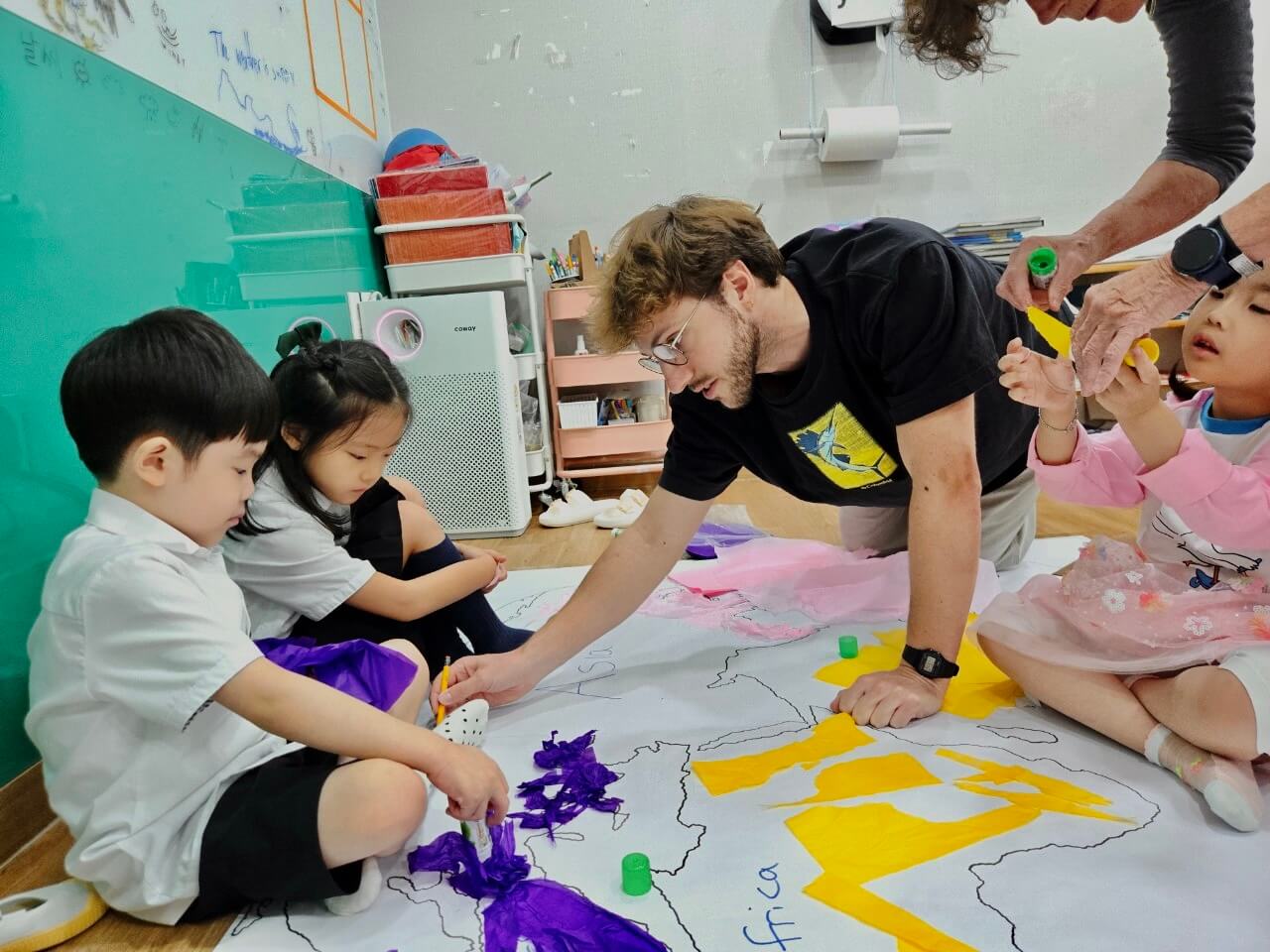
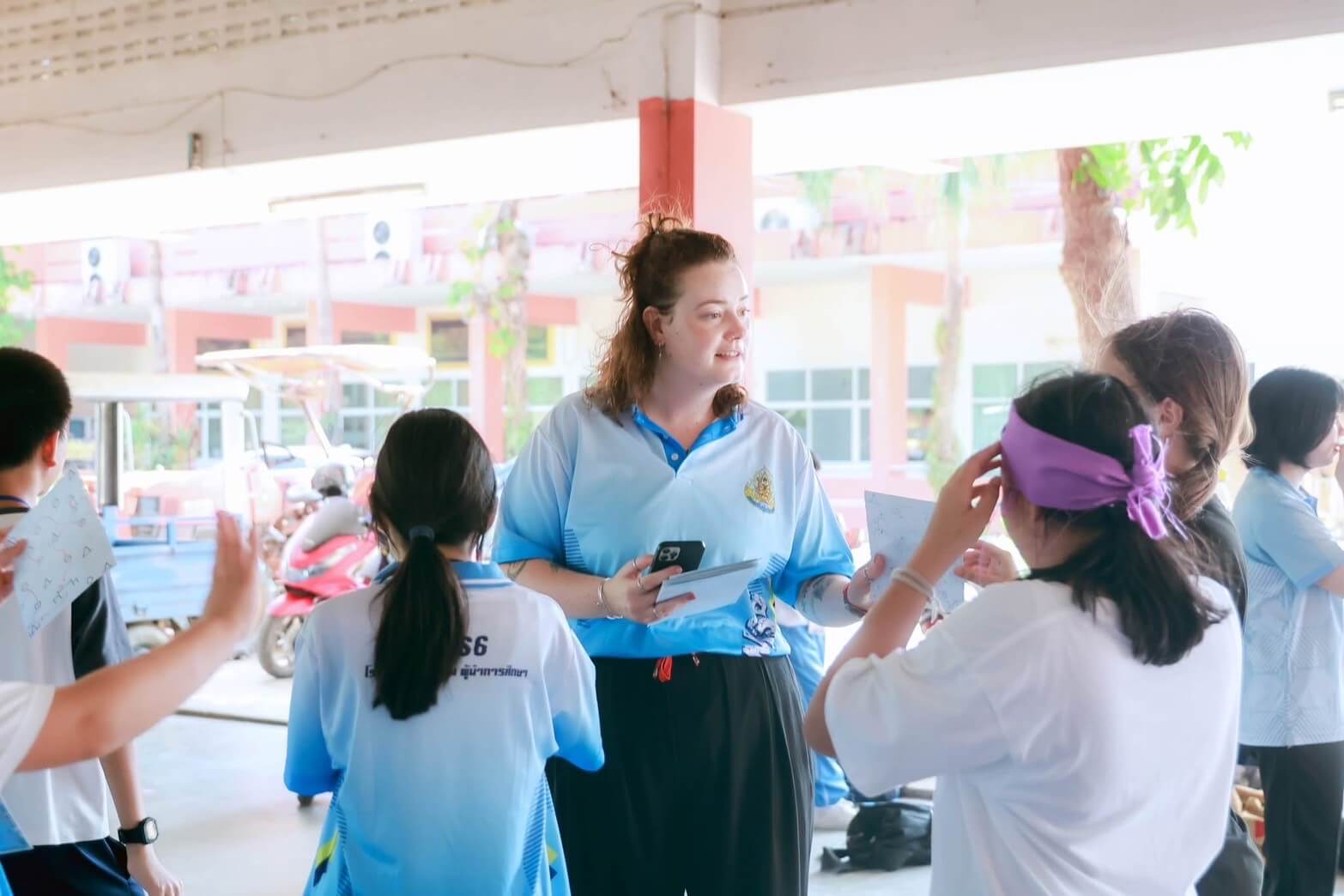
Teaching at public schools in Thailand is popular among entry-level and less experienced TEFL teachers. With around 15–20 teaching hours per week from Monday to Friday, teaching at public schools is similar to other countries.
However, while teachers may initially be overwhelmed by the idea of classrooms of 20–50 students, Thai students are generally fun, welcoming, and intrigued by foreign teachers. Lessons can focus on English grammar, maths and science, among other subjects.
Typical expectations of teaching in a public school in Thailand:
- A fixed schedule from Monday to Friday
- May and October semester start dates
- Around 15–20 hours of teaching per week, with other hours for lesson planning and marking assignments
- Monthly salaries ranging from ฿26,000–฿35,000 ($810–$1,095 / £602–£815)
Private language schools
Private schools or language schools are another common option, as they hire year-round and are open to new teachers. The quality can vary from one language school to another, with popular examples including ECC, Wall Street English, and BFITS.
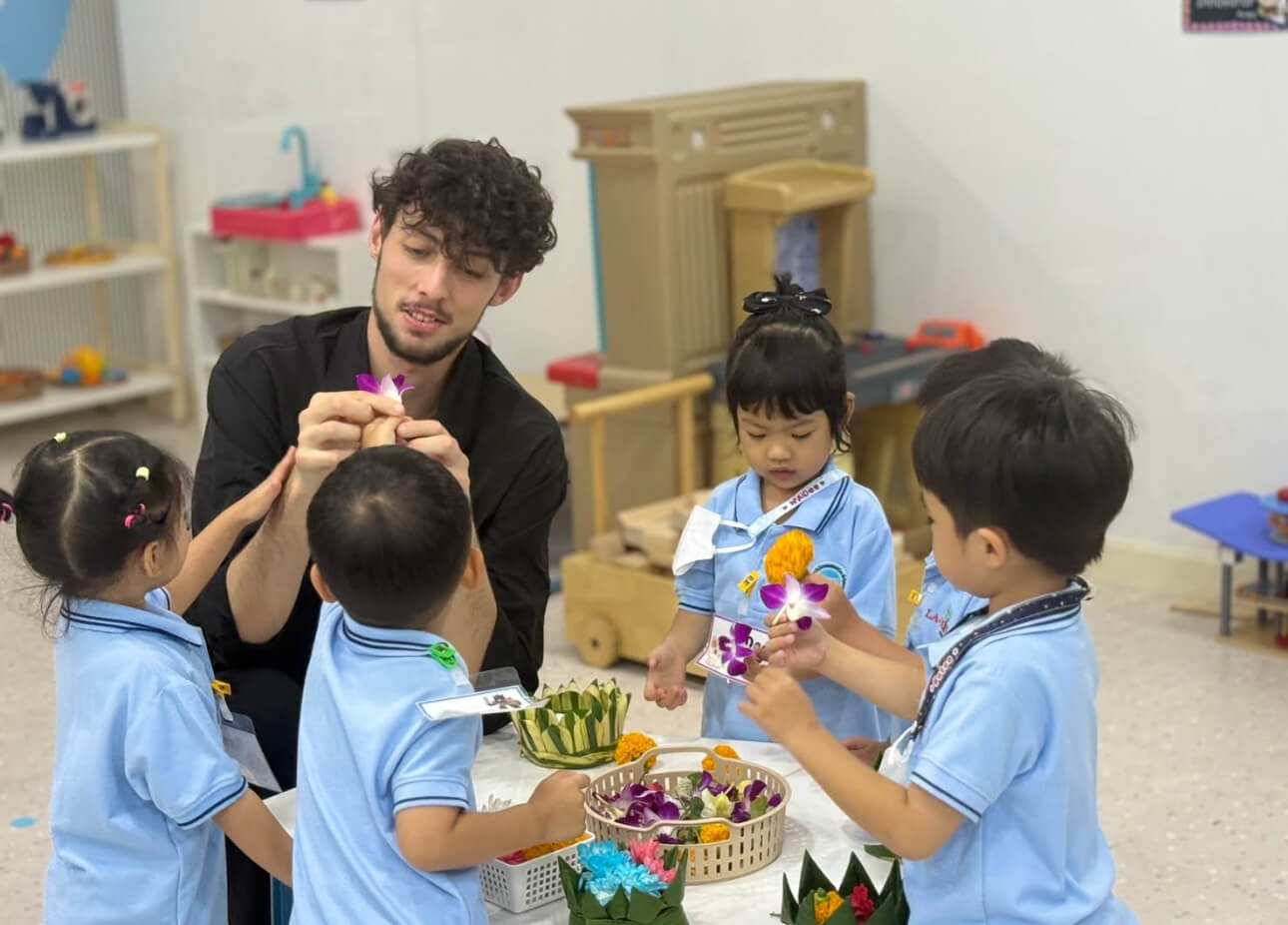
Often, students are already studying at a public school, but supplement their English education at a language school. Classes are smaller than at public schools, and topics can range from conversational skills to grammar, exam preparation, business English, and so on.
Typical expectations of teaching in a private language school in Thailand:
- Afternoon, evening, and weekend schedule
- Year round start dates
- Around 15–30 hours of teaching per week, with other hours for lesson planning and marking assignments
- Monthly salaries ranging from ฿30,000–฿50,000 ($935–$1,560 / £695–£1,160)
International schools
International schools offer the highest salaries and are best suited to experienced teachers or those with advanced TEFL training, education degrees and previous teaching experience. They also offer excellent classroom facilities and modern international curricula, with Thai and international students who have higher levels of English than at public schools.
Typical expectations of teaching in an international school in Thailand:
- A fixed schedule from Monday to Friday
- Thai and international students
- Around 25–30 hours of teaching per week in addition to lesson planning and marking assignments
- High requirements; qualified teachers should have a degree in education, advanced TEFL or teaching licence, and teaching experience
- Monthly salaries ranging from ฿60,000–฿100,000 ($1,840–$3,060 / £1,390–£2,310)
Private tutoring
Teachers can supplement their income through private tutoring. As a private tutor, you can teach general English to young learners, business English to adults, and more. You can set your own hourly rate, with many teachers earning around ฿500–฿1,000 ($15–$30 / £12–£24) per hour. Double check that your teaching contract doesn't explicitly forbid a second income before you start private tutoring.
Teaching English in Major Cities
From the islands of the south to the mountainous region of northern Thailand, there are so many places to consider as an English teacher.
Teaching English in Bangkok
As 2025's most visited city with over 30 million arrivals, Bangkok — or Krung Thep Maha Nakhon — is a global hub and also Thailand's cultural centre. From Buddhist temples to skyscrapers, street food to Michelin star restaurants, and thrifty markets to luxury shopping centres, Bangkok can cater to every budget whether you're looking for affordable living or a premium lifestyle.Despite the laid back Thai culture, Bangkok can be an intense city; many enjoy the sensory overload from its aromatic markets, noisy traffic, and nocturnal nature, but it isn't for everyone. Such a bustling city also offers career prospects for English teachers, with teaching jobs available in both public and private sectors.
While new teachers can find jobs here and embrace an exhilarating lifestyle, saving money can be difficult unless you're an experienced teacher at an international school in Bangkok. Affordability varies significantly, from affluent districts like Thonglor and Siam-Area to cheaper areas like Bang Na, On Nut, Lat Prao, and Pathum Thani.
Beyond teaching, you'll never encounter boredom in Bangkok. Watch the sunset behind Wat Arun, stroll through Benjakitti park, navigate Chinatown, marvel at Muay Thai in Rajadamnern Stadium, or lounge at Sukhumvit's rooftop bars. Want a city break? Bangkok is around 2 hours from archaic Ayutthaya and coastal areas like Hua Hin and Pattaya.
Read more: How to Teach English in Bangkok
Teaching English in Chiang Mai
While Bangkok is the global hub and capital of Thailand, Chiang Mai is its more relaxed equivalent. In Chiang Mai, you'll embrace a slower pace of life in the cooler, more rugged terrain of northern Thailand.
Unofficially dubbed as Thailand's vegan capital and digital nomad hub, Chiang Mai is still a hub for international travellers and expats. As a popular location that attracts tourists, travellers, and business, the demand for English is relatively high.
Its significantly lower population means that teaching positions are more competitive for English teachers than in Bangkok. As long as you have a TEFL certificate, bachelor's degree, and plan accordingly, you can find a rewarding teaching job in Chiang Mai.
After you clock out from work, you can embrace Thai culture by bartering at its famous weekend market, stroll through the idyllic old town, hike to mountain side temples or climb Thailand's highest peak — Doi Inthanon.Teaching English in Isaan
Not a city, but a large region consisting of 20 provinces bordering Cambodia and Laos, many TEFL teachers head to the northeast of Thailand — Isaan — to teach English.
In Isaan, the language is more similar to Vientiane in Laos than it is in Bangkok, with locals speaking a Thai-Lao dialect. In Buriram, many locals speak Northern Khmer!
As a developing region, teachers can embrace an authentic Thai experience unscathed by tourism. However, cities such as Khon Kaen, Nong Khai, Nakhon Ratchasima, and Ubon Ratchathani still attract expats and travellers who want an off-the-beaten-track experience.TEFL jobs come in the form of public, private, and international schools, and while salaries are low compared to central Thailand, the cost of living is even lower.
TEFL Org Teacher Stories
Want to know what it's really like to teach English in Thailand? Our student stories from TEFL graduates are the best way to get an idea of what living and working in the Land of Smiles is truly like!
Teacher James, Sakon Nakhon
"Thailand is one of the most beautiful countries with such a rich culture. Thailand is known as 'The land of smiles' as this is evident, especially the further you travel from the tourist tracks with Thai people always going out of their way to help you. Living and working in Thailand has allowed me to travel and see all the things I had dreamed of in England."
"I have been teaching in Thailand now for nearly 4 months and have just renewed my contract to stay at this school for the rest of the year. This has been one of the most amazing, exciting and fun experiences of my life. This qualification means that I can travel the world, not just taking what I can from a country but actually giving something back. Working as a TEFL teacher has allowed me to really make an impact on students' lives and enhance mine."
Discover more student stories from our TEFL graduates.
Ready to Teach English in Thailand? Get TEFL Certified Today
Before you take the leap, make sure you're TEFL certified. An internationally recognised TEFL certificate will help you stand out in Thailand's competitive teaching market and make you a more confident, effective teacher in the classroom.
Get started with our 120-hour course today.
More on Teaching English in Thailand
Frequently Asked Questions
Q. Is there an age limit for teaching abroad in Thailand?
There's no official age limit for teaching in Thailand, but schools and employers don't often employ teachers 60+ years old, which is the retirement age in Thailand. However, it's possible, and schools that teach specific subjects — like business English — value industry experience.
Q. Are English teachers in demand in Thailand?
English teachers are in high demand in Thailand, from popular locations such as Bangkok and Phuket to rural areas of the northeast. With a low English proficiency score but a booming tourist sector, Thailand needs English speakers to boost its growing economy.
Q. Is teaching English in Thailand hard?
Teaching requires effort, but our graduates at the TEFL Org find teaching in Thailand to be fun and extremely rewarding. Adapting to cultural differences can be a challenge, with teachers requiring patience and improvisation skills in Thailand's relaxed but disorganised lifestyle.
Q. Can I teach English in Thailand without a degree?
To teach English in Thailand as a full-time teacher, you need a bachelor's degree. This is essential to obtaining the work permit and opening a bank account. However, non-degree holders can teach English in Cambodia, or consider volunteering in Thailand.
Q. How to find teaching jobs in Thailand
There are many ways to find teaching jobs in Thailand, including teaching abroad programmes or internships, reaching out to recruiters, or applying directly to schools on job boards like the TEFL Org Job Centre or Dave's ESL Cafe.
Q. Do I need to speak Thai to teach abroad in Thailand?
No, you don't need to understand the Thai language to teach in Thailand. While a degree, TEFL, and English proficiency are enough, learning basic Thai phrases can improve your cultural experience.