








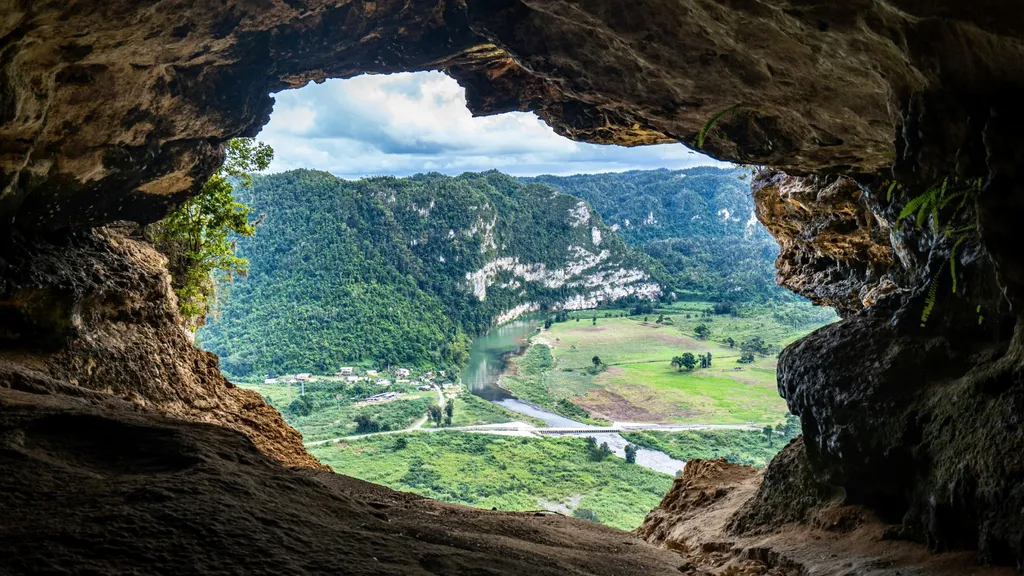
From tall mountains and rainforests to colourful streets and tropical beaches, Puerto Rico creates a striking scenery for photographers. But while this Caribbean island draws plenty of tourists for its natural scenery and stylish neighbourhoods, teachers can find plenty of career opportunities.
Both English and Spanish are official languages in this US territory, but Spanish is the main language in education. So while English speakers are common in Puerto Rico, there’s still plenty of room for improvement among locals. Read on for The TEFL Org’s guide to teaching English in Puerto Rico, from the job types, salary potential, visa process, and more!
Key Takeaways
- Spanish and English are official languages, but there’s still a high demand for English teachers.
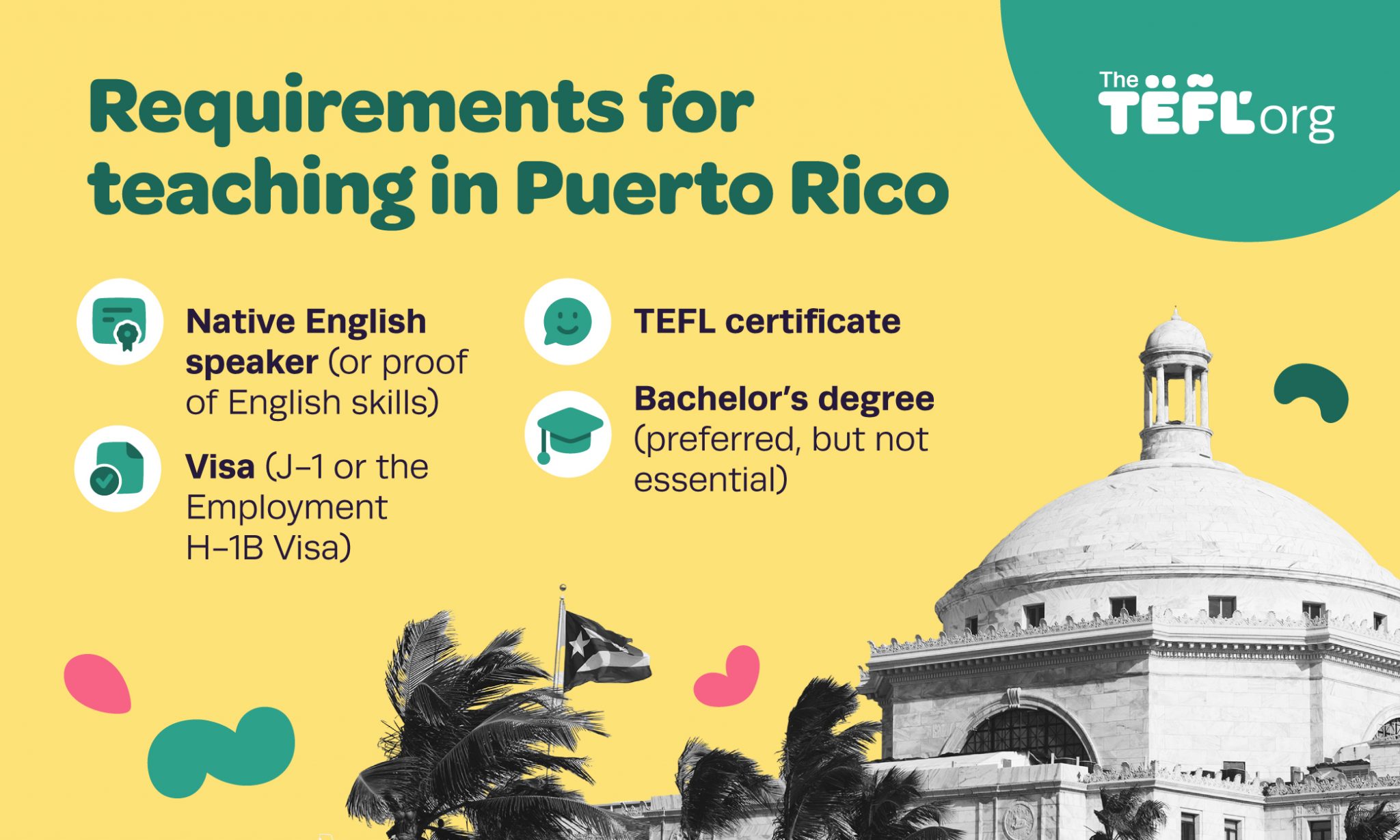
- Most teaching jobs in Puerto Rico require a TEFL certificate and a university degree. Employers prefer native speakers and previous teaching experience, but it’s not essential.
- Teaching jobs exist in public and private schools like language centres and international schools.
- The average English teacher earns around $1,200–$3,500 (£900–£1,880) but international school teachers can earn more.
- Puerto Rico is a US territory, so you’ll need either the J-1 Teacher Visa or the H-1B Employment Visa.
- Top locations include the capital city, San Juan, and Mayagüez.
Requirements for Teaching English in Puerto Rico
Although it’s a US territory where English is an official language, most Puerto Ricans speak Spanish at home. You’ll find that the demand for English teachers is strongest in the private sector, where students want to improve their English skills to study abroad or work in tourism or at international companies.Here’s everything you need to know about the requirements for teaching abroad in Puerto Rico.
Do I need a TEFL certificate to teach English in Puerto Rico?
Yes, you generally need a 120 hour TEFL certificate (at minimum) to teach English in Puerto Rico. Employers at private language schools often accept TEFL certificates, but public schools and international schools require a teaching licence.
English technically isn’t a foreign language in Puerto Rico, but many locals don’t have a high level of English. In fact, there are other non-English speaking countries with higher English proficiency levels than Puerto Rico, so a TEFL course is still essential in many cases.
Tip: Puerto Ricans are US citizens, and specialist teachers with qualifications in teaching Business English or Exam Preparation can earn much more teaching students looking to move to the mainland.
Can I teach English without a degree in Puerto Rico?
Yes, you can teach abroad without a degree in Puerto Rico, but it’ll limit your job search and salary potential.
A degree isn’t always required, but most employers prefer one. Public and international schools almost always expect a bachelor’s degree, but some private language schools are more flexible if you’ve studied a TEFL course.Tip: US teachers have unrestricted work rights in Puerto Rico, making it easier to teach English without a degree.
Do I need teaching experience to teach in Puerto Rico?
If you’ve studied the basics with a TEFL course, you can teach English without experience in Puerto Rico. But while some employers welcome inexperienced teachers, you might be limited to lower paying jobs.
If you don’t have teaching experience, you can always study a more in-depth training like the Level 5 TEFL course or gain in-class teaching practice.
Can I teach in Puerto Rico as a non-native speaker?
Yes, you can teach English as a non-native speaker in Puerto Rico, especially if you can speak Spanish. With a demand for English teachers, employers don’t often exclude non-native English speakers, just as long as they can prove their English skills with an IELTS, CEFR, or TOEFL certificate, for example.
Visa requirements for teaching English in Puerto Rico
Puerto Rico is a US territory, so you’re following US immigration laws. This is great news for American teachers who can teach and live in Puerto Rico more or less without any paperwork!
But if you’re not from the US, you’ll need a work visa. You can apply for either the J-1 Teacher Visa or the H-1B Employment Visa depending on your work status.
- J-1 Visa: This visa is for teachers who want to work in Puerto Rico (and the US) as part of a cultural exchange programme. It’s ideal if you’re planning to teach for a few years before returning home, but you’ll need a bachelor’s degree and 2 years of full-time experience in public education.
- Employment H-1B Visa: The H-1B is a work visa for people in specialist occupations including teaching. It’s for employment rather than exchange programmes — schools hiring you as an employee will sponsor this visa which is valid for up to 3 years.
To qualify for the visas and work permits, you’ll usually need:
- Proof of employment or programme placement with US/Puerto Rican sponsor
- Bachelor’s degree
- Clear criminal background check
- Proof of academic and professional qualifications or experience
- Completed application form and interview at a U.S. Embassy.
Download our guide to teaching English in Latin America
Everything you need to know about teaching English in Latin America and the Caribbean
Salary and Cost of Living
Puerto Rico is a developed territory, and it may surprise people that it has a relatively high cost of living. So how does the cost of living compare to teacher salaries, and can you expect to save up as a teacher?
How much can you earn teaching English in Puerto Rico?
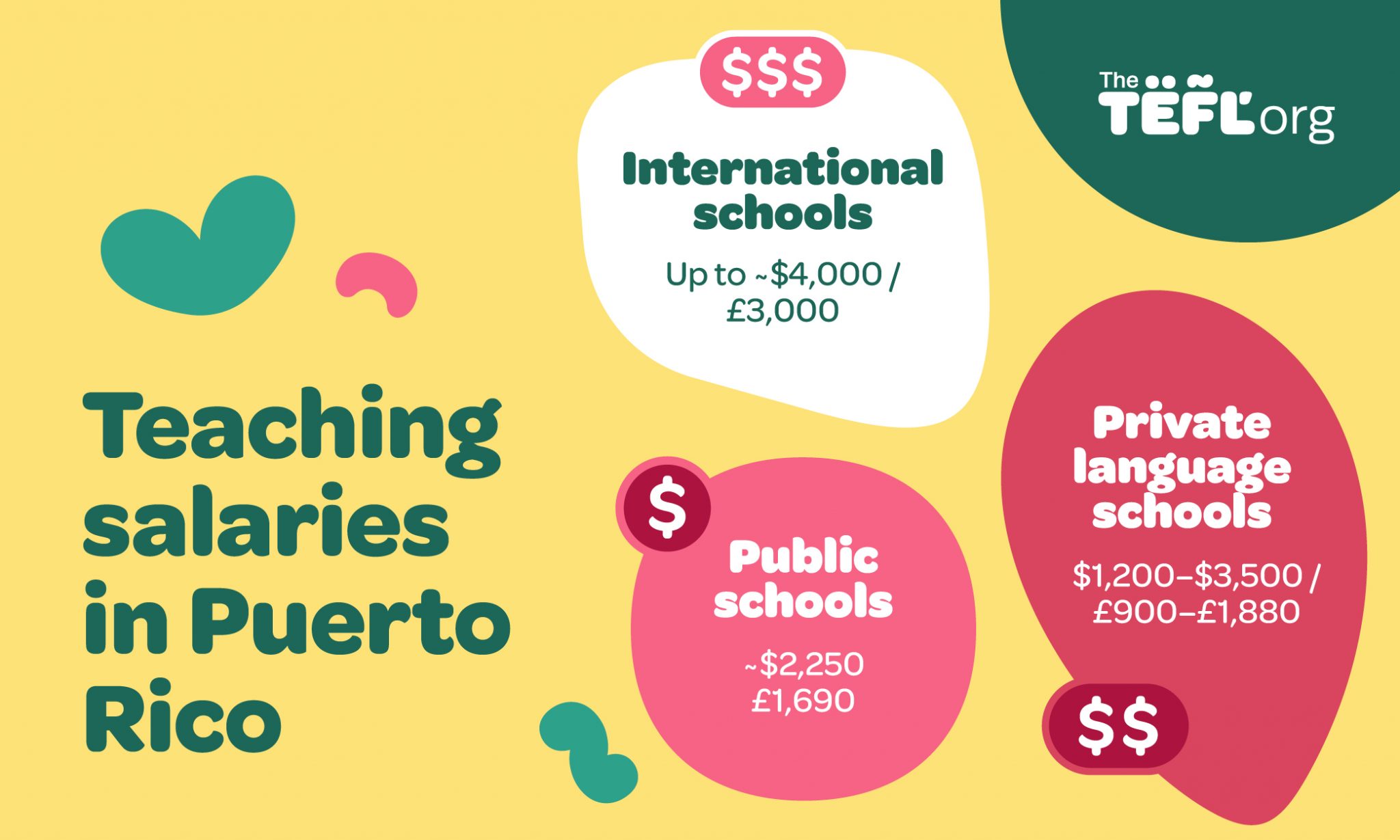
English teachers in Puerto Rico typically make around $1,200–$3,500 (£900–£1,880) per month depending on their experience and the type of job they have. Here’s how the salary compares across different schools in Puerto Rico:
- Public schools: Teachers at public schools in Puerto Rico earn a base salary of around $2,250 (£1,690) per month.
- Private language schools: Private language school salaries vary from one to another. English teachers can earn from $1,200–$3,500 (£900–£1,880) depending on experience, specialist skills, and qualifications.
- International schools: International school teachers with a master’s degree, teaching licence, and years of experience can earn up to $4,000 (£3,000) per month.
How much does it cost to live in Puerto Rico?
The cost of living in Puerto Rico has rocketed in the last decade, and now it ranks as one of the most expensive places in the Caribbean. On average, English teachers can expect to spend around $1,200–$2,000 (£900–£1,500) per month. But remember this is just the average, and you can choose to spend much less and live comfortably with the right spending habits.
Here’s how you can get more bang for your buck in Puerto Rico:
- Live outside the centre: Most of your budget goes towards housing, so making conscious choices on where to live can save you plenty of money. If you avoid the city centre and live on the outskirts, you can save around $300 (£225) per month.
- Look beyond San Juan: While San Juan might offer the most job opportunities and highest salaries, how much you earn might be cancelled out by its high cost of living.
- Enjoy free attractions: It doesn’t cost much to enjoy the natural beauty of Puerto Rico, whether you hike through El Yunque National Forest, surf in Rincón, or daydream at the Río Piedras Botanical Garden.
- Split the rent: Many teachers choose to live with other teachers or expats not just because it’s sociable, but because it also saves you plenty of money. A 1-bed apartment in San Juan, the capital city, averages at around ~$1,200 (£900) per month while a 3-bed apartment costs around ~$700 (£525) per person per month.
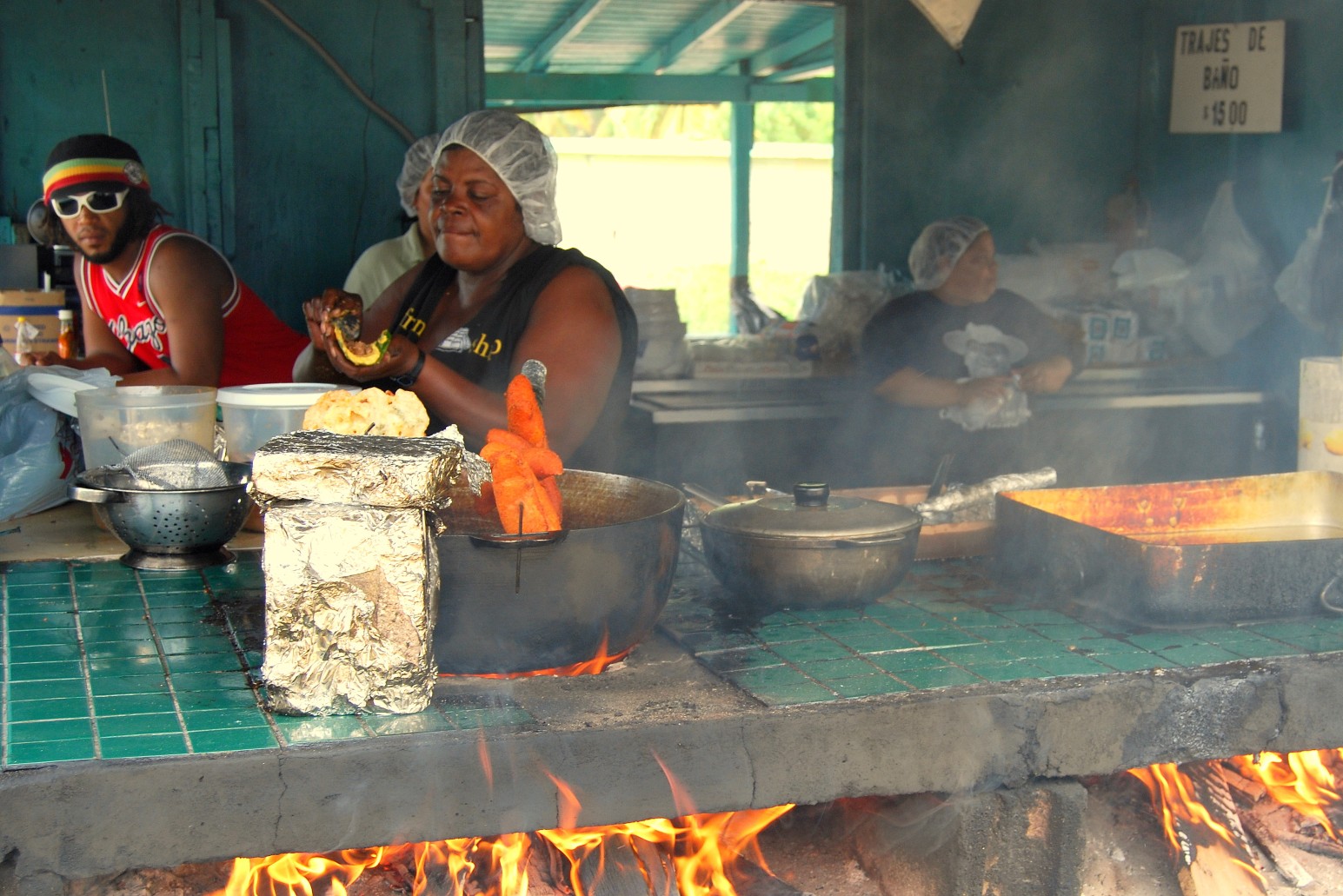
- Eat like a local: Eating local food isn’t just kind to your taste buds but also your wallet. Popular local delicacies like mofongo, asopao soup or lechón cost around $6–$10 (£4.50–£7.50), and shopping at local panaderías (bakeries) is also cheap.
| Restaurants | USD | GBP | EUR |
|---|---|---|---|
| Inexpensive restaurant meal | |||
| Domestic beer (0.5 litre) | |||
| Regular cappuccino | |||
| Water (0.33 litre) | |||
| Markets | USD | GBP | EUR |
| Regular milk (1 litre) | |||
| Loaf of white bread | |||
| Regular eggs (1 dozen) | |||
| Apples (1 kg) | |||
| Transportation | USD | GBP | EUR |
| One-way ticket (local transport) | |||
| Monthly pass (regular price) | |||
| Taxi start (normal tariff) | |||
| Gasoline (1 litre) | |||
| Utilities | USD | GBP | EUR |
| Electricity, heating, cooling, water, and garbage (for a regular apartment) | |||
| Regular prepaid monthly mobile tariff with 10GB+ data | |||
| Internet (60 Mbps, unlimited data, cable/ADSL) | |||
| Clothing and shoes | USD | GBP | EUR |
| Pair of jeans (Levis 501 or something similar) | |||
| Summer dress in a chain store | |||
| Nike running shoes (mid-range) | |||
| Men's leather business shoes |
English Teaching Jobs in Puerto Rico
It’s possible to get work teaching English in public schools if you have the right qualifications and experience, but TEFL teachers will find most job opportunities at private institutions like language schools or international schools. Although some university courses are taught in English, Spanish-taught courses are more common.
The school year runs from August–May, and teaching contracts usually last for 6 months to 1 year. You should aim to apply earlier in the year to secure interviews and allow time for your visa application.
You can apply for positions on job boards like The TEFL Org Job Centre — or you can look for work “boots on the ground” style if you’re from the US.
Public schools
Public school jobs in Puerto Rico are usually filled by qualified English teachers with 2–3 years of classroom experience, and many public school jobs expect teachers to hold a valid U.S. teaching licence. Teachers follow the Puerto Rican curriculum where English is taught as a core subject, but Spanish is the primary language of instruction (so Spanish skills are also valued).
What to expect at public schools in Puerto Rico:
- Monday to Friday schedule following the academic calendar
- Teaching English as part of the national curriculum
- Typically requires a teaching licence and at least two years of classroom experience
- Spanish language skills are beneficial for daily school life
Private language schools
Private language schools cater to adults, university students, and professionals looking to improve their English for work, study, or travel. Because of the variety in subjects, student ages, and entry requirements, it’s one of the most common routes for TEFL teachers. If you have specialist knowledge in areas like Business English or exam preparation, you’ll often find even more opportunities.
What to expect at language institutions in Puerto Rico:
- Evening and weekend classes
- Teaching adults, university students, teenagers, and young learners
- Year-round hiring and flexible entry requirements
- Teaching ESP (English for Specific Purposes) subjects like Business English and English for Academic Purposes
International schools
International schools are often the end-goal for ambitious TEFL teachers because they offer excellent salaries and benefits. These schools usually follow an American or British curriculum, teaching local and international students in English. While they offer the highest salaries and best benefits, they’re also difficult to break into, as most schools expect teachers to have a degree, teaching licence, and previous classroom experience.
What to expect at international schools in Puerto Rico:
- Monday to Friday schedule
- Teaching an international or another bilingual curriculum with English as a main language
- Small class sizes and excellent facilities
- Excellent salary and benefits but high entry requirements
Tip: Teachers with an American or Canadian accent are often preferred for TEFL roles, but don’t rule it out if you come from elsewhere.
Private tutoring
Private tutoring is a great way to supplement your income or build a freelance teaching business if you’re from the US. Many teach privately outside regular hours to students wanting to prepare for exams or just improve their English generally. Building a strong local network and collecting positive reviews can help you find regular clients.
What to expect as a private tutor in Puerto Rico:
- Flexible schedule around your availability — but potentially unstable hours
- Full-time or part-time depending on citizenship and visa
- Teaching one-to-one and small group lessons
- Business English, conversational English, and exam preparation are in demand
Teaching English in Major Cities
There are so many cities to consider on this picturesque island to launch your TEFL career.
Teach English in San Juan
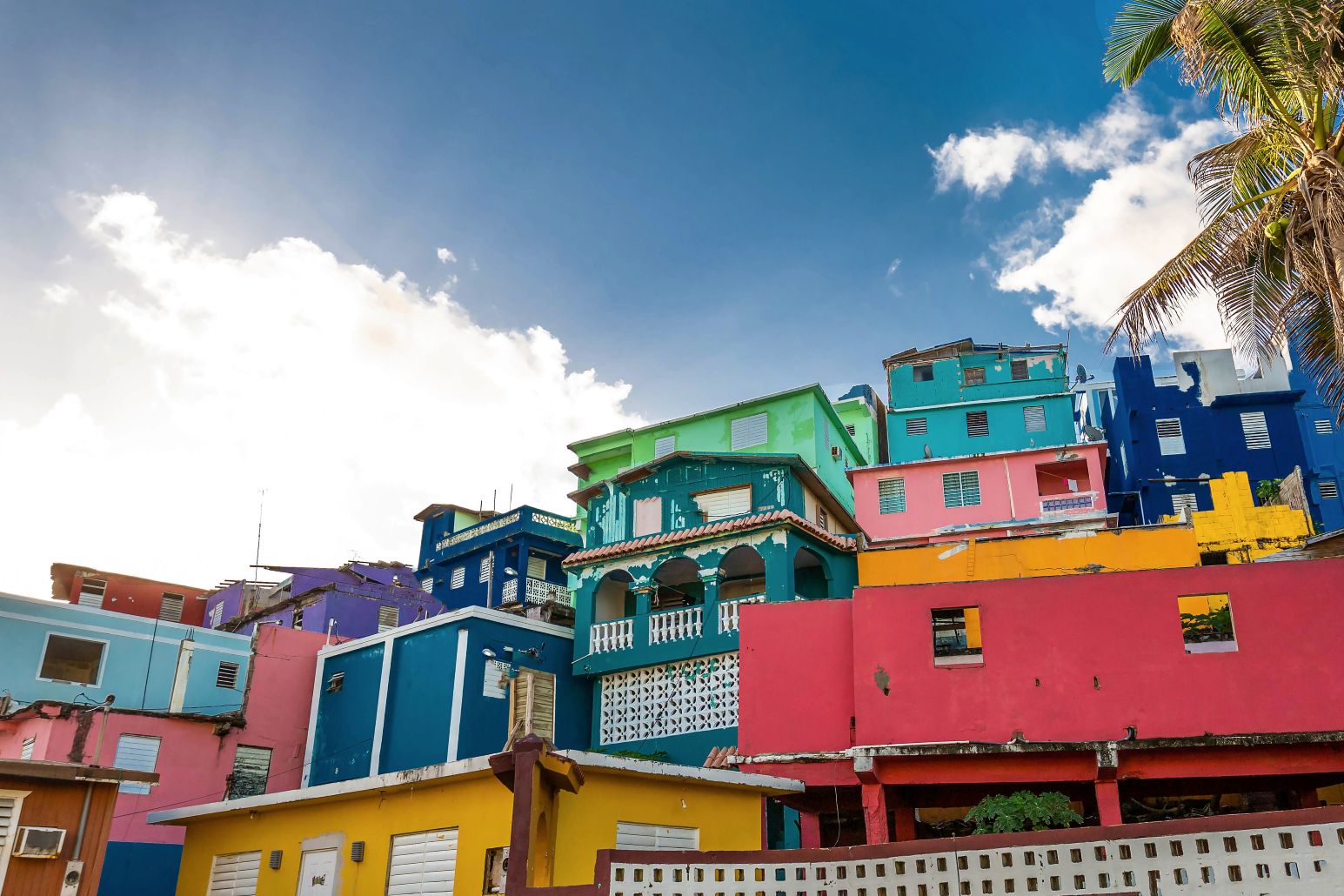
Caribbean beaches, 16th-century historic forts, and the centre of education — San Juan is the obvious choice for teaching English in Puerto Rico. From private language schools and international schools to universities and private tutoring, it’s the best place to build a TEFL career on the island whether you’re teaching young learners or business professionals.

When the school day ends, San Juan feels more like a Caribbean getaway than a capital city. Stroll through the colourful streets of Old San Juan, explore the 16th-century fortress of Castillo San Felipe del Morro, or grab a coffee at La Placita de Santurce before it transforms into one of the city’s liveliest nightlife spots. If you’re craving nature, El Yunque National Forest is less than an hour away, with rainforest trails, waterfalls, and sweeping mountain views.
Teach English in Ponce

Ponce offers a more relaxed alternative to the capital while still providing teaching opportunities in public and private schools. Locals call Ponce the Pearl of the South for its blend of colourful colonial architecture, lively plazas, and slower pace of life.
When you’re not teaching, you’re minutes away from local beaches, national parks, or an international airport should you want a weekend getaway. With a lower cost of living, your salary will also go further in Ponce than in the capital, and its compact size makes it easier to navigate.
Teach English in Mayagüez
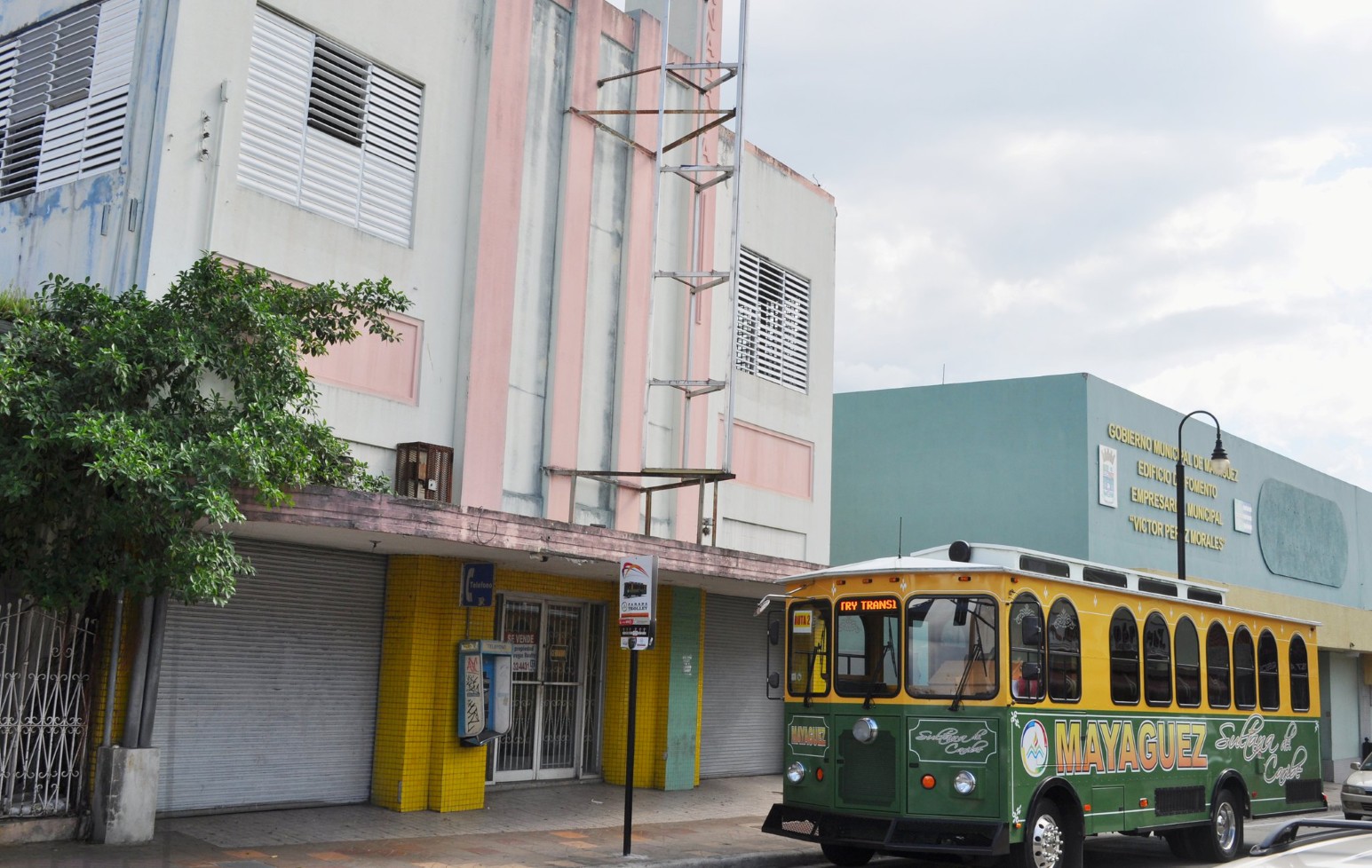
Lying on the western coast is Mayagüez, a charming city known as the City of Pure Waters because of its freshwater springs. Although it has a lower population and smaller TEFL market than the capital, it has one of the island’s biggest universities.
Outside the classroom, life revolves around the coast. Spend your evenings strolling through Plaza Cristóbal Colón, admire the city’s colonial architecture, or watch the sunset over the Caribbean. With beautiful beaches and a relaxed atmosphere on your doorstep, Mayagüez is ideal if you’re looking for a better work-life balance while teaching abroad.
Ready to Teach English Abroad? Don’t Forget Your TEFL Certificate
Before you start your teaching English abroad journey, you’ll need to be TEFL certified. While you can find some of the best TEFL jobs around the world with a TEFL certification, it offers much more than that. By studying a TEFL course, you’ll develop classroom management, lesson planning, and problem solving skills in the English as a second language classroom, and so much more.
So you won’t just get access to more teaching opportunities, but you’ll also feel confident at school. Get started today with our 120-hour TEFL course.
Frequently Asked Questions
Q. Do schools in Puerto Rico teach English?
Yes, schools in Puerto Rico teach English, but most lessons are taught in Spanish. Spanish language skills are much better than English skills on the island.
Q. Can I teach in Puerto Rico if I’m not American?
Yes, you can teach English in Puerto Rico if you’re from outside the US. You’ll need a work visa, but employers might be more inclined to hire US teachers because they don’t need a visa to work in Puerto Rico.
Q. How much do teachers earn in Puerto Rico?
English teachers can earn from $1,200–$4,000 (£3,000) per month depending on their experience and job type. Generally, international schools will offer the highest salaries for teachers, but teachers at public and language schools can still earn a relatively good salary.