











The Land of Fire and Ice is a hive of hot springs, dormant volcanoes, black sand beaches, and chilly glaciers. With incredible landscapes, UNESCO World Heritage Sites, and plenty of English speakers, Iceland is known more for its travel opportunities than its TEFL market - which can be hard to break into.
But a career in teaching English in Iceland isn’t out of the question if you have the right qualifications. Read on for The TEFL Org’s guide on teaching English in Iceland, from teaching jobs and salary expectations, to visa processes, and more.
Key Takeaways
- Icelandic is the official language, but English language skills are high, so demand for English teachers is low.
- The requirements are very high for teaching English in Iceland, including a TEFL, bachelor’s degree, and experience is preferred.
- English teachers in Iceland earn from 300,000 kr.–500,000 kr. ($2,415–$4,030 / £1,805–£3,015) per month.
- Public school jobs are typically reserved for qualified English teachers who can speak Icelandic, so most TEFL jobs come in private language schools and international schools.
- EU teachers don’t need a visa to work in Iceland, but non-EU teachers will need an employer to sponsor their work permit.
Requirements for Teaching English in Iceland
English is widely spoken in Iceland. Not only do students start learning it from an early age in school, but English is a part of everyday life. Some teachers claim that students speak solely in English on the playground, and that English digital media poses a threat to the country’s native language.
That's convenient for visitors, but if you're hoping to teach English, it means competition for jobs is high. Most Icelanders already have a strong command of English, so teaching opportunities are limited but attract plenty of qualified applicants.
Do I need a TEFL certification to teach English in Iceland?
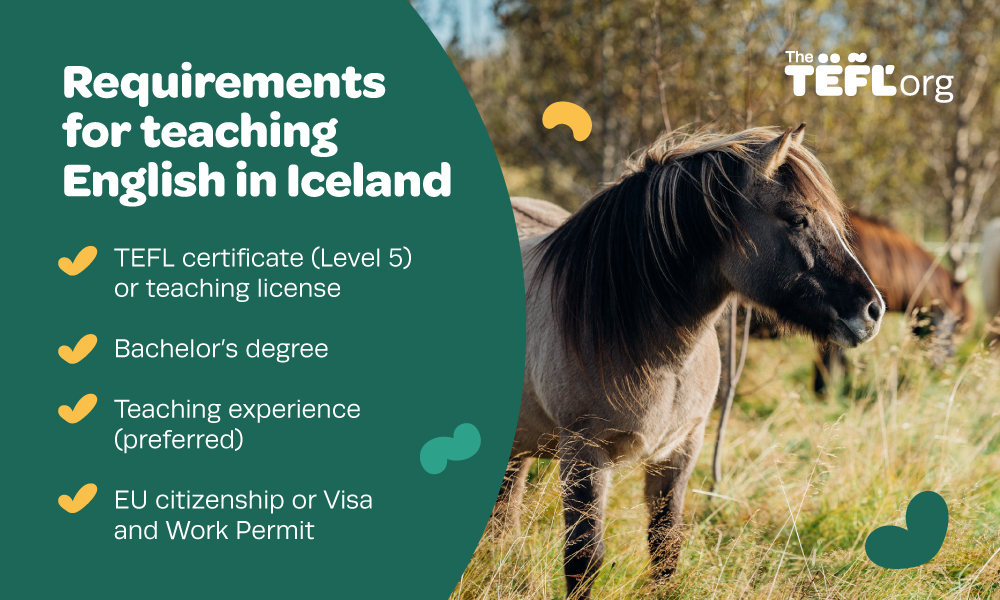
Yes, you need a TEFL certificate to teach English in Iceland. The standard of education is high in Iceland, and most students will learn English with a specific goal in mind.
Most employers seek a 120-hour TEFL course or 250-hour Level 5 TEFL course, but if you want to teach students with specific goals, like professionals or university applicants, an advanced qualification in Business English or academic English can strengthen your application.
Can I teach English in Iceland without a degree?
You’ll need a university degree to teach in Iceland. English is a mandatory subject in Iceland, so there’s no shortage of English speaking graduates in Iceland.
But you can still teach English abroad without a degree in other European countries.
Can I teach English in Iceland without experience?
While it’s possible to teach English without experience in Iceland, schools generally favour teachers with prior experience. But it’s not the be all and end all, having a bachelor’s or master’s degree, teaching qualification, and EU citizenship will boost your chances of finding a teaching job at a private language center or as a private tutor regardless of experience.
On the other hand, non-EU teachers might struggle to get the right visa to work in Iceland without experience unless they have exceptional qualifications.
Visa requirements for teaching English in Iceland
Iceland isn’t a member of the EU, but it’s a member of the European Economic Area (EEA), which is great news for EU teachers (who don’t need a visa to work here).
Non-EU teachers need to get a work visa and a residence permit to work in Iceland. But the lengthy paperwork makes it harder to convince employers to hire non-EU teachers when EU teachers are readily available.
But it’s not impossible. If you find a job teaching English in Iceland as a non-EU teacher, your employer will likely sponsor your visa and work permit application, but you’ll also need to provide the following:
- Show proof of employment contract
- Clear criminal background check
- Proof of qualifications, including degree and TEFL or teaching licence
- Health insurance
Download our guide to teaching in Europe
Everything you need to know about teaching English in Iceland
Salary and Cost of Living
Iceland consistently ranks as one of the most expensive countries in the world, but don’t stop reading just yet – teachers earn very high salaries compared to other countries. Here’s everything you need to know about how much you can earn and save as a teacher in Iceland.
How much can you earn teaching English in Iceland?
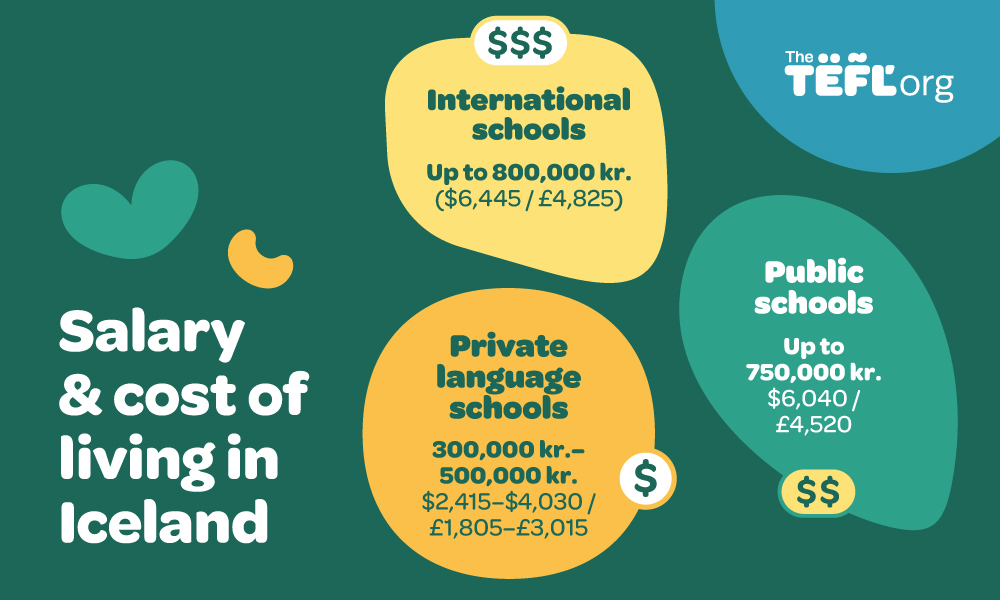
English teachers in Iceland can earn around 300,000 kr.–500,000 kr. ($2,415–$4,030 / £1,805–£3,015) per month depending on their school type and experience. While private school jobs tend to pay more in other countries, it’s different in Iceland. Iceland has one of the highest education investments in the world, and this leads to high salaries for public school teachers.
Here’s how salaries compare across teaching jobs in Iceland:
- Public school: Public school teachers earn up to 750,000 kr. ($6,040 / £4,520), but requirements are high – teachers need a teaching licence and fluency in the local language.
- Private language school: Private language schools are typically more flexible but offer salaries averaging between 300,000 kr.–500,000 kr. ($2,415–$4,030 / £1,805–£3,015). Salaries aren’t always stable, as some teachers get paid per hour instead of monthly, and teachers with skills like Business English or exam preparation can increase their earnings in the market.
- International schools: Alongside public schools, international school teachers earn a very high salary – potentially up to 800,000 kr. ($6,445 / £4,825) per month at elite institutions.
| Restaurants | ISK | USD | GBP |
|---|---|---|---|
| Inexpensive restaurant meal | |||
| Domestic beer (0.5 litre) | |||
| Regular cappuccino | |||
| Water (0.33 litre) | |||
| Markets | ISK | USD | GBP |
| Regular milk (1 litre) | |||
| Loaf of white bread | |||
| Regular eggs (1 dozen) | |||
| Apples (1 kg) | |||
| Transportation | ISK | USD | GBP |
| One-way ticket (local transport) | |||
| Monthly pass (regular price) | |||
| Taxi start (normal tariff) | |||
| Gasoline (1 litre) | |||
| Utilities | ISK | USD | GBP |
| Electricity, heating, cooling, water, and garbage (for a regular apartment) | |||
| Regular prepaid monthly mobile tariff with 10GB+ data | |||
| Internet (60 Mbps, unlimited data, cable/ADSL) | |||
| Clothing and shoes | ISK | USD | GBP |
| Pair of jeans (Levis 501 or something similar) | |||
| Summer dress in a chain store | |||
| Nike running shoes (mid-range) | |||
| Men's leather business shoes |
How much does it cost to live in Iceland?
Iceland has some of the highest living costs in the world, especially in the capital city, Reykjavík. The average person spends around 180,000 kr.–200,000 kr. ($1,450–$1,610 / £1,085–£1,205) per month excluding rent. Rent for a 1-bed apartment ranges from 230,000 kr.–290,000 kr. ($1,850–$2,335 / £1,385–£1,750) per month.
But these are average figures, and you can stretch your salary by adopting these budgeting tips:
- Share accommodation: Splitting rent with roommates can make a massive difference. Rent for a 3-bed apartment averages at around ~125,000 kr. ($1,005 / £750) per person, per month.
- Shop locally: Heavy reliance on imported goods is a big factor in Iceland’s high living costs. Try to buy local goods and food to keep costs down.
- Use public transport: If you live in the capital, you can use public transport to get around. A monthly pass costs around 11,000 kr. ($88 / £65) and gives you access to its extensive bus network.
- Embrace outdoor activities: Iceland is full of natural wonders you can enjoy free. Consider spending some of your free time by hiking or visiting nearby UNESCO World Heritage sites like Thingvellir National Park.
English Teaching Jobs in Iceland
For non-English speaking countries, Iceland has one of the highest English scores in the world which means that teaching opportunities for foreign teachers are limited, especially in the public sector.
But there are TEFL jobs in the private sector. If you have enough experience to find a job at an international school or niche qualifications (like Business English or Exam Preparation) to work at private language schools, you can find teaching jobs in larger cities like Reykjavík.
While you can find work through local job boards like The TEFL Org Jobs Centre, you can contact schools directly and interview in-person if you’re an EU citizen.
Public Schools
Public school jobs offer high salaries and benefits, but they’re uncommon for foreign English teachers. English is a mandatory subject in the national curriculum, and the school year runs through August–June, and there’s a greater emphasis on holistic activities and student-independence, with teacher evaluations favoured over high-stakes testing like exams.
What to expect at public schools in Iceland:
- Teaching children and teenagers within the national curriculum
- Emphasis on holistic activities and student independence
- High requirements including a teaching licence and Icelandic language fluency
Private Language Schools
Private language schools offer the easiest path into teaching in Iceland for TEFL teachers because they usually have more flexible requirements and hire year-round. Lessons are often geared towards students with a specific goal in mind, like university students, tourism workers, or business professionals looking to improve their English for work, so experience in niche subjects is useful.
What to expect at private language schools in Iceland:
- Evening and weekend classes
- Smaller class sizes, often focused on adult learners
- Teaching specialist subjects like business English or IELTS exam preparation
International Schools
Iceland has relatively few international schools, but job opportunities exist especially in Reykjavik. International schools typically cater to foreign students from expat families who want to learn from an international curricula, and these jobs offer excellent salaries and benefits, but requirements are high.
What to expect at international schools in Iceland:
- Small class sizes
- Teaching international students from a British, American, or International Baccalaureate (IB) curriculum
- Excellent professional growth, salary, and benefits including housing assistance, health insurance, and completion bonuses
- Requirements and expectations are high
Teaching English in Major Cities
Here are the most popular spots for teaching English in Iceland.
Teach English in Reykjavík
The world’s northernmost capital city with a small population and a progressive society, Reykjavik is an urban anomaly. Sunlight ranges from 4–5 hours in the winter to 22 hours in the summer – meaning you can enjoy your midnight cocktails in the sun. Its geography and sustainability efforts make it the only capital city in the world that generates its electricity and heating entirely from renewable sources.

Reykjavik is where you’ll find most English speakers, language centers, and international schools. As the business hub of the country, students need English teachers to improve their workplace English skills, whether they work in tourism & hospitality or at an international company.
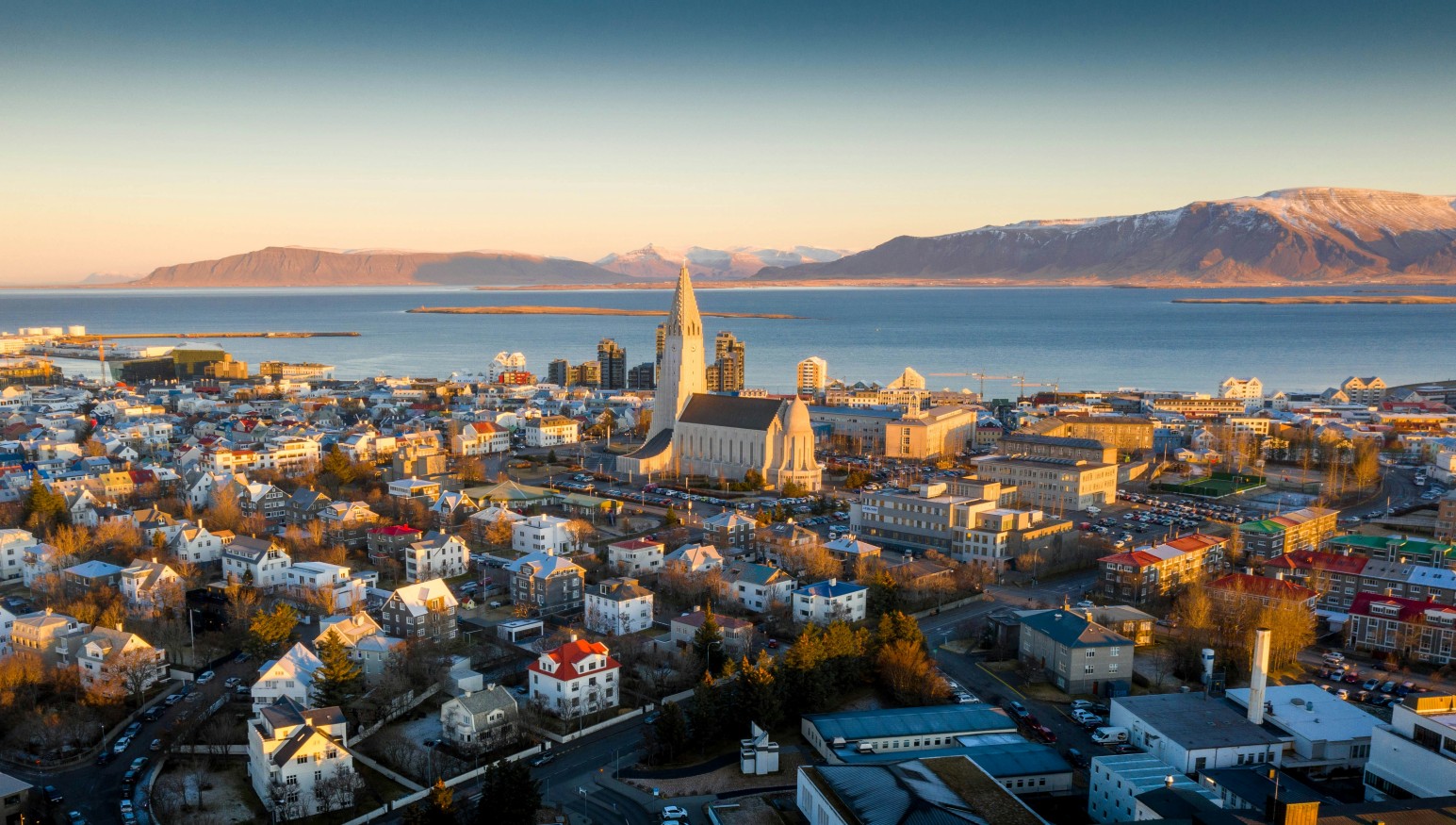
When you’re not teaching English, there’s plenty to do in this compact city. Head to the Settlement Exhibition or the Icelandic Phallological Museum for Icelandic culture and history. Or, if you’re looking to up the tempo, go whale watching or take the coastal walk to the Grótta Lighthouse on the Seltjarnarnes peninsula. On the weekend, you can even head up to see the northern lights!
Ready to Teach English Abroad? Don't Forget Your TEFL Certificate
Teaching English as a foreign language isn't easy, but a TEFL certificate will help you become a skilled and confident teacher in the classroom. Although a TEFL course is a common requirement that employers look out for, it's not without good reason. By studying an online TEFL course, you'll learn about classroom management techniques, lesson planning, learning styles, and so much more.
Get started today with our 120-hour TEFL course to launch your career teaching abroad!
Frequently Asked Questions
Q. Are English teachers in demand in Iceland?
English teachers aren't in high demand in Iceland like in other countries. However, teaching jobs exist for TEFL teachers at private language schools and international schools, especially for those with EU passports.
Q. Can I move to Iceland to teach English?
You can teach English in Iceland, especially if you have a TEFL, degree, and an EU passport. Many schools (especially in the private sector) seek native English speakers with previous teaching experience, and having an EU passport will increase your job opportunities.
Q. How much can you earn as a TEFL teacher in Iceland?
The average monthly salary for English teachers in Iceland ranges from 300,000 kr.–500,000 kr. ($2,415–$4,030 / £1,805–£3,015) per month. Teachers can earn more at public or international schools, but private language schools are the most accessible path for TEFL teachers.
Q. Can I teach English in Iceland without a degree?
You need a degree to teach English in Iceland. English speakers are common, which means that the standards of teaching are even higher than in other European countries.
Q. Can I teach in Iceland as a non-native speaker?
Yes, you can teach English as a non-native speaker, especially if you're an EU citizen. However, you'll need a degree, TEFL or teaching licence, and proof of English proficiency, and your job hunt may be limited to private schools.