









From tango on the streets of Buenos Aires to the glaciers of Patagonia, Argentina has so many reasons to top someone’s travel list. But for English teachers, there’s potential to set up a rewarding career in this South American hub.
Wages aren’t high in Argentina, but neither is the cost of living. So while Argentina isn’t the go-to location for teachers after the highest salaries, it’s the perfect place for those chasing a comfortable lifestyle in a lively culture. Read on for The TEFL Org’s guide to teaching English in Argentina, from the requirements, salaries, top locations, and more!
Key Takeaways
- Argentina’s English levels are higher than most Latin American countries, but there’s still a high demand for English teachers.
- Requirements for teaching in Argentina are generally flexible; it’s a popular location for non-degree holders and non-native speakers (as long as you have a TEFL certificate).
- TEFL teachers earn around $AR 750,000–1.8 million ($500–$1,200 / £370–£890) per month, or $AR 3–3.7 million ($2,000–$2,500 / £1,485–£1,855) at international schools.
- Teaching jobs come through language assistant programmes, private language schools, and international schools.
- Teachers need a temporary residence visa to work in Argentina legally — but some employers might want you to work on a tourist visa (which is illegal).
- Top locations include Buenos Aires, Córdoba, and Mendoza.
Requirements for Teaching English in Argentina
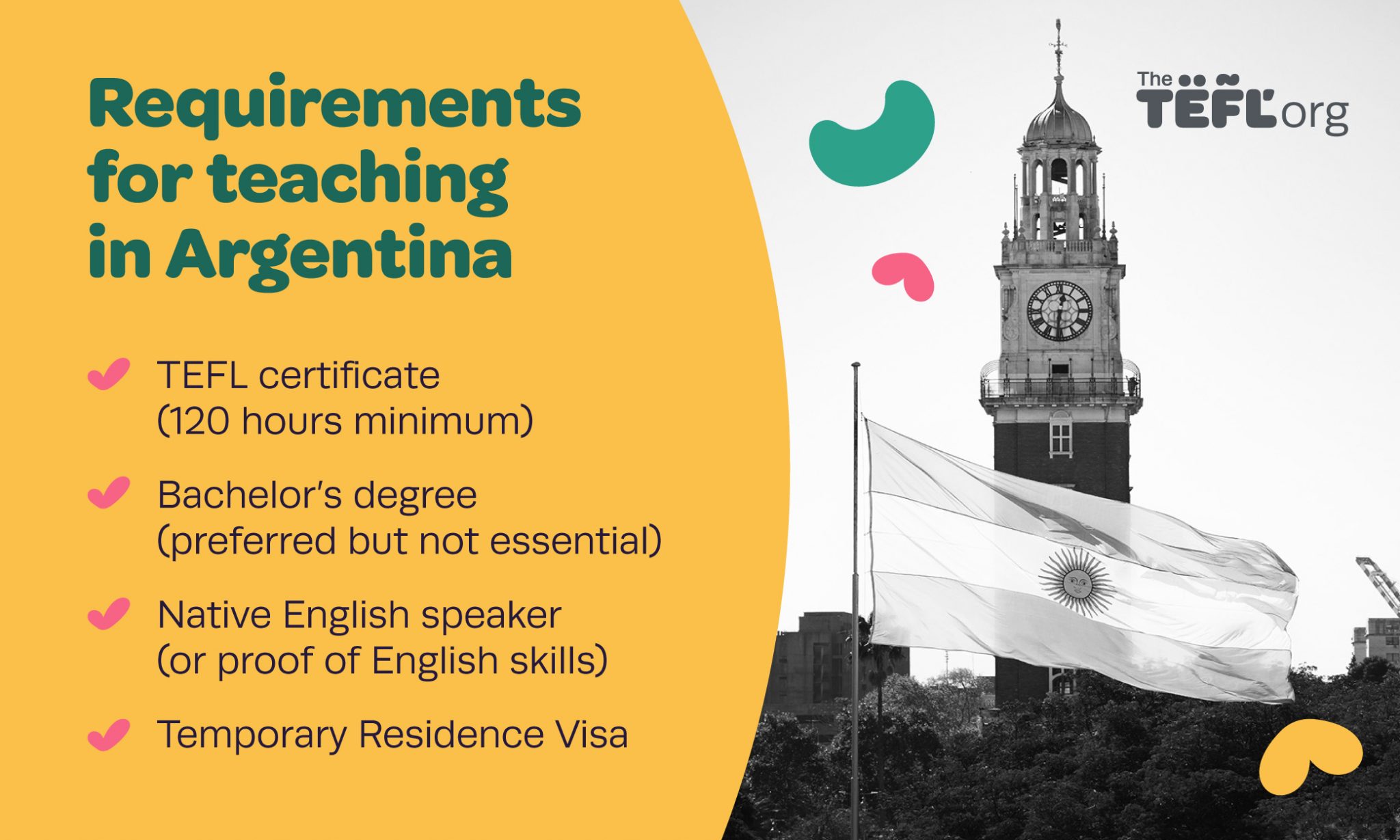
Argentina’s English proficiency score is high, especially compared to the rest of South America, but the teaching requirements are still pretty flexible if you have a TEFL certificate.
The hiring process can be quick and informal in Argentina. Some schools offer six-month contracts and staff turnover is high, so employers make decisions quickly. Interviews are usually short, and if you’re a good fit, you could be offered the job on the spot — but you’ll need to make a good impression with your CV first.
Do I need a TEFL certificate to teach English in Argentina?
It’s not a legal requirement, but you’ll struggle to find a teaching job without a TEFL certificate in Argentina. Most employers require a 120-hour TEFL certificate because it shows that you’ve studied the basics, from managing large classrooms, teaching grammar, lesson planning, and so much more.
Can I teach English without a degree in Argentina?
Generally, most employers prefer teachers who are graduates, but it’s still possible to teach abroad without a degree in Argentina, especially at private language schools (or language centres).
While not having a degree will limit your job opportunities and how much you can earn, you can still find work, especially if you’re TEFL certified or have previous experience.
Can I teach in Argentina without experience?
Yes, you can teach English without experience in Argentina (just as long as you’re TEFL certified). Most entry-level teaching jobs come through private language schools, volunteer roles, or private tutoring.
But similar to the degree requirement, most employers prefer teachers who have experience. It’s not essential, but you’ll have better luck searching for higher paying jobs in Argentina with experience under your belt.
Can I teach in Argentina as a non-native speaker?
If you’re a non-native English speaker, you can still find teaching jobs in Argentina. You’ll need to be able to prove your English fluency with an IELTS, TOEFL, CEFR, or other certificate (like a degree from an English-speaking university).
Again, Argentina is generally quite flexible with hiring as long as you’ve learned how to teach English as a foreign language.Visa requirements for teaching English in Argentina
Teachers need a work visa or Temporary Residence Visa (category 23A or 23E) to teach in Argentina legally. But the sad reality is that many schools don’t sponsor your visa, and they might ask you to work on a tourist visa (which is illegal).
To get the right visa, you’ll need to find a job first with a school that’s enrolled in RENURE (led by the immigration office), which allows them to sponsor the work permit and visa of foreigners.
You’ll also need to provide the following documents:
- Clear criminal background check
- Proof of signed contract with an Argentinian employer
- Proof of academic and professional qualifications (degree, TEFL certificate, etc.)
- Birth certificate
Tip: Ask whether a school can sponsor your visa before accepting a job. It could save you time (and avoid any awkward surprises further down the line).
Download our Teaching English in Latin America guide
Everything you need to know about teaching English in Latin America
Salary and Cost of Living
South America is generally more affordable than English-speaking countries like the US, UK, or Australia, but that doesn’t mean that you shouldn’t plan your budget carefully.
Teaching salaries might not be as high as you anticipated, so here’s everything you need to know about how much you can earn and spend in Argentina.
How much can you earn teaching English in Argentina?
TEFL teachers can typically earn between $AR 750,000–1.8 million ($500–$1,200 / £370–£890) per month. Like we said, teaching in Argentina isn’t a get-rich-quick scheme, but you can still live comfortably on a teacher’s salary.
Many teaching jobs are part-time, so it’s common for teachers to combine work at private language schools with private tutoring or teaching English online to boost their income.
Teachers at international schools in Argentina can earn up to $AR 3–3.7 million ($2,000–$2,500 / £1,485–£1,855) per month, but these teachers usually have master’s degrees (often in education or English) and years of teaching experience.
Tip: Budget for inflation — the Argentinian peso is an unstable currency.
How much does it cost to live in Argentina?
Argentina has become increasingly popular with expats, and living costs have risen as a result. Even so, it’s still around 50–65% cheaper than the UK or US.You can expect to spend around $AR 1.8–2 million ($1,200–$1,350 / £900–£1,000) per month on rent, food, entertainment, and other things. So it’s not exactly cheap, especially if you’re living on an entry-level teacher’s salary.
Here’s how you can stretch your peso while living in Argentina:
- Be flexible with location: Look beyond Buenos Aires if you have to. While the capital city is an amazing place to teach, it’s more expensive than cities like Córdoba or Mendoza. While salaries might be lower, you might save around $AR 600,000 ($400 / £300) per month.
- Buy a reusable water bottle: You can drink tap water in Argentina, so buy a reusable bottle instead of buying plastic water bottles over and over. You can fill up on water in public spaces, too.
- Shop like a local: Fashionable brands, imported foods, and even foreign electrical goods will set you back far more than if you learn to live with what is produced locally.
- Eat like a local: Eating local food isn’t just a way to embrace the culture — it can also spare your wallet. You can find dishes at bodegones (local eateries), carritos (street carts), panaderías or confiterías (bakeries) for around $AR 7,500 ($5 / £3.70).
- Use public transport: Cities like Buenos Aires are huge, so buy a SUBE card to pay as you go on public transport. You’ll receive discounts the more you use it!
- Split the rent: Housemates can help you hit the ground running with socialising and also save money. Rent for a 1-bed apartment costs ~$AR 635,000 ($425 / £315), or ~$AR 450,000 ($300 / £220) per person in a 3-bed apartment.
| Restaurants | ARS | USD | GBP |
|---|---|---|---|
| Inexpensive restaurant meal | |||
| Domestic beer (0.5 litre) | |||
| Regular cappuccino | |||
| Water (0.33 litre) | |||
| Markets | ARS | USD | GBP |
| Regular milk (1 litre) | |||
| Loaf of white bread | |||
| Regular eggs (1 dozen) | |||
| Apples (1 kg) | |||
| Transportation | ARS | USD | GBP |
| One-way ticket (local transport) | |||
| Monthly pass (regular price) | |||
| Taxi start (normal tariff) | |||
| Gasoline (1 litre) | |||
| Utilities | ARS | USD | GBP |
| Electricity, heating, cooling, water, and garbage (for a regular apartment) | |||
| Regular prepaid monthly mobile tariff with 10GB+ data | |||
| Internet (60 Mbps, unlimited data, cable/ADSL) | |||
| Clothing and shoes | ARS | USD | GBP |
| Pair of jeans (Levis 501 or something similar) | |||
| Summer dress in a chain store | |||
| Nike running shoes (mid-range) | |||
| Men's leather business shoes |
English Teaching Jobs in Argentina
Employers often prefer to interview candidates in person and make hiring decisions quickly, so some teachers look for work “boots on the ground”. It’s worth arranging several interviews if you’re hoping to compare job offers. But if you’re adamant about finding a job before arriving, you can check out The TEFL Org Job Centre.
The school year starts in late February or early March, but staff turnover is high, which means you can find English teaching jobs in Argentina throughout the year. If you’re not ready to commit to a long-term role, volunteering is also a good way to gain experience and get a feel for life in Argentina before applying to paid jobs.
Public schools
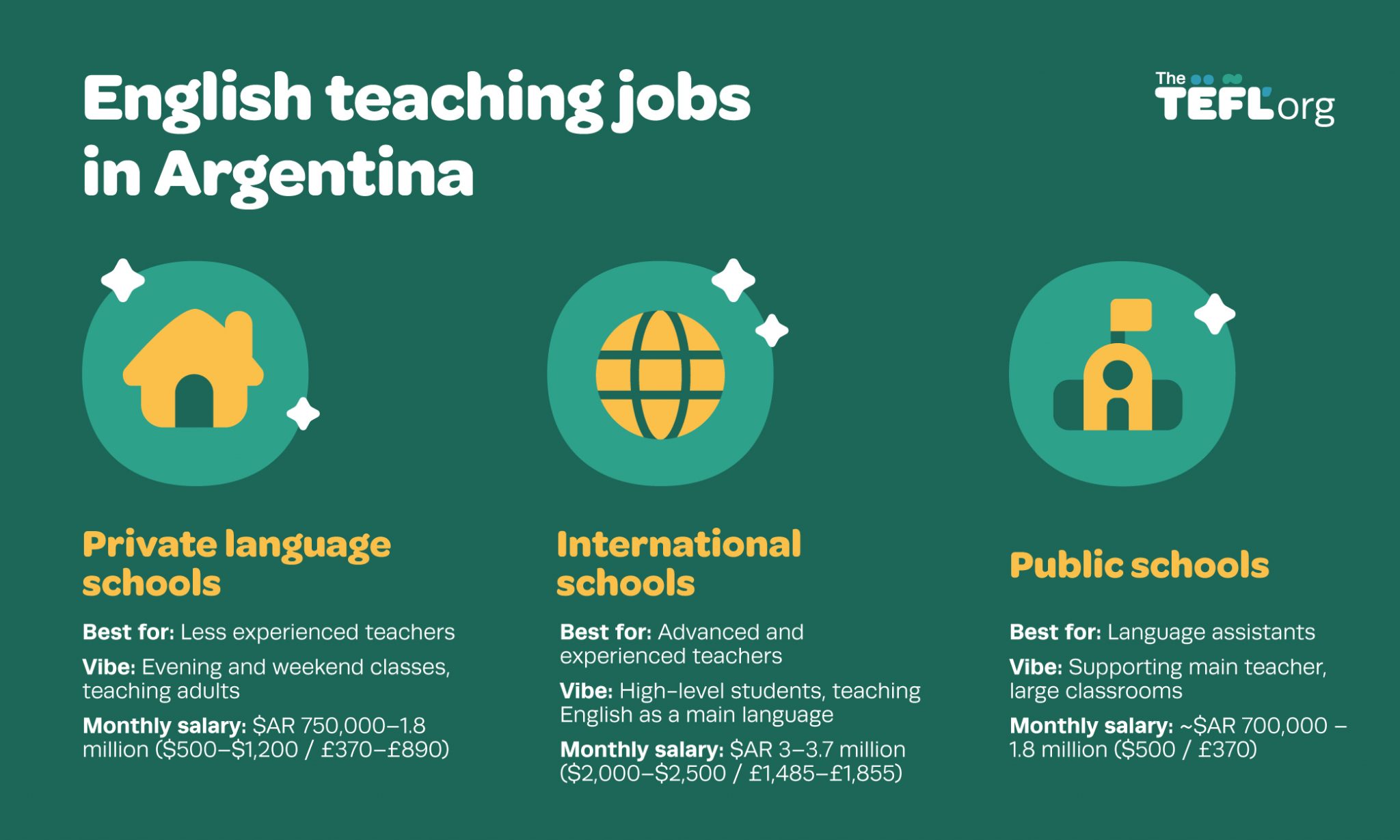
Public school jobs in Argentina are less common for foreigners unless you join a language assistant programme like the British Council or Fulbright. These roles usually require Spanish language skills, and rather than leading classes independently, assistants work with a local teacher.
What to expect at public schools in Argentina:
- Language assistant roles
- Part-time schedule and lower salary
- Teaching in large classrooms
- Following the national curriculum from February/March–December
Private language schools
Private language schools are more varied than public schools; one might teach general English to young learners and another might teach professionals Business English. Because of this, there’s plenty of flexibility between different schools. Classrooms are usually small, and students typically have a specific goal in mind.
What to expect at private language schools in Argentina:
- Evening and weekend classes
- Teaching ESP (English for Specific Purposes) subjects like Business English, Academic English, Exam Preparation etc.
- Small classrooms
- Year-round hiring
International schools
Many TEFL teachers aim for international schools in Argentina because they offer the highest salaries and benefits like accommodation allowance, flight reimbursement, and so on. But the requirements and responsibilities are much higher than at other schools.
At an international school, teachers follow an international curriculum (US, UK, or IB) and teach local and foreign students. Tuition fees are high, so these schools usually have excellent facilities — but also high expectations of teachers.What to expect at an international school in Argentina:
- Monday to Friday schedule
- Teaching local and international students
- Following an international curriculum
- High salary and benefits, but requirements often include master’s degrees and years of teaching experience
Tip: International schools recruit earlier than language schools, so start looking several months before the school year begins (February/March).
Private tutoring
Private tutoring can be a great way to boost your income in Argentina, and experienced teachers can often charge more than they would at a language school. The trade-off is that you’ll need to find your own students, market your services and manage your own schedule. Many tutors advertise through social media, expat groups, community noticeboards or word of mouth.
If you have the legal right to work in Argentina, you can tutor independently. If you’re teaching on an employer-sponsored work visa, you may be restricted to working for your sponsoring employer, so check the conditions of your visa before taking on private students.
What to expect as a private tutor in Argentina:
- Freedom in setting rates and schedule (but unstable hours)
- Having to source your own students and develop your own materials
Teaching English in Major Cities
Argentina is wonderful — and big. There are plenty of places to consider if you want to teach English in this South American haven.Teach English in Buenos Aires
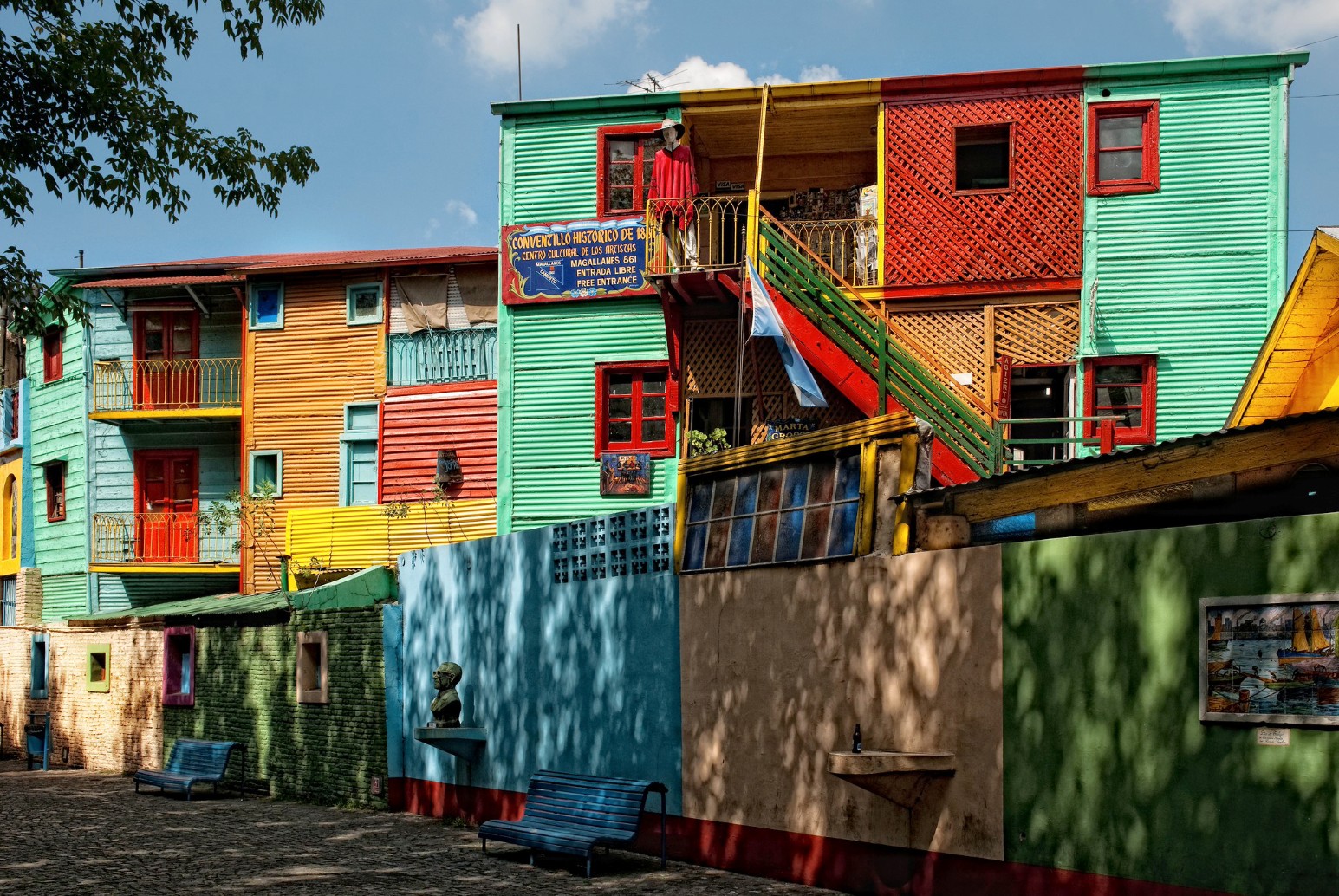
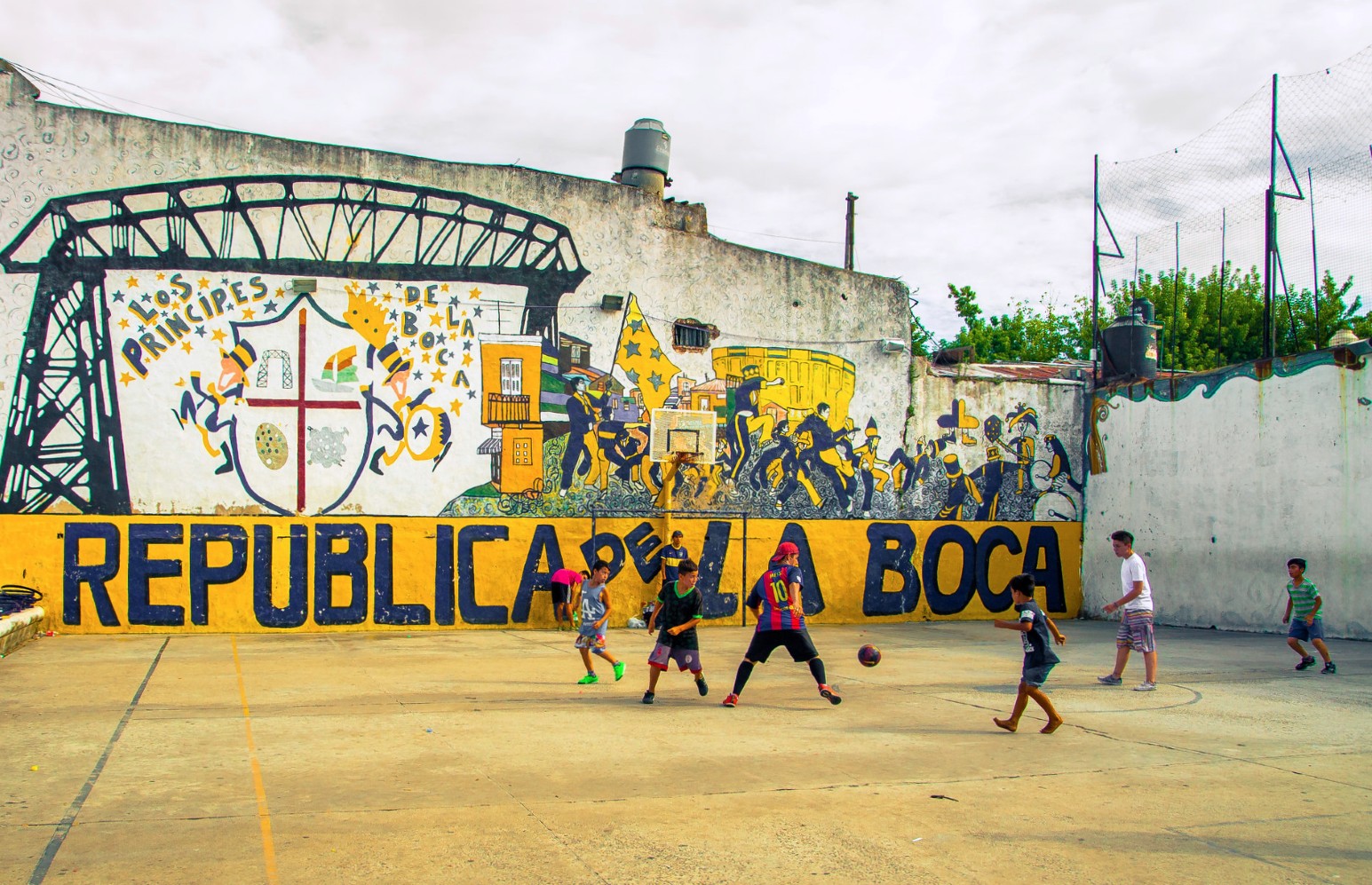
Life outside the classroom is just as rewarding. You can tuck into world-famous Argentine steak, explore independent bookshops like El Ateneo Grand Splendid, take a boat trip through the Tigre Delta or even join a tango class. Whatever you’re into, there’s plenty to keep you busy after work.
Check out Matt and Perlie’s daily routine as online teachers in Buenos Aires:
Teach English in Córdoba
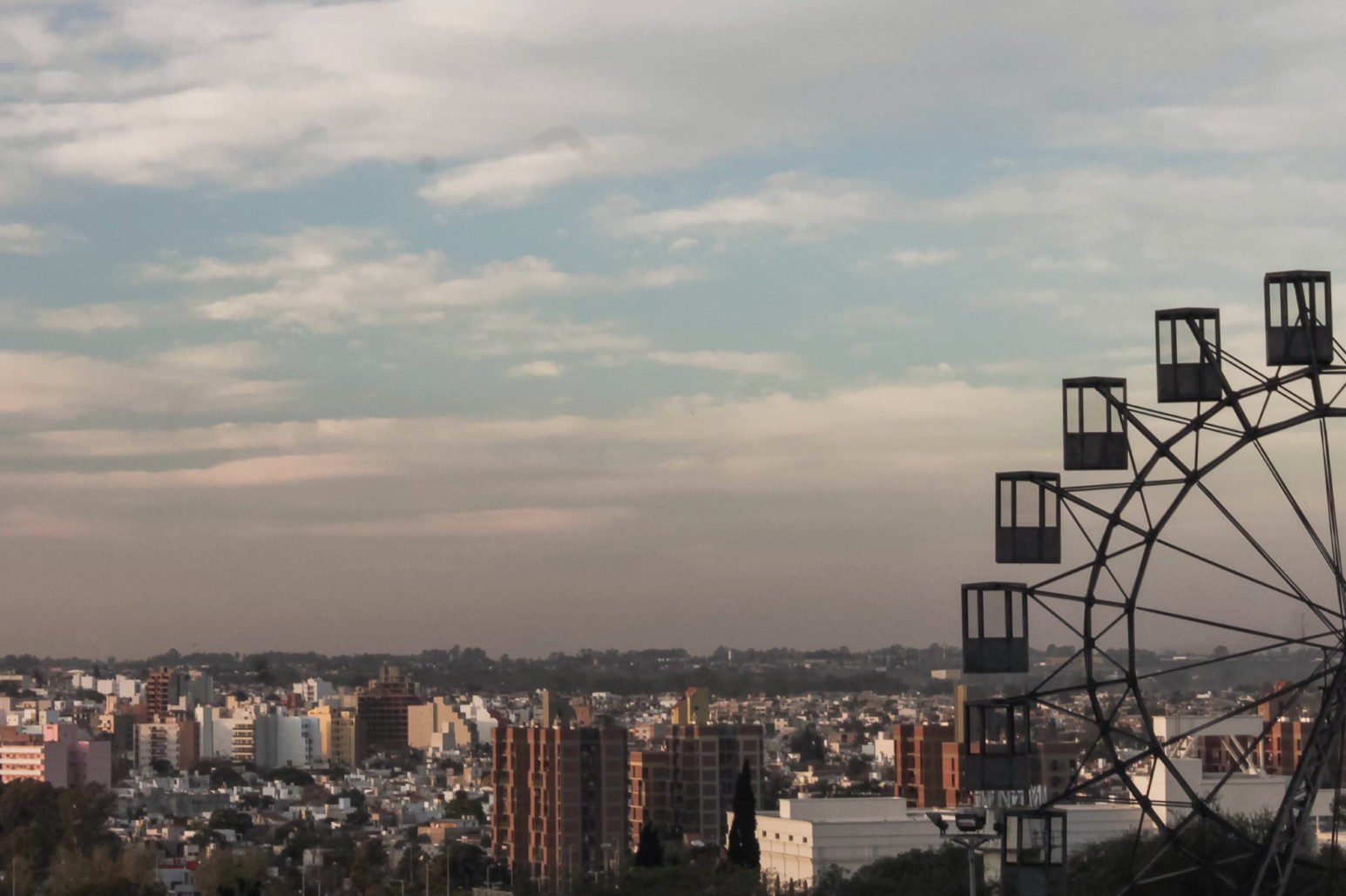
Córdoba offers a more relaxed and affordable alternative to Buenos Aires, with less competition for teaching jobs and a lower cost of living. But don’t mistake it for a second-best option.
The city has a massive student population relative to its size, leaving plenty of opportunities for TEFL teachers (especially private tutors). With a mix of European architecture, boutique cafés, and nearby mountainous terrain, there’s plenty to do in Argentina’s second-largest city. When you’re not teaching, you can explore historic landmarks like the Córdoba Cathedral, cycle through Sarmiento Park or head into the mountains for a weekend hike.
Teach English in Mendoza

The TEFL market isn’t as lively as Buenos Aires or Córdoba, but there’s plenty to enjoy if you’re able to secure a spot in Mendoza. When you’re not in the classroom, you can tour world-famous wineries, browse the markets around the city’s Five Plazas or head into the Andes for a weekend adventure. If you’re up for it, spend the day trekking up Mount Aconcagua — the highest peak in the Americas.
Ready to Teach English Abroad? Don’t Forget Your TEFL Certificate
Teaching English abroad can mean many things, whether you’re picturing yourself in Buenos Aires, Córdoba, or beyond Argentina. But teaching English without a TEFL certificate is like trying to run before you can walk.
A TEFL certificate gives you the practical skills employers look for, from lesson planning and classroom management to teaching grammar and speaking skills. It’s both a technical and a practical requirement, from standing out in the job market to feeling confident in the classroom.Get started today with our 120-hour TEFL course to launch your career abroad.
Frequently Asked Questions
Q. What is the average salary for English teachers working in Argentina?
TEFL teachers earn around $AR 750,000–1.8 million ($500–$1,200 / £370–£890) per month, but advanced teachers can earn up to $AR 3–3.7 million ($2,000–$2,500 / £1,485–£1,855) at international schools.
Q. How can I teach English in Argentina?
You’ll need a TEFL certificate (a minimum of 120 hours), and employers prefer teachers who have a bachelor’s degree, teaching experience, and native English proficiency (but these aren’t essential). Teachers need a temporary residence worker visa to teach legally.
Q. Which TEFL certification providers are recognised by Argentine language schools?
TEFL courses from accredited providers like The TEFL Org are recognised by language schools in Argentina (and all over the world). The TEFL Org is the most accredited TEFL course provider in the world.