





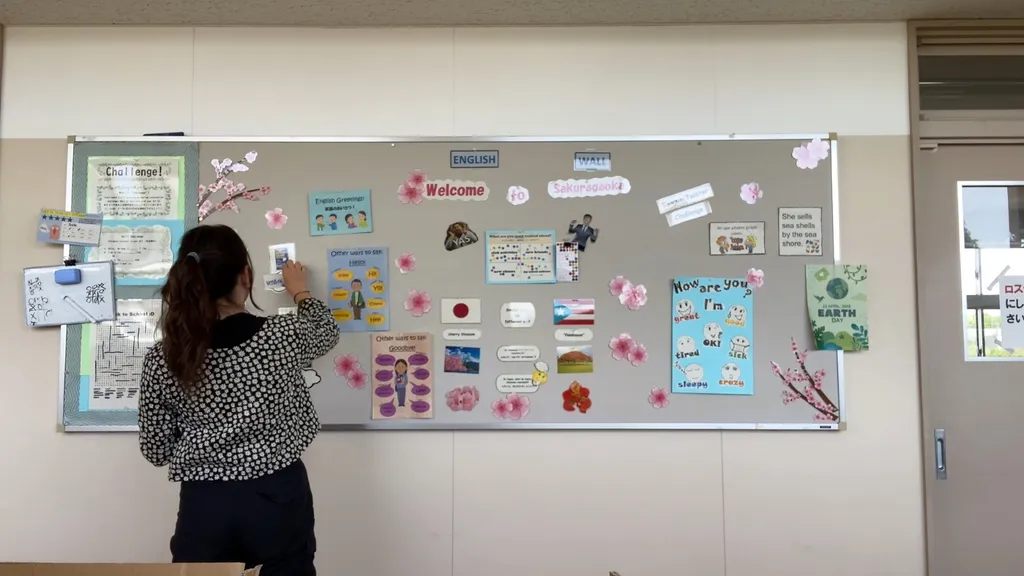
The term ESL stands for “English as a Second Language”. This is a common term among English learners and refers to the process of learning English in a country where English is the primary language. You may have heard other terms such as ESOL and EFL, and while these are similar terms, there are distinct differences. A standard TEFL or TESOL certification allows you to teach ESL in English-speaking countries like the United States, the United Kingdom, Canada, Australia, and abroad.
Key takeaways
- ESL stands for English as a Second Language and refers to English instruction for non-native speakers living in an English-speaking country.
- EFL (English as a Foreign Language) refers to learning English in a non-English-speaking country. ESOL (English for Speakers of Other Languages) is the broadest umbrella and covers both ESL and EFL.
- In the U.S. formal education system, the term “ESL” is being gradually replaced by “ELL” (English Language Learner) and “ML” (Multilingual Learner), though “ESL” remains common in job listings, state policies, and the TEFL industry.
- A standard accredited TEFL or TESOL certificate (120 hours minimum) qualifies you to teach ESL in most contexts worldwide.
- For U.S. public school ESL teaching, you need a state teaching licence with an ESL or ESOL endorsement on top of a bachelor’s degree.
- ESL teaching careers span U.S. K-12 schools, adult education, online platforms, and language schools worldwide.
What does ESL stand for?
The term “ESL” stands for “English as a Second Language”. It describes students and a learning context, as in a person studying English while living in an English-speaking country, as well as a programme. ESL programmes are generally structured English instruction for non-native speakers.
“Second” in “second language” is just a simplification of the term. In fact, many ESL students are learning English as an additional language to a third, fourth, or fifth language. The clarifier “second” simply means another language other than the students’ native or dominant language.
Why the term ESL is changing in U.S. education
If you search for ESL teaching jobs in the United States, you will encounter several different terms for what is essentially the same work. Here are a few terms, their definitions, and why they’re changing in U.S. education.
LEP (Limited English Proficient): LEP is the original U.S. federal label but is now considered outdated for obvious reasons. You will still see it in older legislation and some federal reporting.
ESL (English as a Second Language): The term “ESL” has been the standard programme label for decades and refers to English as a second or foreign language. It’s still widely used in job listings, the TEFL industry, and many state policies. Some states (notably Florida, Georgia, Maryland) use “ESOL” instead of “ESL” for the same K-12 programmes.
ELL (English Language Learner) and EL (English Learner): Most states use ELL or EL to describe the English language learning students, even where the programme is still called ESL. The shift emphasises that these students are actively learning, and not limited like with the term “LEP”.
ML (Multilingual Learner) and MLL: ML is one of the newest terms in ESL, adopted by WIDA, TESOL International Association, and a growing number of states. It reframes students as building proficiency in multiple languages, highlighting bilingualism as an asset.
State-level variations: New York uses ENL (English as a New Language). California uses ELD (English Language Development). Florida uses ESOL. The programme structure and teacher qualifications are broadly the same across all of these, although the labels differ by state.
For a prospective teacher, the skills, the training, and the day-to-day work are the same regardless of which term a state or school uses. If you see a job listing for an ESL teacher, an ESOL teacher, an ENL teacher, or an ELD specialist, these are essentially the same career field. A TEFL or TESOL certification is the standard entry qualification for most of these roles outside U.S. public schools.
ESL vs EFL vs ESOL vs TEFL vs TESOL: what is the difference?
With so much terminology and acronyms in the world of ESL, it can be difficult to decipher and remember what each one means. Here’s a simple comparison table to help you differentiate between the different types.
| Acronym | What It Stands For | Refers to ESL Learners or Teachers | Where It Applies | One-Line Example |
|---|---|---|---|---|
| ESL | English as a Second Language | Learners and programmes | English-speaking countries | An immigrant from Latin America taking English classes in Houston |
| EFL | English as a Foreign Language | Learners and programmes | Non-English speaking countries | A Chinese student learning English in Beijing |
| ESOL | English for Speakers of Other Languages | Learners and programmes | Both | An adult immigrant attends English classes in London or Miami |
| ELL | English Language Learner | Learners only (U.S. K-12 label) | U.S. public schools | A 4th-grader in California receiving English support |
| ML/MLL | Multilingual Learner | Learners only (newer U.S. label) | U.S. education (growing adoption) | The same student, described as using asset-based language. |
| TEFL | Teaching English as a Foreign Language | Teachers and certification | Non-English speaking countries | Teaching English at a language school in South Korea |
| TESOL | Teaching English to Speakers of Other Languages | Teachers and certification | Both | A certification that qualifies you to teach ESL or EFL anywhere |
| CELTA | Certificate in English Language Teaching to Adults | Teachers and certification | Global (Cambridge-branded) | A Cambridge-assessed in-person TEFL course |
To help further distinguish these terms, here are a few real-world examples.
If a Latin American immigrant enrols in English classes at a college in Texas, that is ESL. If a Japanese university student studies English in Tokyo, that is EFL. If an adult immigrant attends English classes at a further education college in London, that is an ESOL programme. The teacher in all three cases holds essentially the same qualification: a TEFL or TESOL certificate.
In terms of TEFL vs. TESOL, these terms essentially mean the same thing with only slight variations. TESOL covers teaching English abroad and in a native English-speaking country, while TEFL focuses on teaching English in a country where English isn’t the first language. The teaching methods, the lesson planning, the classroom management, and the core skills are fundamentally the same.
Do you need an ESL certification to teach?
In most cases, you do not need something specifically labelled an “ESL certification”. A standard accredited TEFL or TESOL certificate (120 hours minimum) qualifies you to teach ESL in the vast majority of contexts worldwide, including private language schools, online platforms, and international schools.
Here are a few examples of the ESL certifications you’ll need and in which situations…
For U.S. public schools (K-12): You’ll need a state teaching licence with an ESL, ESOL, or ELD endorsement. This requires a bachelor’s degree, completion of a state-approved educator preparation programme, and passing a licensure exam. This is typically the Praxis English to Speakers of Other Languages test. This is a different path from a standard TEFL/TESOL certification. Requirements vary by state.
For adult education programmes in the U.S.: Requirements vary for U.S. adult English language programmes. Community colleges and non-profit literacy programmes often require a bachelor’s degree and prefer TESOL or ESL endorsement. Private language schools may accept a TEFL certificate alone.
For teaching ESL or EFL abroad: A 120-hour accredited TEFL or TESOL certificate is the standard requirement. Some countries (South Korea, Japan, and the Middle East) also require a bachelor’s degree, but the degree can be in any subject.

To clearly distinguish between them, TEFL/TESOL certification is the international industry standard. A state-level ESL endorsement like taking the Praxis ETS test is a U.S. K-12 credential.
Download our guide to teaching English around the world
Everything you need to know about teaching English abroad

What do ESL teachers do?
The spectrum of what ESL teachers do is broad and depends entirely on the individual teaching position. Here are a few examples of how English teachers instruct and what their duties are on a daily basis.
K-12 ESL in the U.S.: Support English learners in mainstream classes. ESL teachers work alongside content-area teachers to help with factors like English grammar, vocabulary, and reading comprehension. You’ll also administer language proficiency assessments (ACCESS, ELPAC) and advocate for students’ needs via an IEP and teacher team meetings.
Adult ESL in the U.S.: Teaching functional English, including navigating government forms, job interviews, healthcare appointments, and parent-teacher conferences at community colleges, non-profits, libraries, and faith-based organisations. Classes are often multi-level and multilingual. Students range from recent immigrants to long-term residents and business professionals improving their English for career advancement.
ESL online: Teaching English to adult learners or children worldwide via online platforms. Lessons are typically one-on-one or small groups. There’s generally flexible scheduling across time zones. Platforms may provide curricula or expect teachers to create their own materials.
ESL/EFL abroad (technically EFL): Teaching English at language schools, public schools, universities, or corporate educational settings in non-English-speaking countries. Often includes cultural exchange, lesson planning, and exam preparation (IELTS, TOEFL, Cambridge). Contracts typically include housing, flights, and visa sponsorship.

How to become an ESL teacher
There are several routes to becoming an ESL teacher. Here are a few paths you can take to start teaching English as a second language.
Get TEFL or TESOL certified
Getting TEFL/TESOL certified is the standard entry point for most ESL teaching roles outside U.S. public schools. You’ll need to be sure the certification is 120 hours, either online or in person. This qualifies you to teach ESL at private language schools, online platforms, and international schools in over 100 countries. Be sure to get your TEFL certificate from an accredited provider like the TEFL Org.
For U.S. public schools: earn a state ESL endorsement
Teaching English as a second language in U.S. public schools will require a bachelor’s degree (generally in education), a state-approved educator preparation programme, and passing a licensure exam (commonly Praxis). Some states allow teachers to add an ESL or ESOL endorsement to an existing teaching licence. Check your state board of education for specific requirements.
For teaching abroad: choose a country and apply
If you’re looking to teach English abroad, start researching countries based on salary, visa requirements, and lifestyle preferences. You can begin applying after receiving your TEFL certification. Many programmes, like JET in Japan, EPIK in South Korea, and TAPIF in France, recruit directly from the U.S. A bachelor’s degree is required for most countries but can be in any subject.
For teaching ESL students online: set up and start
Online ESL teaching requires a TEFL or TESOL certificate and a stable internet connection. Many platforms also require a bachelor’s degree, but there are several ways to teach English online without a degree or experience. You can start teaching within weeks of completing your certification.
ESL and bilingual education: what is the difference?
ESL programmes teach English to non-native speakers using English as the medium of instruction with English language acquisition as the sole goal. Bilingual education programmes teach academic English content in two languages, with the goal of developing proficiency in both. Dual-language programmes pair native English speakers with English learners so both groups develop bilingual language skills.
In U.S. schools, ESL and bilingual education are separate programme models, though a single student may receive both. ESL programmes are more common because they require only English-speaking teachers, while bilingual programmes require teachers fluent in the students’ home language.
For a prospective teacher, the distinction matters for job applications: a bilingual education role requires fluency in a specific language (usually Spanish in the U.S.), while an ESL role does not.
ESL for learners: programmes, exams, and where to study
ESL programmes for learners are available at community colleges, universities, non-profit organisations, libraries, and private language schools across the U.S., U.K., Canada, Australia, and New Zealand. Most programmes organise classes by proficiency level (beginner, intermediate, advanced) and focus on English skills like reading, writing, speaking, and listening.
Common ESL-adjacent exams and assessments:
- TOEFL (Test of English as a Foreign Language): This is the standard for U.S. university admissions
- IELTS (International English Language Testing System): accepted by universities and immigration authorities worldwide
- Cambridge English exams (PET, FCE, CAE, CPE): widely used in Europe and the UK
- CASAS (Comprehensive Adult Student Assessment Systems): used in U.S. adult education programmes
- WIDA ACCESS: the annual English proficiency assessment used in most U.S. K-12 schools
Ready to start teaching ESL?
Whether you’re a college student looking into teaching ESL in a U.S. classroom or you’re looking to kick off your ESL career abroad, there are so many ways to get started teaching English as a second language. Get started by getting TEFL certified with an accredited provider like the TEFL Org.
Frequently Asked Questions
Q. What does ESL stand for?
ESL stands for English as a Second Language. It refers to both the process of learning English in an English-speaking country and the educational programmes that support that learning. The term is used worldwide, though some U.S. states use ESOL or ELD instead.
Q. Is ESL the same as ESOL?
These terms overlap heavily, but they’re not identical. ESL refers specifically to learning English in an English-speaking country. The term ESOL (English for Speakers of Other Languages) is a broader umbrella that includes ESL, EFL, and all other English learning contexts.
Q. Is ESL the same as TEFL?
No. ESL describes the field and the learners. TEFL (Teaching English as a Foreign Language) describes the teaching qualification and the act of teaching English language skills in a non-English-speaking country. A TEFL certification qualifies you to teach ESL.
Q. What is the difference between ESL and ELL?
ESL refers to the programme or the field. ELL (English Language Learner) refers to the student. In U.S. K-12 education, students are identified as ELLs and placed in ESL, ESOL, or ELD programmes. The newer term “multilingual learner” (ML) is gradually replacing ELL in some states and organisations, as some students speak several languages.
Q. Is ESL an outdated term?
Not exactly. ESL remains the most widely recognised term in the TEFL industry and appears in thousands of active job listings worldwide. In U.S. education, it is being gradually replaced by more asset-based terms like ELL and ML. The underlying career field, skills, and qualifications remain the same regardless of which term is used.
Q. Can I teach ESL without a degree?
For private language schools, online platforms, and many international positions, yes, provided you hold an accredited TEFL or TESOL certification. For U.S. public schools, a bachelor’s degree and state teaching licence are required. Degree requirements vary by country for international teaching positions.
Q. How much do ESL teachers earn?
ESL teacher salaries vary widely by context. U.S. public school ESL teachers earn an average of approximately $59,000 per year (BLS). Online ESL teachers typically earn $15 to $25 per hour. ESL teachers abroad earn varying salaries depending on the country, with the highest pay in the Gulf states, South Korea, Japan, and China.
Q. Do I need to speak another language to teach ESL?
No. The vast majority of ESL teachers are monolingual English speakers. ESL teaching methods are designed for teachers who do not share their international students’ first language. Knowing another language can be helpful but is not required.