








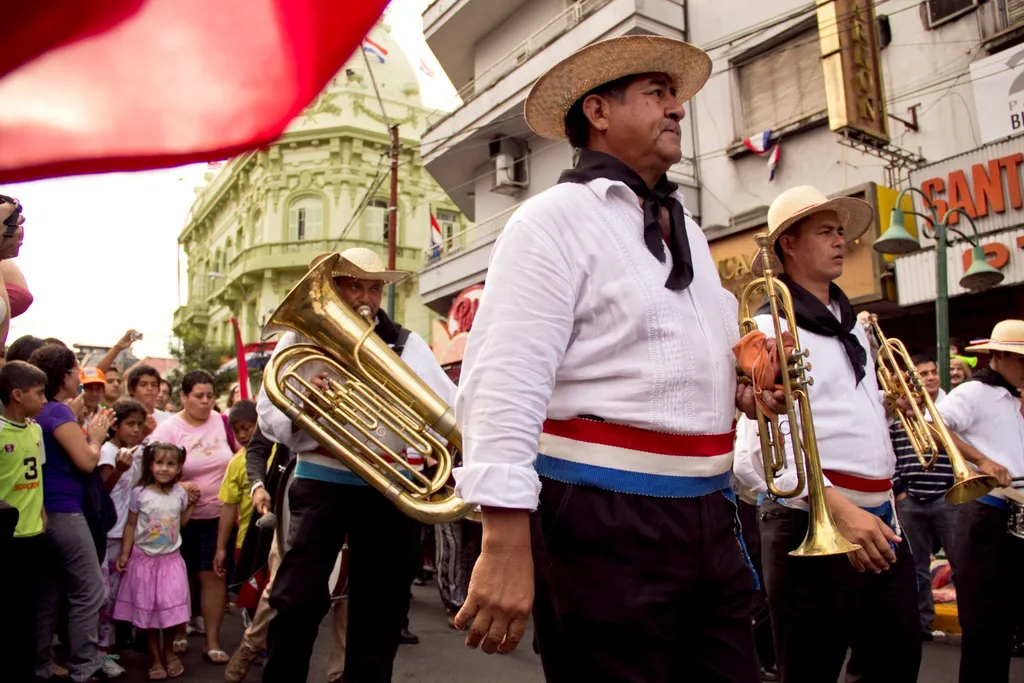
Known as the Corazón de América (or the Heart of South America), Paraguay is one of the continent’s most underrated destinations for not just travelling but also teaching abroad. While neighbouring countries like Brazil and Argentina often steal the shine, Paraguay’s dramatic landscapes, colourful festivals, thriving wildlife, and demand for English teachers makes it a top choice.
English isn’t widely spoken compared to Spanish or Guaraní, but the demand is growing as locals see it as a path towards study, professional, and international opportunities. Read on for The TEFL Org’s guide to teaching English in Paraguay, from job requirements, salary expectations, visas, top locations and more.
Key Takeaways
- Paraguay has an increasing demand for English teachers, especially in bigger cities where there’s more business and students.
- Most teaching positions require a TEFL certificate; degree holders, experienced teachers, and native English speakers are preferred but not always required.
- English teachers earn around ₲2.4 million–4.8 million ($400–$800 / £300–£600), or up to ₲5–10 million ($825–$1,625 / £620–£1,250) at international schools.
- Most teaching jobs come through private schools, either language centres or international schools.
- Teachers need to get the Temporary Residence permit to work in Paraguay legally.
- Top locations include Asunción, Encarnación, and Ciudad del Este.
Requirements for Teaching English in Paraguay
Paraguay has a moderate English proficiency score, but Spanish and Guaraní are Paraguay’s two official languages. While English isn’t common outside major cities, the demand is growing among locals because it’s seen as a gateway to academic and career opportunities.
This is good news for TEFL teachers, and here’s what you need to know about the requirements for teaching abroad in Paraguay.
Do I need a TEFL certification to teach English in Paraguay?
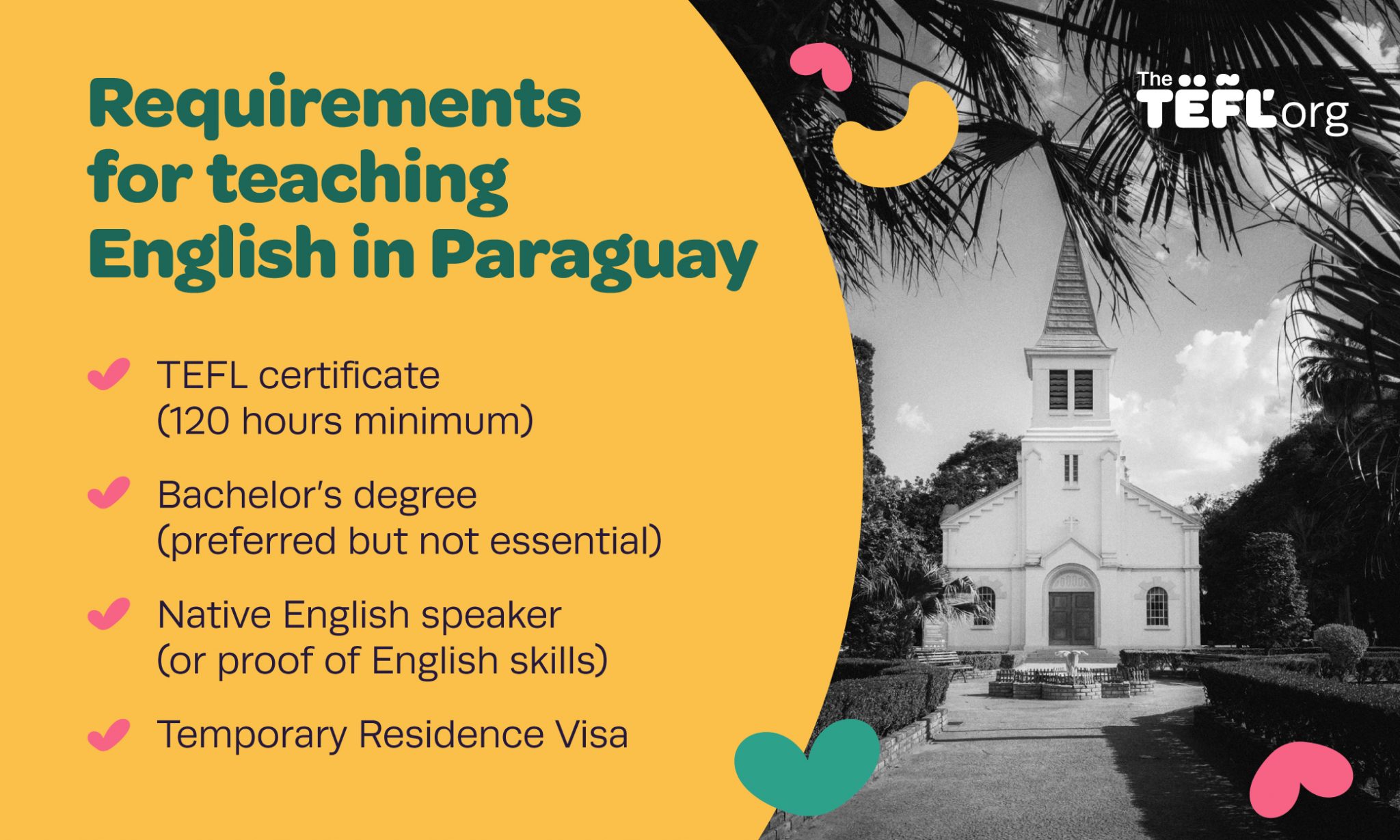
Yes, you’ll need a recognised 120-hour TEFL certificate for most teaching jobs in Paraguay. While it’s possible to teach English without a TEFL certificate, you’ll struggle to find higher paying jobs — and some employers will flat out reject your application.
But a TEFL certificate isn’t just so you can qualify for these jobs, it’s also so you can learn the essentials of teaching and feel confident in the classroom. That way, your employer can see the value that you bring to the classroom every day.
Tip: Many students in Paraguay learn English to study abroad or work for international companies (especially with US firms). Advanced courses like Business English, English for Academic Purposes or Exam Preparation can help you branch out to different avenues of teaching.
Can I teach English without a degree in Paraguay?
With a high demand for English teachers, having a bachelor’s degree isn’t a strict requirement to teach in Paraguay. While you can teach abroad without a degree in Paraguay with a TEFL certificate (particularly in private language schools), holding a degree will improve your job prospects and salary potential.
Do I need teaching experience to teach in Paraguay?
If you’re just starting out in the industry, don’t worry — you can teach English without experience in Paraguay (as long as you’re TEFL certified).
But like having a bachelor’s degree, you’ll cast a wider net when it comes to finding higher paid jobs if you have teaching experience.
Can I teach in Paraguay as a non-native speaker?
You can teach English as a non-native speaker if you have a TEFL certificate and demonstrate English fluency. Employers might ask for evidence of your English ability through qualifications such as IELTS, CEFR, or TOEFL, so be sure to prepare these ahead of your interviews.
Tip: English speakers aren’t that common, and speaking Spanish will benefit your application.
Visa requirements for teaching English in Paraguay
To teach English in Paraguay legally, you’ll need to apply for the Temporary Residence permit. You can do this by submitting an application to Paraguay’s National Directorate of Migration. After you’ve submitted the right documents, you’ll need to attend an interview at your nearest Paraguayan consulate.
Unlike many other countries, you don’t need a job first to apply for the residence permit. Once your application has been reviewed and approved, you’ll be able to complete the residence process. You’ll typically need the following for your application:
- Proof of employment with a Paraguayan employer
- A valid passport
- A clean criminal background check
- Birth certificate
- Proof of academic and professional qualifications
Important: Visa requirements can change, so always check the latest guidance from your nearest Paraguayan embassy or consulate before applying.
Download our guide to teaching English in Latin America
Everything you need to know about teaching English in Latin America
Salary and Cost of Living
Paraguay has one of the lowest costs of living in South America, so teachers can enjoy a comfortable lifestyle even on a modest salary, but you still need to know what sort of teaching salary you can earn before deciding to make the jump.
How much can you earn teaching English in Paraguay?
Teaching general English classes in Paraguay can net you ~₲2.4 million–4.8 million ($400–$800 / £300–£600) per month. This doesn’t seem like much, but it can take you far in this affordable country.
This salary is typical at language schools, but if you have experience, a master’s degree, or a teaching licence, you could work at an international school where you can earn around ₲5–10 million ($825–$1,625 / £620–£1,250).
Tip: Many teachers in South America boost their income by private tutoring or teaching English online.
How much does it cost to live in Paraguay?
Paraguay is one of South America’s more affordable countries, so it’s easier to get by on a lower salary especially if you’ve built up savings before heading to South America. You can expect to spend ~₲4.8–6 million ($795–$995 / £600–£750) per month living in Paraguay, including rent, food, and other services.
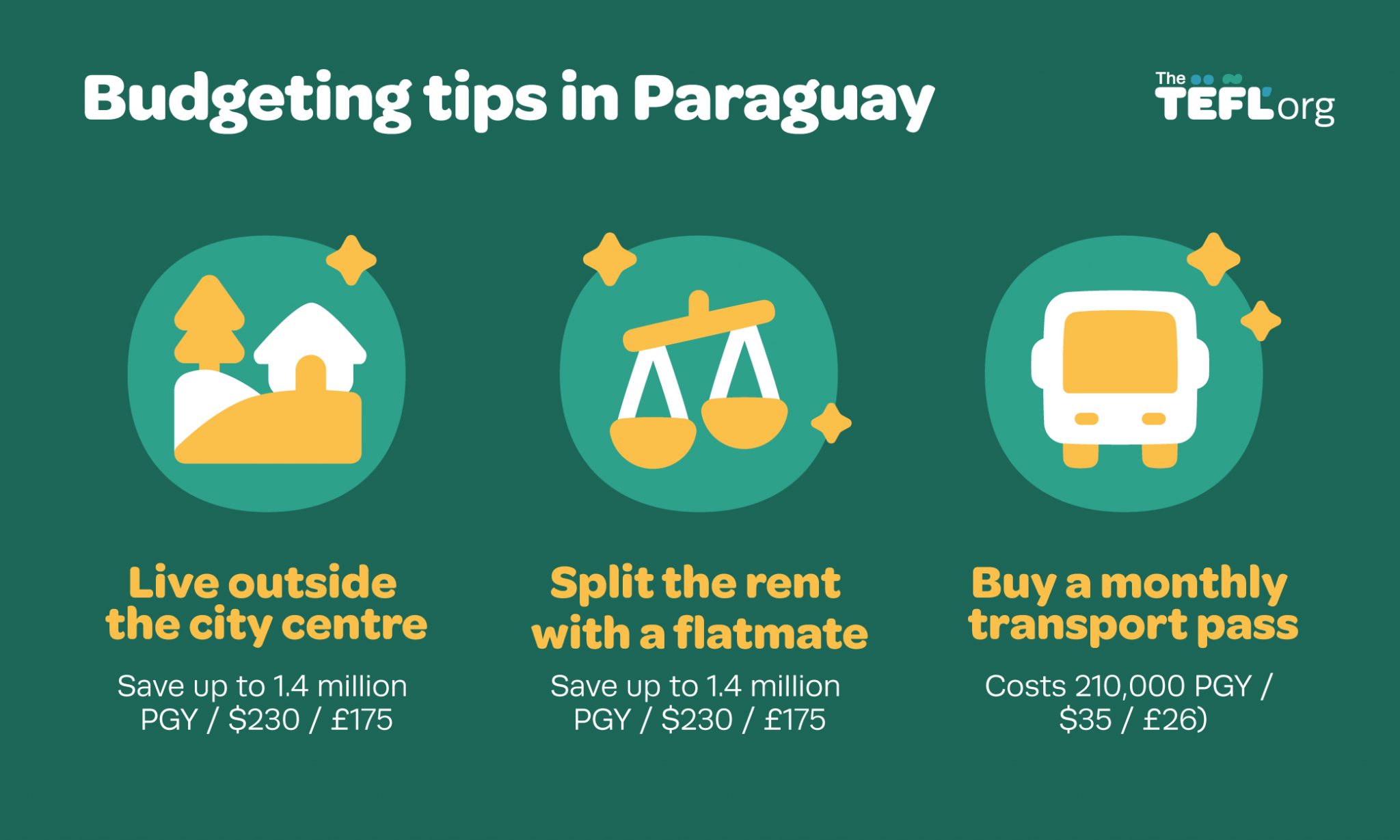
You can also reduce your spending by following these simple tips:
- Live outside the city centre: Living in the city centre of somewhere like Asunción (the capital city) can cost around 70% higher than living outside the city centre. Try to avoid living in tourist hotspots — not only will you save up to ₲1.4 million ($230 / £175) but you’ll also get a better glimpse of the local culture.
- Split the rent: Many teachers share housing with other expats or teachers to save money. While a 1-bed apartment in the capital city costs around ₲2.8 million ($350/ £260) per month, a 3-bed apartment costs around ₲1.4 million ($230 / £175) per person per month. This can help pay for your monthly gym membership, transport pass, restaurant outings, and more!
- Take the bus: Although there isn’t a rail network in Asunción, it does have a pretty good bus network that connects different districts and the capital to fringe cities like Luque, San Lorenzo, and Lambaré. A monthly transport pass costs around ₲210,000 ($35 / £26) per month.
- Eat like a local: Pick up fresh food from local markets or supermarkets like Superseis and Stock. Imported goods cost significantly more, so buying local is one of the simplest ways to stretch your teaching salary.
- Eat the comedor lunch: If you choose to eat out, choose the comedor which is a traditional eatery that offers full meal sets with a drink for around ₲25,000–₲40,000 ($4–$7 / £3–£5).
| Restaurants | PYG | USD | GBP |
|---|---|---|---|
| Inexpensive restaurant meal | |||
| Domestic beer (0.5 litre) | |||
| Regular cappuccino | |||
| Water (0.33 litre) | |||
| Markets | PYG | USD | GBP |
| Regular milk (1 litre) | |||
| Loaf of white bread | |||
| Regular eggs (1 dozen) | |||
| Apples (1 kg) | |||
| Transportation | PYG | USD | GBP |
| One-way ticket (local transport) | |||
| Monthly pass (regular price) | |||
| Taxi start (normal tariff) | |||
| Gasoline (1 litre) | |||
| Utilities | PYG | USD | GBP |
| Electricity, heating, cooling, water, and garbage (for a regular apartment) | |||
| Regular prepaid monthly mobile tariff with 10GB+ data | |||
| Internet (60 Mbps, unlimited data, cable/ADSL) | |||
| Clothing and shoes | PYG | USD | GBP |
| Pair of jeans (Levis 501 or something similar) | |||
| Summer dress in a chain store | |||
| Nike running shoes (mid-range) | |||
| Men's leather business shoes |
English Teaching Jobs in Paraguay
You’ll find most teaching opportunities in bigger cities like Asunción, Ciudad del Este, Encarnación and San Lorenzo. English isn’t common or widely taught in rural areas, so the private sector offers the best opportunities for most TEFL teachers.
You can find teaching jobs on The TEFL Org Job Centre, but not all teaching jobs are advertised online. Some teachers take the chance to search for work in-country after arriving on a visa exemption (which lasts for 90 days).
Public schools
If you already have temporary residence and can speak the local language, you can find a job teaching English at public schools. Public school opportunities are relatively limited, but they do exist in larger cities where English is offered as an optional subject. These positions aren’t usually posted online, so you’ll need to be in-country to find these jobs.
What to expect at public schools in Paraguay:
- Academic calendar from February/March–November/December
- Large class sizes
- Modest classroom equipment
- Following the national curriculum
Private language schools
English teachers often find most luck applying to private language school jobs. These schools offer English lessons to different ages after school or work. Courses range from general English to something more specific like Business English and Exam Preparation, so specialist skills go a long way for teachers at language centres. Most are based in Asunción and teach teenagers and adults studying English for work, university or travel.
What to expect at private language schools in Paraguay:
- Evening and weekend classes
- Small class sizes of teenagers or adults
- Year-round hiring
- Teaching general English or ESP (English for Specific Purposes) courses like Business English or Exam Preparation.
International schools
Students from wealthier or expat families study English as the main language alongside Spanish at international schools. Here, teachers follow an international curriculum (US, UK, or IB) and receive the best salaries and benefits, but responsibilities are high and you’ll need a master’s degree or teaching experience to qualify. Like private language schools, international schools are mostly found in and around Asunción.
What to expect at international schools in Paraguay:
- Monday to Friday schedule
- Small class sizes of local and international students
- Following an international curriculum with English as a main language
- Excellent salary and benefits, but high requirements and expectations
Private tutoring
Private tutoring is a popular way to supplement your income once you’ve secured a teaching job. It’s not a replacement for teaching full-time, but it’s a great way to cover expenses by getting some extra hours in each week. Most students will be those preparing for university, applying for jobs abroad or improving their workplace English, so Business English and English for Academic Purposes are particularly valuable qualifications.
What to expect as a private tutor:
- Flexible timetable but potentially unstable hours
- One-to-one or small group lessons
- Earning around ₲30,000–₲75,000 ($5–$13 / £4–£10) per hour or more
- Networking and marketing yourself to find students
Teaching English in Major Cities
Paraguay isn’t famous for its cities, so it can be hard to choose a place. But there are plenty of cities and towns to choose from in the Heart of South America.
Teach English in Asunción

Paraguay’s buzzing capital city Asunción doesn’t boast the size of Brasilia or travel scene of Buenos Aires, but its unique blend of Guaraní and Spanish culture, sights like Ypacaraí Lake, and its scenic waterfront make the city appealing to travellers and career-driven teachers.
As the capital city, it’s where you’ll find most teaching opportunities in Paraguay. Common English teaching jobs in Asunción are found in language schools, international schools, and through private tutoring.Outside the classroom, Asunción blends indigenous and European influences with a growing café, food and nightlife scene. Visit landmarks like the Palacio de López and Museo del Barro, relax by nearby Lake Ypacaraí or discover the city’s underground electronic music scene. Better still, it’s one of South America’s more affordable capitals, so your teaching salary can go further.
Teach English in Encarnación

From relics of colonial settlements to modern promenades, Encarnación is a dark horse when it comes to South American cities. Few people consider the Pearl of the South — or have even heard of its qualities — despite its scenic views of the Paraná River, sandy beaches, and close proximity to Argentina.
Encarnación is the third-largest city in Paraguay, and it has become the country’s summer hotspot for domestic and international travellers for its hot summers and riverside activities (it’s also the coldest city during winter months!). Most teaching jobs come through private language centres — especially those that focus on work and business English — and private tutoring.
Teach English in Ciudad del Este
Located on the intersection between Paraguay, Argentina, and Brazil, Ciudad del Este is one of the largest free-trade zones in the world. Because of this, there’s plenty of business opportunities, and many workers look for English tutors to improve their language skills in the workplace.
Beyond teaching, there’s so much to enjoy besides business in the triple frontier. From luxury shopping malls and the Landmark of the Three Borders to the spray at Monday Falls, lakes, and green spaces, you can enjoy a comfortable lifestyle in this commercial hub.
Ready to Teach Abroad? Don’t Forget Your TEFL Certificate
Before you jet off to teach English abroad, the most important thing you can take with you is your TEFL certification.
Employers don’t just look for teachers who’ve studied a TEFL course because it’s a technical requirement, it’s also essential towards developing teaching skills. When you study a TEFL course with an accredited provider, you’ll learn the essentials from classroom management, explaining grammar to students, inspiring confidence, and so much more.
Get started today with our 120-hour TEFL course.
Frequently Asked Questions
Q. How much does an English teacher make in Paraguay?
A typical salary for an English teacher in Paraguay is between ₲2.4 million–4.8 million ($400–$800 / £300–£600). Teaching jobs in international schools typically pay the highest wage with salaries going for around ₲5–10 million ($825–$1,625 / £620–£1,250).
Q. Is English widely spoken in Paraguay?
English isn’t uncommon in bigger cities like Asunción, but it isn’t as common as other South American countries. The two official languages in Paraguay are Spanish and Guaraní.
Q. What currency is used in Paraguay?
The official currency in Paraguay is the guaraní, and its symbol is ₲ — it’s considered as one of the most stable currencies in South America.
Q. Can foreigners work in Paraguay?
Yes, foreigners can work in Paraguay, but they’ll need to get the Temporary Residence permit to work legally.