








Set on the Bay of Bengal, Bangladesh is one of the world’s most densely populated countries with a population of around 176 million. Bengali is the national language, and while Bangladesh has around 10 million English speakers, they’re just a fraction of the population. While there is huge demand for English teachers, as a developing nation hit by political unrest, environmental issues, and poverty, wages here are generally low.
Read on for The TEFL Org’s guide on teaching English in Bangladesh, from the requirements, job types, visas, salary, and more.
Key Takeaways
- The official language of Bangladesh is Bengali, while English is a compulsory language at school.
- High availability of local English teachers means that most positions are voluntary, but teachers can find paid jobs at private language centres and international schools.
- Most teaching jobs are voluntary, but teaching salaries at private language centres range from around ৳35,000–৳45,000 ($285–$365 / £210–£270), and potentially more at top-tier international schools.
- Top locations to teach in Bangladesh include Dhaka, the capital city.
- Teachers need to work in Bangladesh on an Employment Visa (also known as the E Visa), whereas volunteer teachers need an NGO Visa.
Requirements for Teaching English in Bangladesh
You may think that a developing country in South Asia has low entry requirements for English teachers, but keep in mind that Bangladesh has an availability of local English teachers. While many local teachers may not meet the standard of native English speaking teachers, schools struggle to afford foreign teachers. Many jobs are voluntary, making the paid teaching jobs competitive.
Here are the requirements for foreign English teachers in Bangladesh.
Do I need a TEFL certification to teach English in Bangladesh?
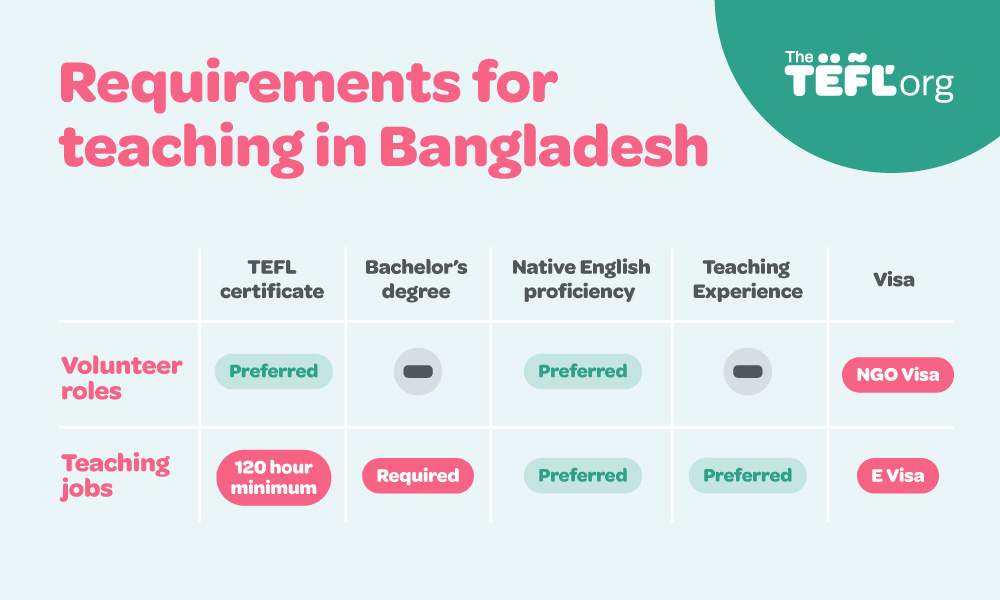
Yes, you need a TEFL certificate to teach English in Bangladesh. 120 hours of TEFL training is the minimum requirement at most positions, as you’ll compete with not only other foreign teachers but also local teachers.
Tip: Consider specialising! In addition to your 120 hour course, a business English or exam preparation course can help you find jobs teaching students with a specific goal in mind.
Can I teach English in Bangladesh without a degree??
Generally, you need a bachelor’s degree to teach English in Bangladesh. While not a mandatory visa requirement, a degree is often listed by employers as a requirement. If you don’t have a degree, you can teach English as a volunteer.
Tip: You can teach English without a degree in Bangladesh by volunteering, or, consider other countries such as Cambodia if you want to get paid to teach without a degree!
Do I need teaching experience to teach in Bangladesh?
Yes, you can teach English in Bangladesh without experience if you have a TEFL certificate. However, some teaching jobs require 2–3 years of experience, especially at international schools. Teachers without experience are most likely to find positions at private language centres or on volunteer programmes.
Tip: Don’t have teaching experience yet? Enroll in TEFL Org’s 40-hour Observed Teaching Practice to gain real experience and valuable feedback before you land your first teaching job.
Visa requirements for teaching in Bangladesh
To teach English in Bangladesh legally, you’ll need to get the Employment Visa, also known as the E Visa. This visa is valid for 90 days, but can be extended for up to 3 years as long as it’s sponsored by your in-country employer.
Volunteer teachers will need an NGO Visa to enter Bangladesh. This visa allows volunteers to stay in Bangladesh for up to 90 days.
Paid teachers and volunteers need to complete the application (online or in-person depending on nationality) before scheduling an appointment with the Bangladesh Embassy / High Commission to provide essential documents and pay visa fees. You can also arrange to send your documents and visa fee via postage.
Once approved, a printed copy of the visa sticker will be attached to a page in your passport, allowing you to enter Bangladesh as a worker.
To apply for the these visas, you’ll need the following:
- Proof of employment
- Clear criminal background check
- Original passport for at least 6 months and two blank pages
- Application fee varying depending on nationality, single/multiple entry
Important: The information above isn’t intended as legal or visa advice. Immigration rules can change; be sure to check the official government website for updated rules.
Get our free guide to teaching English in Asia
The ultimate guide to culture, life and work as a TEFL teacher in Asia.
Salary and Cost of Living
Bangladesh offers low costs of living, but with low paying and even unpaid teaching roles, you’ll need to be mindful of your spending habits.
How much can you earn teaching English in Bangladesh?
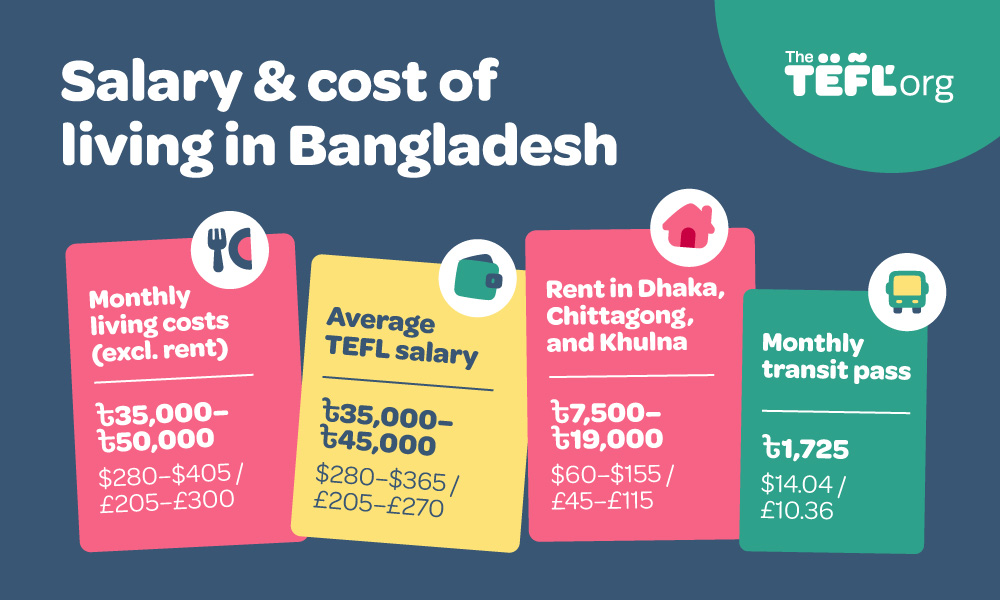
Many teaching positions in Bangladesh are voluntary, but most, if not all, salaried teaching jobs for foreign English teachers in Bangladesh take place in the private sector in language centres and international schools. The average salary for English teachers in paid positions ranges from ৳35,000–৳45,000 ($285–$365 / £210–£270).
Teachers at international schools earn more than the average teaching salary depending on the unique institution.
Want to find out how teaching salaries in Bangladesh compare with other countries? Download the TEFL Org Salary Guide!
How much does it cost to live in Bangladesh?
The average monthly living cost in Bangladesh ranges from ৳35,000–৳50,000 ($280–$405 / £205–£300) excluding rent.
Rent for a 1-bed apartment in popular cities like Dhaka, Chittagong, and Khulna range from ৳7,500–৳19,000 ($60–$155 / £45–£115). While the monthly cost of living is low, it can actually exceed the teacher salary in some cases.
It’s important to remember these cost of living figures are largely made up of what locals spend, and foreign teachers don’t always “live like a local” to its fullest extent. If you want to live in a more modern apartment or indulge in western comfort food, for example, you may need to anticipate spending more than the average cost.
| Restaurants | BDT | USD | GBP |
|---|---|---|---|
| Inexpensive restaurant meal | |||
| Domestic beer (0.5 litre) | |||
| Regular cappuccino | |||
| Water (0.33 litre) | |||
| Markets | BDT | USD | GBP |
| Regular milk (1 litre) | |||
| Loaf of white bread | |||
| Regular eggs (1 dozen) | |||
| Apples (1 kg) | |||
| Transportation | BDT | USD | GBP |
| One-way ticket (local transport) | |||
| Monthly pass (regular price) | |||
| Taxi start (normal tariff) | |||
| Gasoline (1 litre) | |||
| Utilities | BDT | USD | GBP |
| Electricity, heating, cooling, water, and garbage (for a regular apartment) | |||
| Regular prepaid monthly mobile tariff with 10GB+ data | |||
| Internet (60 Mbps, unlimited data, cable/ADSL) | |||
| Clothing and shoes | BDT | USD | GBP |
| Pair of jeans (Levis 501 or something similar) | |||
| Summer dress in a chain store | |||
| Nike running shoes (mid-range) | |||
| Men's leather business shoes |
English Teaching Jobs in Bangladesh
Most English teaching jobs for foreigners in Bangladesh exist in the private sector. With a consistent availability of English teachers, most teaching jobs at public schools go to locals (unless it’s a volunteer role).
Private language school jobs exist for teachers, especially those who have an interest in teaching business English.
Public schools
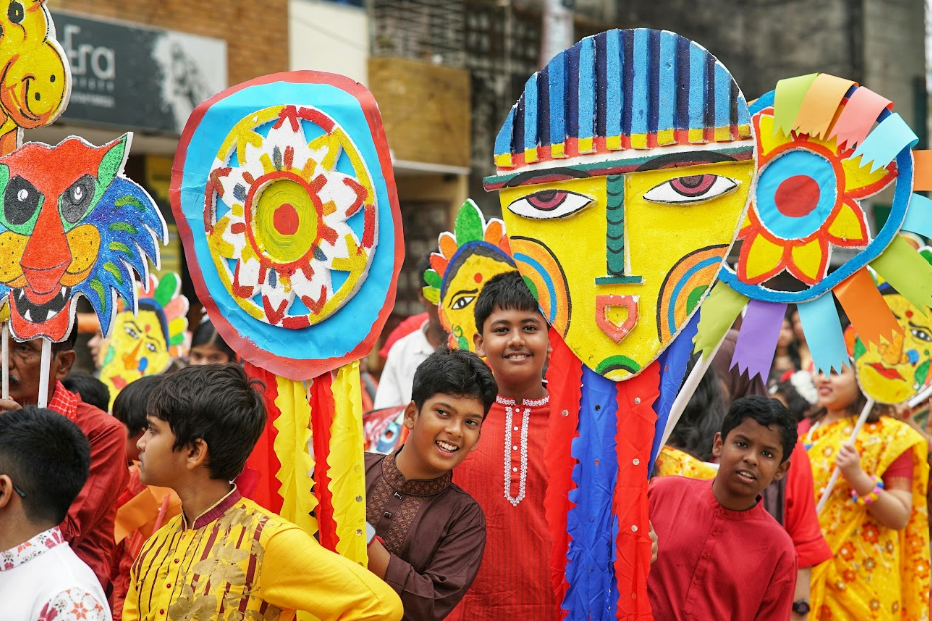
Most public school roles are filled by local teachers, as English is already a compulsory subject in Bangladesh. However, some opportunities for foreign teachers exist through volunteer programmes. Volunteer programmes typically require teachers to have a TEFL certificate and native English proficiency to teach at public schools.
What to expect at public schools in Bangladesh:
- Short-term volunteer positions, or very low salaries
- Teaching large classrooms with modest facilities
- Emphasis on conversational and spoken English skills
Private language schools
Private language schools are a common option for TEFL teachers, especially in larger cities like Dhaka. Students come in the form of young learners and teenagers supplementing their English education for IELTS exams and adults learning business English. Because of the type of students, classes take place in the evenings or on weekends.
What to expect at a private language school in Bangladesh:
- Working evenings and weekends
- Smaller classrooms, often with better facilities
- Teaching students of various ages from young learners to adults
- Niche subjects like exam preparation and business English
International schools
International schools offer some of the best teaching opportunities in Bangladesh. These local or international students come from wealthier families, prominent figures, and expatriate families. Teachers will deliver from an international curriculum and typically have access to excellent classroom facilities. While salary and benefits are among the best, entry requirements and expectations are high.
What to expect at an international school in Bangladesh:
- Teaching small classrooms of local and international students
- High requirements; TEFL certificate, bachelor’s degree, teaching license (preferred) and teaching experience (preferred)
- Teaching from an international curriculum with English as the primary language
- Excellent salary and benefits
Universities
Bangladesh has a large higher education sector, and with a range of English-taught programmes, plenty of opportunities for experienced teachers exist, especially in Dhaka. Lecturing positions usually require at least a master’s degree, while teaching assistant roles can occasionally suit newer teachers looking to gain experience.
What to expect at a university in Bangladesh:
- Lecture-based teaching
- Additional responsibilities such as academic research, mentorship
- High requirements including a bachelor’s or master’s degree, TEFL, teaching license, and a few years of teaching experience
Teaching English in Major Cities
Here are the most prominent locations for teaching opportunities in Bangladesh.
Teach English in Dhaka
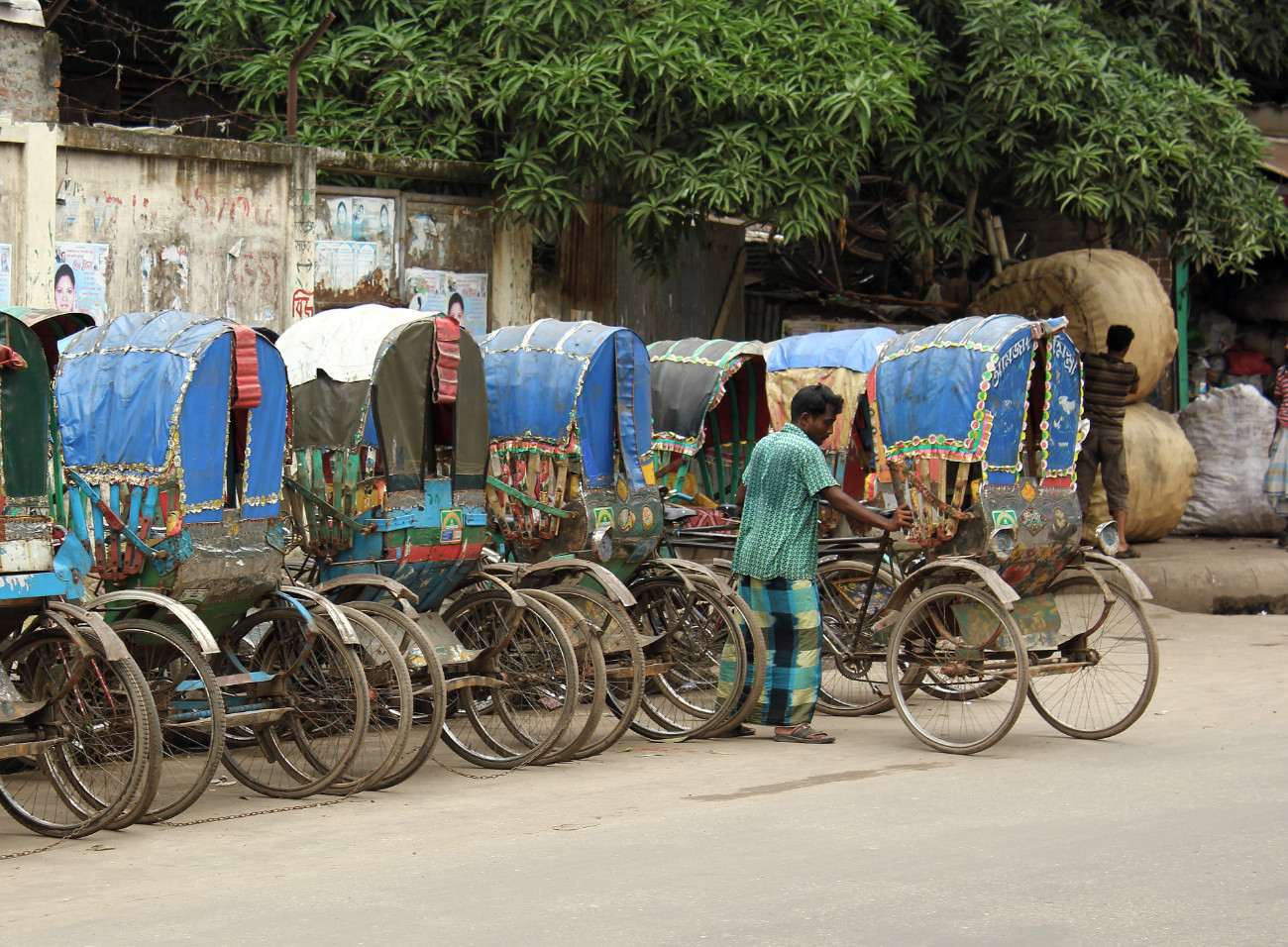
Home to the government and many of the country’s leading universities and research institutions, Dhaka plays a central role in Bangladesh’s rapid development.
With international schools, universities, and private language centres, it's the best place to find long-term teaching opportunities and professional development as a teacher in Bangladesh. With 52 universities, including the historic Dhaka College founded in 1841, education runs deep.
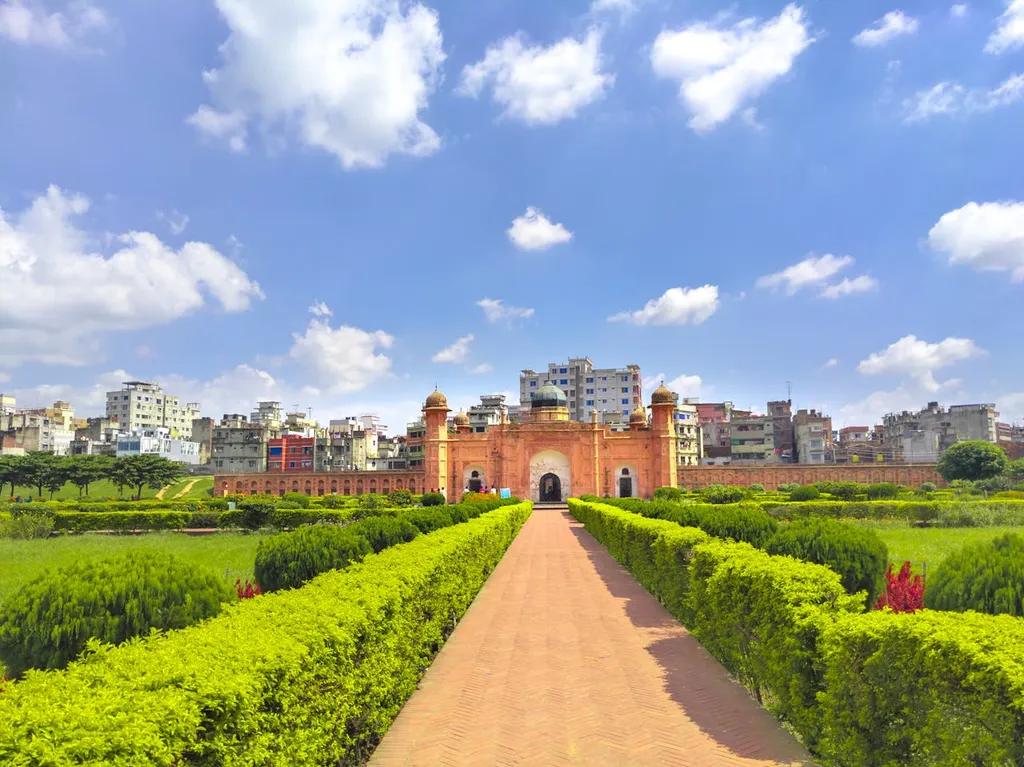
As one of the most densely populated cities in the world, the city is always buzzing. Dhaka is home to ornate Islamic architecture which grants its nickname The City of Mosques as well as cultural festivals from Durga Puja to Pahela Baishakh. Sweet and savory Bengali cuisine can be found in thriving food markets, and a national passion for cricket and football creates a thriving sports culture.Ready to Teach English Abroad?
Before you head off overseas to teach English abroad, don’t forget your TEFL course! Studying a TEFL course doesn’t just help employers tick your application from afar, it makes you a skilled and confident teacher.
From managing large groups, personalising lesson activities, and overcoming cultural and language differences in the classroom, you’ll become a pro with our TEFL certification. Choose between online or in-person courses ranging from 120-hour to 250-hour courses.
Frequently Asked Questions
Q. How to become a teacher in Bangladesh?
You’ll need an Employment Visa and work permit, but you’ll also need to meet unique employer requirements. This generally includes a TEFL certificate and a bachelor’s degree, and teaching experience is preferred at some institutions.
Q. Is English widely spoken in Bangladesh?
English language lessons are compulsory at schools, so it isn’t uncommon. However, the standard of conversational English still remains low, creating opportunities for English teachers.
Q. Is the education system in Bangladesh good?
Literacy rates average at 79% nationally, and Bangladeshi students learn English for around 12 years in public schools, with a focus on reading and writing skills.
Q. Is English taught as a second language in Bangladesh?
Yes, English is taught as a second language in Bangladesh. English language learning is encouraged from a very early age, and it's the most popular "foreign language" in Bangladesh. Students learn English for around 12 years at public schools.
Q. Can I teach English in Bangladesh as a non-native speaker?
It’s possible to teach English in Bangladesh as a non-native speaker, but you’ll need a bachelor’s degree from an English-speaking institution, an IELTS certificate (or equivalent), and teaching experience to compete against native English speakers.