








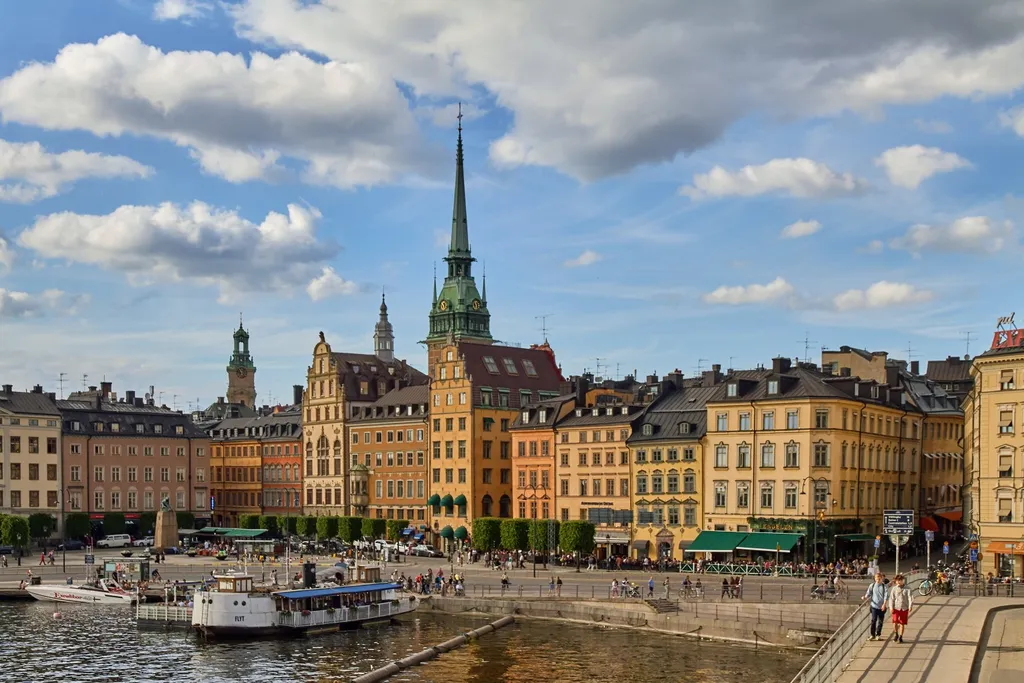
From its dynamic capital Stockholm, to viking heritage and the northern lights, Sweden offers a blend of wilderness, history, and cosmopolitan lifestyle. And while it's still technically a foreign language, Sweden's English levels are among the highest in the world.
Most teaching jobs in Sweden are taken by locals who speak English, so you may wonder whether it's worth exploring job opportunities in the largest Scandinavian country – but it's still possible with the right qualifications. Read on for the TEFL Org's guide on teaching English in Sweden, from the best jobs, salary expectations, visa process, and more.
Key Takeaways
- English speakers are common in Sweden, so English teachers aren't in high demand.
- Teachers generally need a bachelor's or master's degree and a teaching license (or an advanced TEFL course) to teach in Sweden.
- Most teaching jobs for foreigners can be found in the private sector at language schools or international schools.
- Public school jobs are typically reserved for local teachers who speak Swedish.
- The teaching salary in Sweden ranges from 20,000 kr–50,000 kr ($2,235–$5,320 / £1,670–£3,970) depending on your experience and job.
- EU teachers don't need a visa to teach in Sweden (which makes them preferred), but non-EU teachers need a visa and work permit.
Requirements for Teaching English in Sweden
The requirements for teaching in Sweden are much higher than they are in other TEFL locations. English is mandatory in the Swedish education system, which means that English speakers are common across the country and especially in big cities like Stockholm, Gothenburg, Malmö, or Uppsala.
But beyond teaching locals, there's a sizeable migrant population in Sweden. And while the government offers Swedish for Immigrants (SFI) training to asylum seekers, they don't offer English lessons. This creates opportunities for teachers at language centres and private tutors to help migrants develop their English skills.
Do I need a TEFL certification to teach English in Sweden?
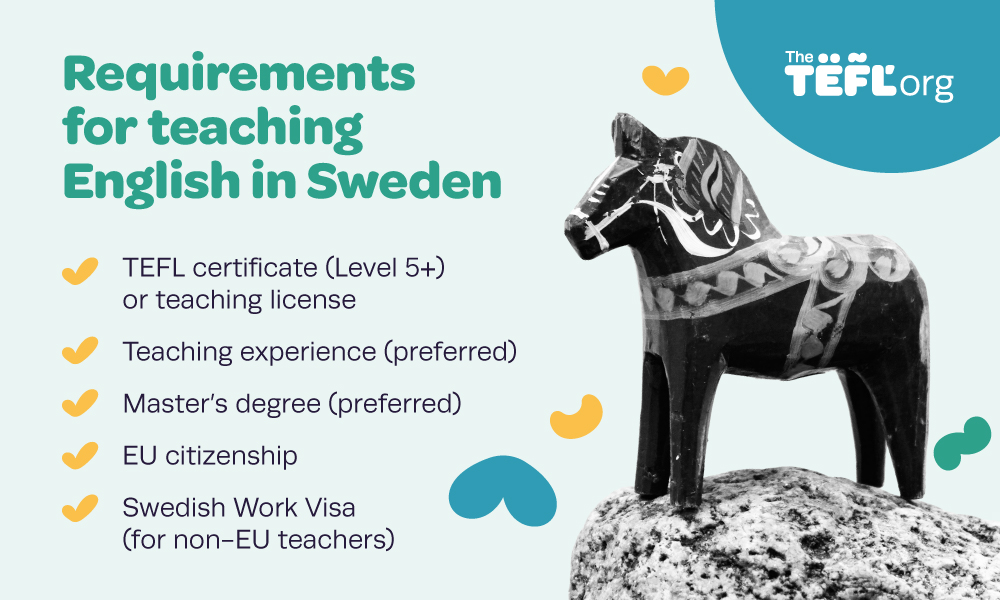
Yes, you need a TEFL certificate (at minimum) to teach English in Sweden. A 120 hour TEFL certificate is usually the industry standard in other countries, but most employers in Sweden require at least a Level 5 TEFL course or a teaching license.
If you're already teaching certified, having a qualification in an ESP (English for Specific Purposes) subjects like teaching young learners or Business English is desirable in a competitive job market, especially in private language schools.
Can I teach English in Sweden without a degree?
No, you can't teach English in Sweden without a degree. A bachelor's degree in any subject might be enough, but many employers prefer candidates who have a bachelor's or master's degree in English or education.
But don't worry, you can still teach abroad without a degree in other countries in Europe.
Can I teach English in Sweden without experience?
It's possible to teach English without experience in Sweden, especially if you have TEFL training, a degree, and an EU passport. While employers prefer teachers who have experience, especially at international schools, private language schools are generally more flexible, and employers will give preference to EU teachers who can relocate without visa sponsorship.
Visa requirements for teaching English in Sweden
Sweden is a member of the European Union, so EU citizens don't need to get a visa or work permit to teach English in Sweden. Employers prefer EU teachers because they can start working as soon as the contract allows them to.
Non-EU teachers need the Swedish Work Visa to teach English in Sweden, but this requires securing a job first, then your employer will sponsor your work permit application. Once they've started the application, you'll need to submit documents yourself for the Swedish Migration Agency to approve.
Here's what you'll need to apply for the work permit:
- Completed visa application form
- Proof of employment contract with a Swedish employer
- Clear criminal background check
- Proof of academic qualifications or experience
It's also possible to get an Entrepreneur Visa to live and work self-employed in Sweden, but you need to prove you have at least 200,000 kr ($21,000 / £15,560) in savings and proof of a business plan.
Download our Teaching English in Europe Guide
Everything you need to know about teaching English abroad in Europe
Salary and Cost of Living
Sweden has a reputation for being an expensive country, but how do teaching salaries compare to its cost of living? Here's everything you need to know.
How much can you earn teaching English in Sweden?
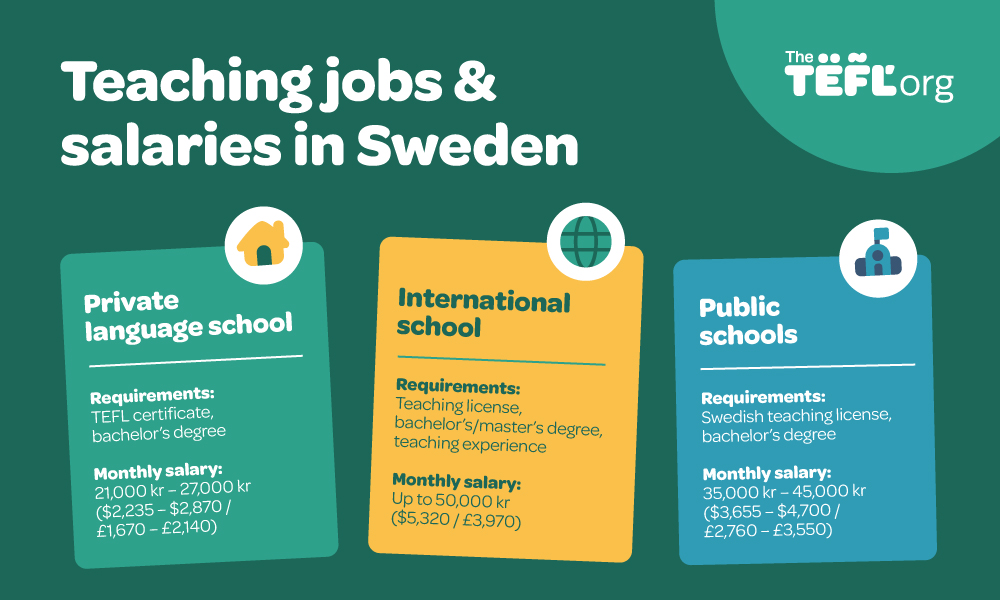
Teaching salaries are high in Sweden, and TEFL teachers can earn between 20,000 kr–50,000 kr ($2,235–$5,320 / £1,670–£3,970) depending on how experienced they are, their qualifications, and their job type.
Here's how teaching salaries compare across teaching jobs in Sweden:
- Public school: Teachers at public schools receive high and benefits in Sweden, but they teach much more than just English. The average salary ranges from 35,000–45,000 kr ($3,655–$4,700 / £2,760–£3,550) per month, and benefits include paid holidays and subsidised national healthcare.
- Private language school: Jobs at private language schools are generally more flexible for TEFL teachers, and salaries range from 21,000–27,000 kr ($2,235–$2,870 / £1,670–£2,140) — or more if you have qualifications in ESP subjects like IELTS preparation or business English.
- International school: Jobs at international schools typically pay the most, especially at elite institutions. Teachers can earn up to 50,000 kr ($5,320 / £3,970) per month depending on the school and their teaching experience.
- Private tutoring: Teachers can supplement their income or work entirely as tutors (if they're from the EU or have an Entrepreneur Visa), charging around 130–400 kr ($14–$43 / £10–£32) per hour depending on their experience and students.
| Restaurants | SEK | USD | GBP |
|---|---|---|---|
| Inexpensive restaurant meal | |||
| Domestic beer (0.5 litre) | |||
| Regular cappuccino | |||
| Water (0.33 litre) | |||
| Markets | SEK | USD | GBP |
| Regular milk (1 litre) | |||
| Loaf of white bread | |||
| Regular eggs (1 dozen) | |||
| Apples (1 kg) | |||
| Transportation | SEK | USD | GBP |
| One-way ticket (local transport) | |||
| Monthly pass (regular price) | |||
| Taxi start (normal tariff) | |||
| Gasoline (1 litre) | |||
| Utilities | SEK | USD | GBP |
| Electricity, heating, cooling, water, and garbage (for a regular apartment) | |||
| Regular prepaid monthly mobile tariff with 10GB+ data | |||
| Internet (60 Mbps, unlimited data, cable/ADSL) | |||
| Clothing and shoes | SEK | USD | GBP |
| Pair of jeans (Levis 501 or something similar) | |||
| Summer dress in a chain store | |||
| Nike running shoes (mid-range) | |||
| Men's leather business shoes |
Sweden is an expensive place to live, with the average person spending around 10,000 kr ($1,065 / £795) per month excluding rent. But while living costs and tax rates are high, you also get a lot for your money in the way of excellent public services.
Rent for a one-bedroom apartment in Sweden ranges from around 6,500–9,500 kr ($690–$1,010 / £515–£755) per month depending on whether you live inside or outside the city center. But rent in Stockholm can be significantly higher, ranging from 10,000–17,000 kr ($1,065–$1,230 / £795–£920).
Here's how you can save money on a teacher's salary in Sweden:
- Be flexible with location: Many have their sights set on Stockholm, but other cities like Gothenburg, Malmo, Lund and Uppsala offer more affordable living and rent up to 50–60% cheaper.
- Live outside the city center: Living outside the city center in cities such as Stockholm can save up to 6,000 kr ($640 / £475) per month in rent costs. And while public transport is expensive at around ~950 kr ($100 / £75), it's convenient and effective.
- Shop at discount supermarkets: Discount supermarkets such as Lidl or Willys can help you save plenty of money in the long run, and loyalty cards can increase these savings.
- Cycle to work: Cities like Stockholm, Malmö, and Gothenburg are cycle-friendly, so you save money and stay healthy on your daily commute.
English Teaching Jobs in Sweden
English teaching jobs in Sweden exist in both public and private schools. But unless you're fluent in the Swedish language, foreigners will have most luck finding English teaching jobs in the private sector.

EU teachers can look for work in-country if they have enough savings, but non-EU teachers will find most luck searching for jobs online on The TEFL Org Job Centre or other job platforms.
Public schools
Public school jobs in Sweden are rare for foreign teachers as most roles require a Swedish teaching certification (Svensk Lärarlegitimation), C1-level Swedish, and a bachelor's or master's degree. Public school teachers teach multiple subjects, and the Swedish education system places greater focus on student wellbeing and creating a well-rounded individual rather than purely academic results.
The academic year runs from August–June with 40 weeks of study, with peak hiring season in January–April.
What to expect at public schools in Sweden:
- Teaching multiple subjects in the Swedish national curriculum
- Emphasis on student wellbeing (rather than just academic results)
- Excellent salary and benefits, including paid holidays and health insurance
Private language schools
Private language schools are less common in Sweden than in other countries, but you can find schools that focus on specialist language training like teaching business English to adults. Because of the emphasis on English in public education, opportunities for teaching young learners are limited. These roles are often more accessible than public school positions, particularly for teachers without Swedish fluency.
What to expect at private language schools in Sweden:
- Evening and weekend classes
- Smaller class sizes
- Flexibility — year-round hiring and lower entry requirements
- Focus on ESP (English for Specific Purposes)
International schools
Most international school jobs are concentrated in Sweden's larger cities like Stockholm and Gothenburg. At these schools, teachers deliver lessons from an international curriculum to local and international students from expat families.
Salaries and benefits are often excellent, but competition and requirements are high. Teachers need a TEFL or teaching license, bachelor's or master's degree, and 2–3 years of teaching experience. While Swedish fluency helps, it isn't essential.
What to expect at international schools in Sweden:
- Teaching smaller class sizes of mostly international students
- Delivering lessons from an American, British, or International Baccalaureate curriculum
- Excellent salaries and benefits, but high requirements including a master's degree, teaching license, and previous teaching experience
Teaching English in Major Cities
From the east coast to the west coast, there are plenty of cities to consider for English teachers in Sweden.
Teach English in Stockholm
Often hailed as the Venice of the North due to its foundation of 14 islands, Stockholm is dynamic to say the least. Combining Nordic charm and medieval old towns with modern architecture and a thriving tech scene, Stockholm offers a varied cosmopolitan lifestyle.

Beyond teaching, live like a local by celebrating the midsummer festival or indulging in Swedish pastries and coffee with your peers (known as a fika), venture through the cobblestone old town, or walk alongside the cliffside waterfront at sunset.
Teach English in Gothenburg
With Dutch colonial roots and scenic canals, Gothenburg strikes a similar appearance to Amsterdam in the Netherlands. This port city and trading hub has a multicultural population, and it's sometimes referred to as Little London, with around 1 in 4 coming from outside Sweden.

Compared to Stockholm, Gothenburg feels more intimate and walkable. With around a third of Stockholm's population, the job market is smaller in Gothenburg, but opportunities still exist in international and private language schools.
After you've clocked out, there's plenty to do whether you're an adventurer or want to take it slow. Gothenburg is a host to one of the world's largest half marathon competitions, and you can kayak to uninhabited islands in its archipelago. Or, if you want to take things slower, embrace the hygge lifestyle by indulging in cinnamon buns while wandering around neighbourhoods like Haga and Linné.
Ready to Teach Abroad? Don't Forget Your TEFL
Before you start teaching English abroad, you'll need to be TEFL certified. Although a TEFL is a common requirement for teachers, it's a practical requirement as much as it's a technical one.
By studying a TEFL course, you'll learn about classroom management, lesson planning, overcoming first language interference, and so much more. These skills will not only help you qualify, but they'll make you feel confident in your abilities to lead the classroom.
Get started today with our 120 hour TEFL course!
Frequently Asked Questions
Q. Is there a demand for English teachers in Sweden?
There isn't a high demand for English teachers in Sweden simply because there's already an emphasis on English in the school system. However, opportunities still exist for highly qualified teachers.
Q. How much do English teachers get paid in Sweden?
The teaching salary in Sweden ranges from 20,000 kr–50,000 kr ($2,235–$5,320 / £1,670–£3,970) per month. Typically, public school and international school teachers will receive the highest salaries in Sweden.
Q. Can I get a job in Sweden if I only speak English?
Yes, but you'll be limited to teaching at private schools, and you'll be at a disadvantage because there are many local Swedish teachers who are advanced English speakers.
Q. Is it hard to get a job in Sweden as a foreigner?
It's easier to find a job in Sweden if you're a native English speaker with an EU passport due to the EU's freedom of movement. Non-EU teachers will struggle to find work in Sweden, because it requires finding an employer willing to sponsor your visa and work permit.