








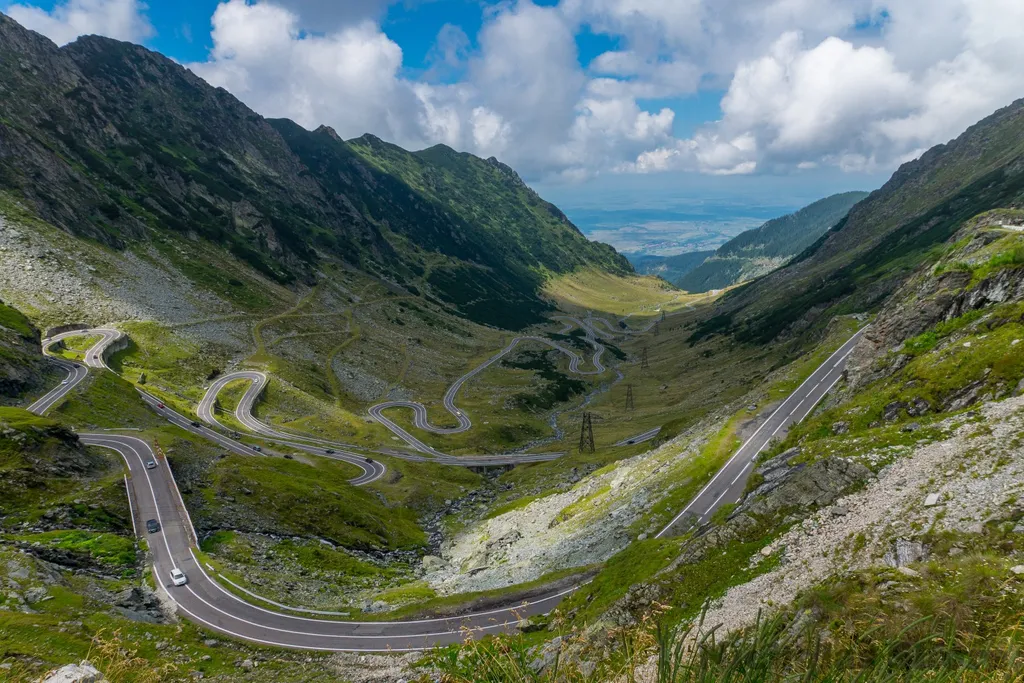
Gothic castles and deep folklore make Romania as stunning as it is interesting, but there’s so much more to Romania beyond vampire legends. The country is home to UNESCO-listed monasteries, Carpathian Mountains, and backpacking hubs that make it an appealing choice for history buffs, adventurers, and English teachers alike.
While it’s not always easy to find paid TEFL jobs in Romania, teaching opportunities exist if you have the right qualifications and know where to look. Read on for The TEFL Org’s guide to teaching English in Romania to find out more - from where to find jobs, the requirements you'll need, salary expectations, and more.
Key Takeaways
- Teachers need a 120-hour TEFL certification and a university degree to teach English in Romania.
- Romania has a high English proficiency score, but it still has a demand for English teachers.
- Most teaching jobs for foreign teachers come through summer camps and private language schools.
- English teachers can earn around 2,090L–9,420L ($460–$2,055 / £345–£1,535) per month, or more if they have prior teaching experience.
- Romania is a member of the EU, so teachers from EU countries don't need a visa.
- Non-EU teachers need the Long-Stay D Visa and Work Permit to teach in Romania legally.
- Top TEFL locations in Romania include Bucharest and Cluj-Napoca.
Requirements for Teaching English in Romania
English is widely spoken in Romania, especially among younger people and in larger cities. That means teaching jobs can be competitive, and your job prospects will depend partly on your qualifications and whether you need a work visa.
Here are the requirements for teaching abroad in Romania.
Do I need a TEFL certification to teach English in Romania?
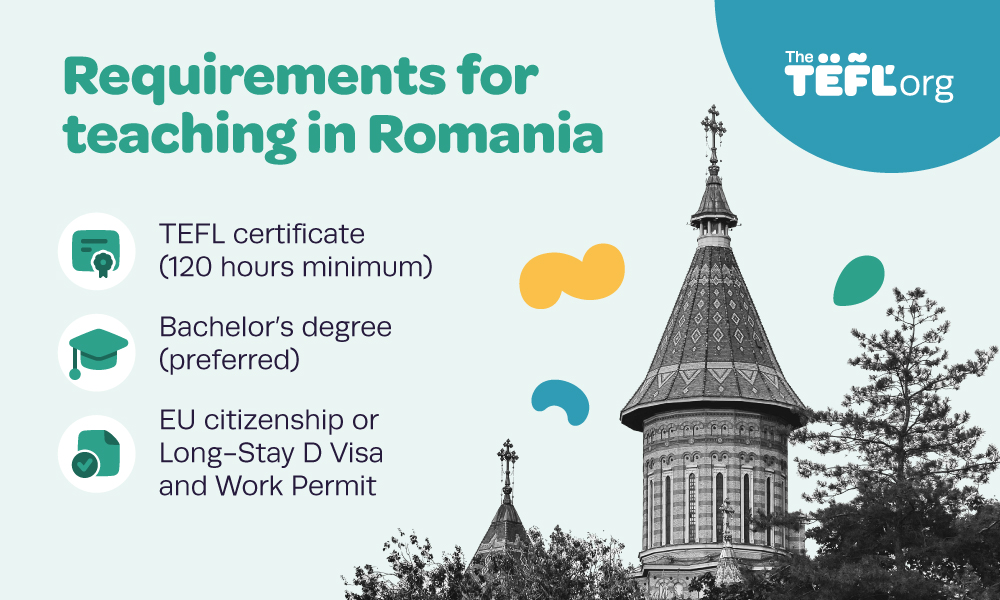
English teachers in Romania need a TEFL certificate to qualify for most jobs. Many employers require at least 120 hours of TEFL training, and while it’s possible to teach without a TEFL certificate, your scope will be limited to volunteer or very low paying positions.
A TEFL certificate teaches you how to plan lessons, manage large classrooms, and overcome common issues in the ESL classroom. If you want to develop your teaching skills further, you can always upskill with an advanced course.Tip: Many students in Romania look to study abroad in Europe and the US, so a qualification in teaching exam preparation can come in handy.
Can I teach English without a degree in Romania?
As long as you’ve got your TEFL certificate, you can teach English without a degree in Romania. Having an EU passport will boost your job prospects if you don’t have a degree, with private language schools and summer camps being the most common route for non-graduates.Can I teach abroad in Romania without experience?
Employers are open to hiring entry-level teachers, just as long as they’ve studied a TEFL course. If you have native English proficiency, a bachelor’s degree, and an EU passport, this can boost your prospects despite inexperience.
But while it’s possible to teach abroad without experience in Romania, you might need to settle for a lower paying job.
Visa requirements for teaching English in Romania
Romania is a member of the European Union, so EU citizens don’t need a visa to teach here legally. It’s as easy as finding a job and booking your ticket!
Non-EU teachers often face difficulty finding a teaching job because they need sponsorship for the Long-Stay D Visa and Work Permit, and EU law can be strict about hiring non-EU teachers.
But while it’s difficult, plenty of non-EU teachers still find work each year. Your employer will sponsor your work permit before you apply for the Long-Stay D Visa at the closest Romanian embassy.
To qualify for the visa and work permit, you’ll need the following:
- Proof of contract with a Romanian employer
- Clear criminal background check
- Proof of academic and professional qualifications
- Health insurance
British and American teachers can enter Romania visa-free for 90 days. If you’re volunteering at a summer camp for less than 90 days, you may be able to teach visa-free.
Download our guide to teaching in Europe
Everything you need to know about teaching English in Romania
Salary and Cost of Living
Romania is a very affordable travel destination, especially when compared to other European countries, but how does its cost of living compare with teaching salaries?
How much can you earn teaching English in Romania?
Teaching in Romania offers the opportunity to gain experience and cultural insight into eastern Europe, but it's not known for its salary potential. Much of the population lives in the countryside, and political instability in the past means that Romania’s economy has faced difficulties over the years.
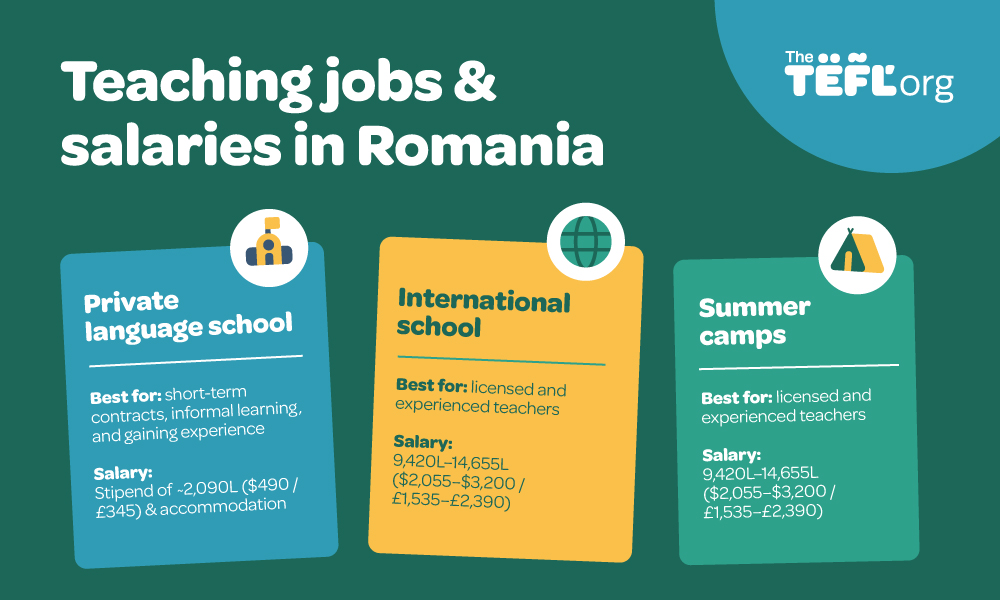
But you can still live comfortably on a teacher’s salary in Romania, with TEFL teachers earning around 2,090L–9,420L ($460–$2,055 / £345–£1,535) per month.
While you’ll find higher salaries in locations like Bucharest, Sibiu, and Cluj-Napoca, salaries are mostly influenced by your qualifications, experience, and teaching job.
- Summer camps: Summer camp jobs are popular for English teachers looking for short-term roles, and while salaries are low at around 2,090L ($490 / £345) per month, you’ll receive accommodation and meals.
- Private language schools: English teachers can earn around 2,750L–5,495L ($600–$1,200 / £450–£900) per month, or more with specialist skills like teaching business English or academic English.
- International schools: International school teachers in Romania can earn around 9,420L–14,655L ($2,055–$3,200 / £1,535–£2,390) per month.
Tip: The tax rate in Romania is quite high – ask your employer if salaries are listed as gross or net.
How much does it cost to live in Romania?
Romania is known for being a budget destination, with Bucharest in particular known for its affordability among travellers. But living in Romania is a different experience, so you’ll need to know what to expect as a resident when it comes to cost.
Teachers in Romania might spend around 4,765L ($1,040 / £775) per month including rent, or around 6,600L ($1,440 / £1,075) in popular cities like Bucharest and Cluj-Napoca.
But low teacher salaries also mean that some teachers need to adopt mindful spending habits, so here’s how you can stretch your salary in Romania.
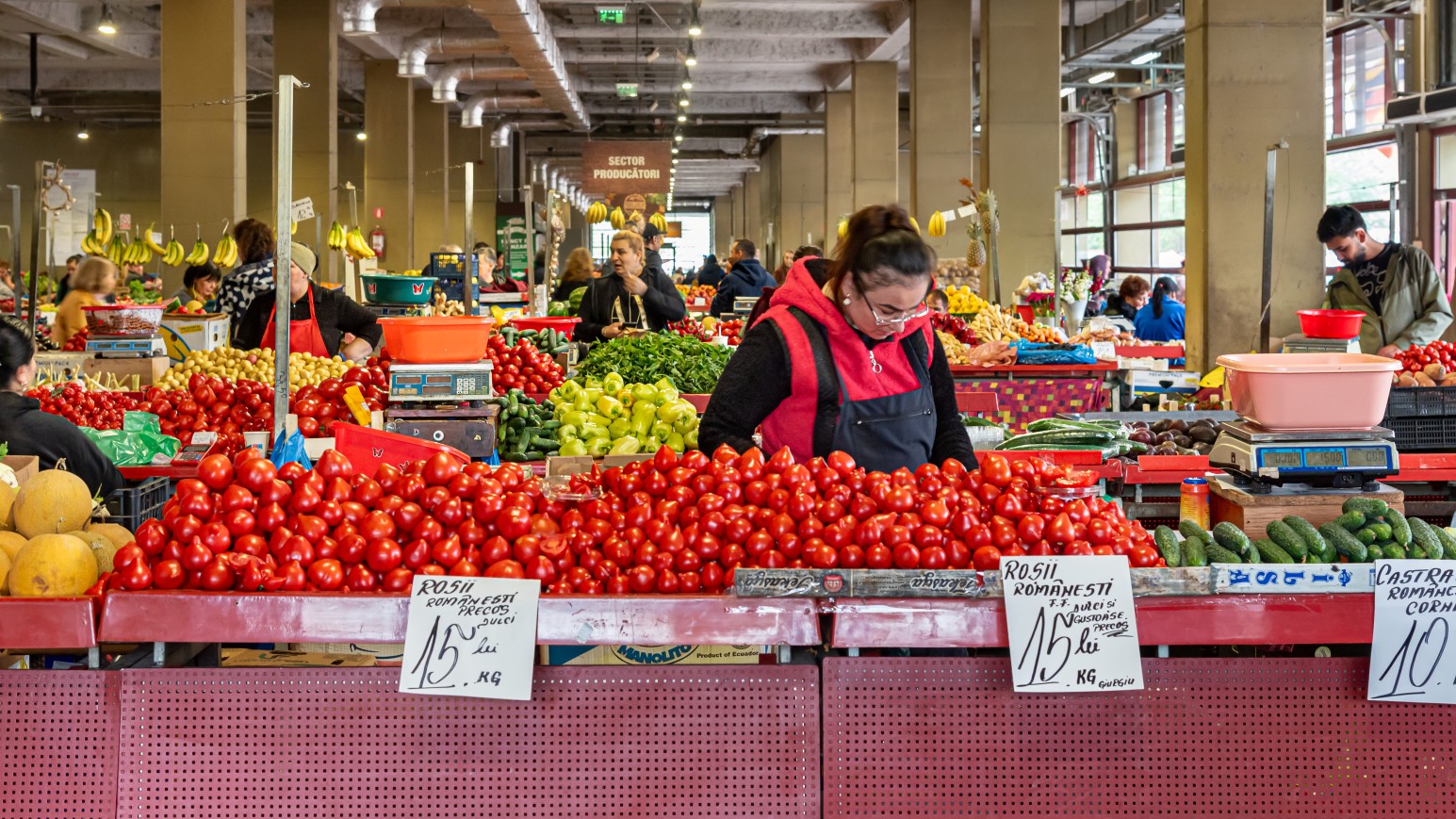
- Split the rent: Some teachers choose to split rent with expats or locals to save money, and the savings are huge. A 1-bed apartment in Bucharest costs around 2,600L ($565 / £420), but a 3-bed apartment costs around 1,365L ($295 / £220) per person per month.
- Live outside the city centre: Living outside the city centre in Bucharest can save you up to 1,100L ($240 / £180) per month, which can pay for other expenses like your monthly transport pass, gym membership, restaurants meals, and then some.
- Look out for the Meniul Zilei: The Meniul Zilei, or daily menu, is a set lunch menu that costs around 20–40L ($4–8 / £3–£6) that typically offers a soup, main dish, and a dessert or drink.
- Travel in the off-season: If you live in Romania, you’ve got all of the time in the world to travel – save it for the off-season from November–February to avoid high prices.
- Go international: Euronet ATMs are notorious for high withdrawal fees, stick to other ATMs or use an international debit card like Revolut, Monzo, or Wise to bypass foreign transaction fees.
| Restaurants | RON | USD | GBP |
|---|---|---|---|
| Inexpensive restaurant meal | |||
| Domestic beer (0.5 litre) | |||
| Regular cappuccino | |||
| Water (0.33 litre) | |||
| Markets | RON | USD | GBP |
| Regular milk (1 litre) | |||
| Loaf of white bread | |||
| Regular eggs (1 dozen) | |||
| Apples (1 kg) | |||
| Transportation | RON | USD | GBP |
| One-way ticket (local transport) | |||
| Monthly pass (regular price) | |||
| Taxi start (normal tariff) | |||
| Gasoline (1 litre) | |||
| Utilities | RON | USD | GBP |
| Electricity, heating, cooling, water, and garbage (for a regular apartment) | |||
| Regular prepaid monthly mobile tariff with 10GB+ data | |||
| Internet (60 Mbps, unlimited data, cable/ADSL) | |||
| Clothing and shoes | RON | USD | GBP |
| Pair of jeans (Levis 501 or something similar) | |||
| Summer dress in a chain store | |||
| Nike running shoes (mid-range) | |||
| Men's leather business shoes |
English Teaching Jobs in Romania
While teaching jobs exist in public and private schools, public school jobs are usually reserved for local teachers fluent in Romanian. TEFL teachers will find most luck in the private sector, whether that’s at a summer camp, language centre, or international school.
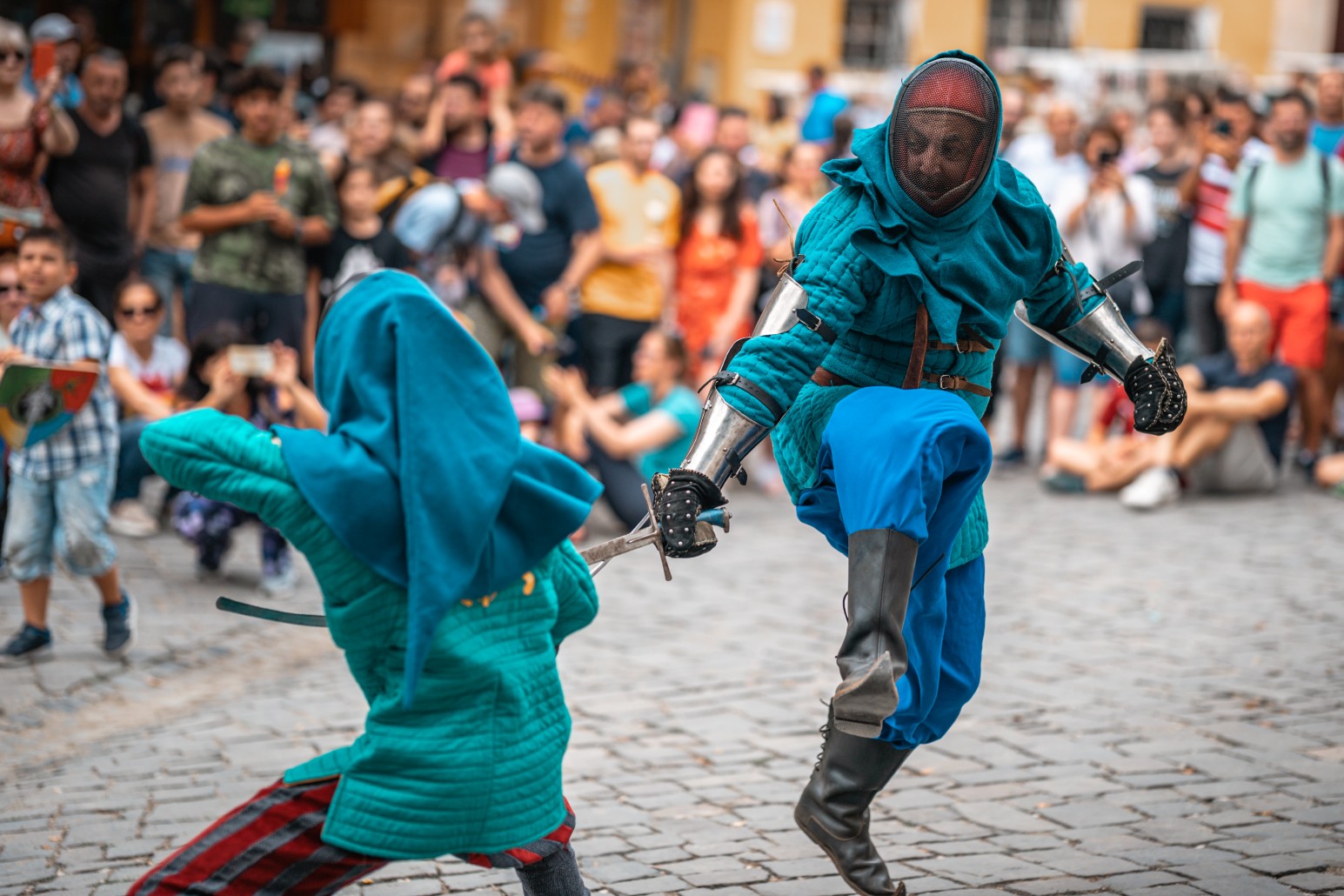
Once you’re TEFL certified, you can begin scrolling for jobs on platforms like The TEFL Org Job Centre or other platforms for opportunities. Or, you can apply directly to the school website. If you’re from the EU, you could try your luck by applying for schools in-person to make a good first impression.
Summer camps
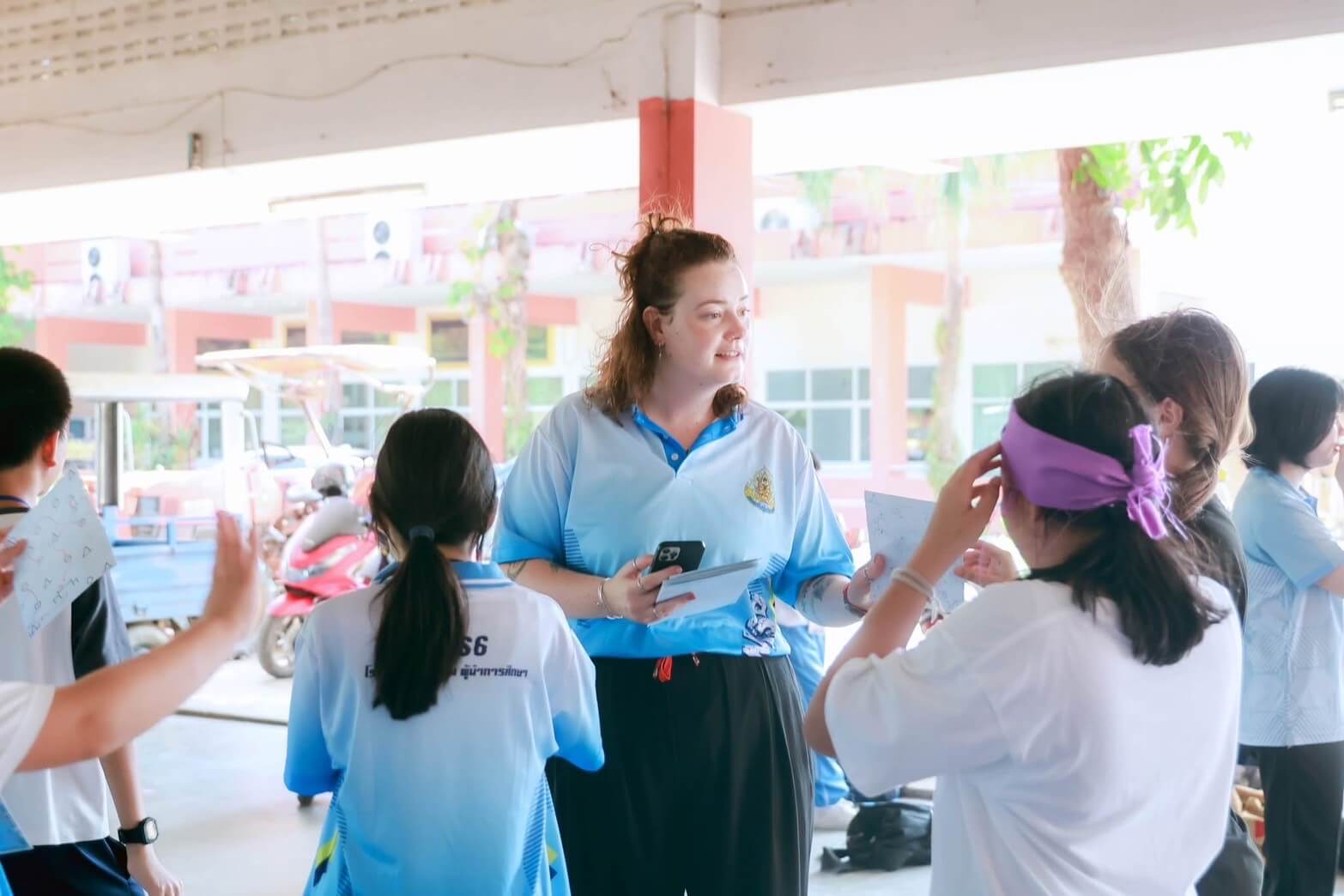
Summer camps are possibly the most popular TEFL jobs in Romania because they’re flexible, entry-friendly, and don’t require long-term commitment. They’re also a lot of fun, as you’ll teach conversational English as a “team leader” rather than working as a traditional classroom teacher. You’ll host team-building activities, arts and crafts workshops, mountain hikes, and more. Popular examples include English Cool Camp in Brasov, Sibiu, and Bacău.
What to expect at summer camps in Romania:
- Short-term teaching commitments (2–12 weeks)
- Low salaries but free accommodation and meals
- Teaching engaging and team-building activities in English
- Staying onsite at a hotel, ski resort, or other holiday resort
Private language schools
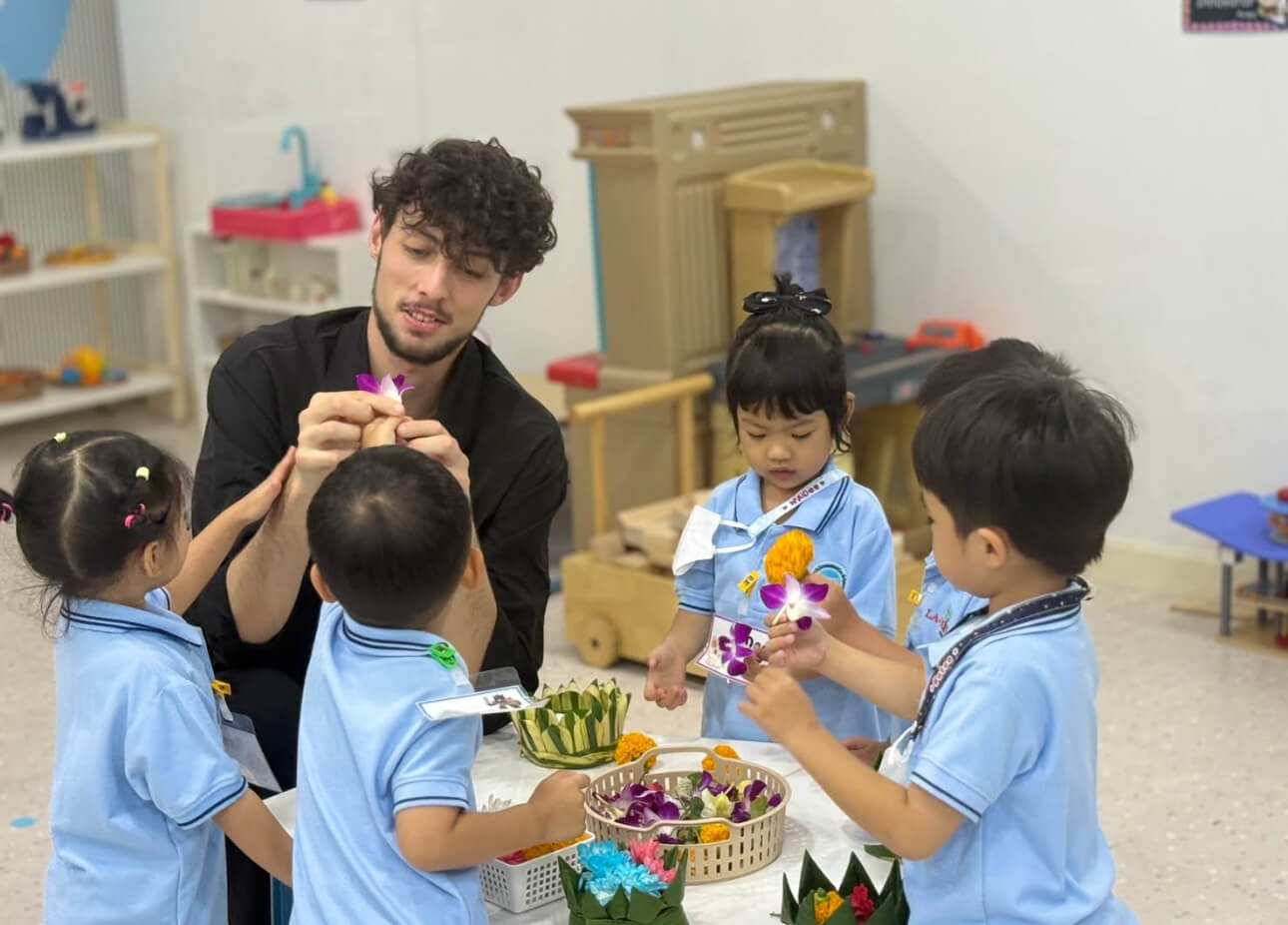
Private language schools typically cater to teenagers and adults who are learning English with a specific intention, like preparing for exams or improving corporate English skills. Most classes take place in the evening and on weekends to accommodate busy schedules, and most private language schools hire year-round since they aren’t restricted to a national curriculum.
What to expect at private language centres in Romania:
- Evening and weekend classes
- Teaching ESP (English for Specific Purposes) subjects
- Flexible entry-requirements – speciality experience preferred
International schools
International schools are the gold standard when it comes to teaching English abroad – they offer not only the best salaries but also excellent career progression. At these schools, you’ll teach local and mostly international students English as a primary language in different subjects from an international curriculum. But most international schools seek qualified teachers with 3+ years of experience.
What to expect at international schools in Romania:
- Monday to Friday schedule
- Teaching local and international students
- Teaching English as a primary language from a US, UK, or IB curriculum
- Excellent salary and benefits – but high requirements and responsibilities often including a master’s, teaching licence, and 3+ years of experience
Teaching English in Major Cities
From Transylvania to Moldavia and Wallachia, Romania is home to beautiful regions that offer their own folklore, and culture.
Teach English in Bucharest
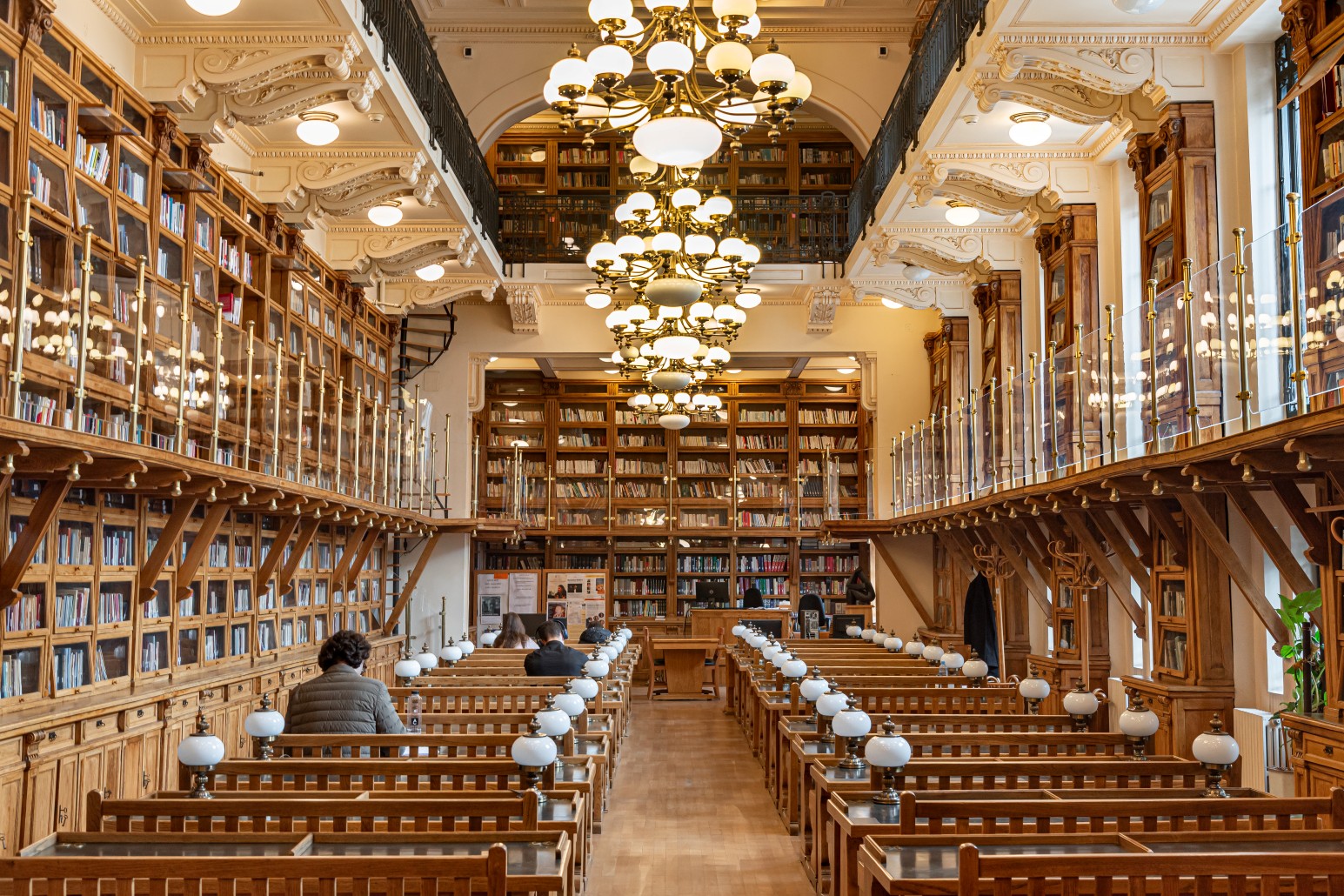
Bucharest has a reputation for affordable nightlife, but there's much more to the city than weekend breaks. Its cool neighbourhoods of Art Deco, Soviet brutalist, and Belle Époque architecture within close proximity creates a city of stark contrasts that’s sure to entice anyone with an eye for detail.
As the capital, here’s where you’ll find the bulk of teaching opportunities in Romania, with jobs for entry and experienced teachers appearing at language centres, international schools, and summer schools. But beyond teaching, there’s plenty to do in Little Paris.
From the Palace of Parliament to the ornate Romanian Athenaeum, Bucharest’s visuals are enough to eat up your time. If you’re looking to up the tempo, head to its taprooms for its speciality beers or if you’ve got more time, hike up the Bucegi Mountains or visit Peleș Castle.
Teach English in Cluj-Napoca
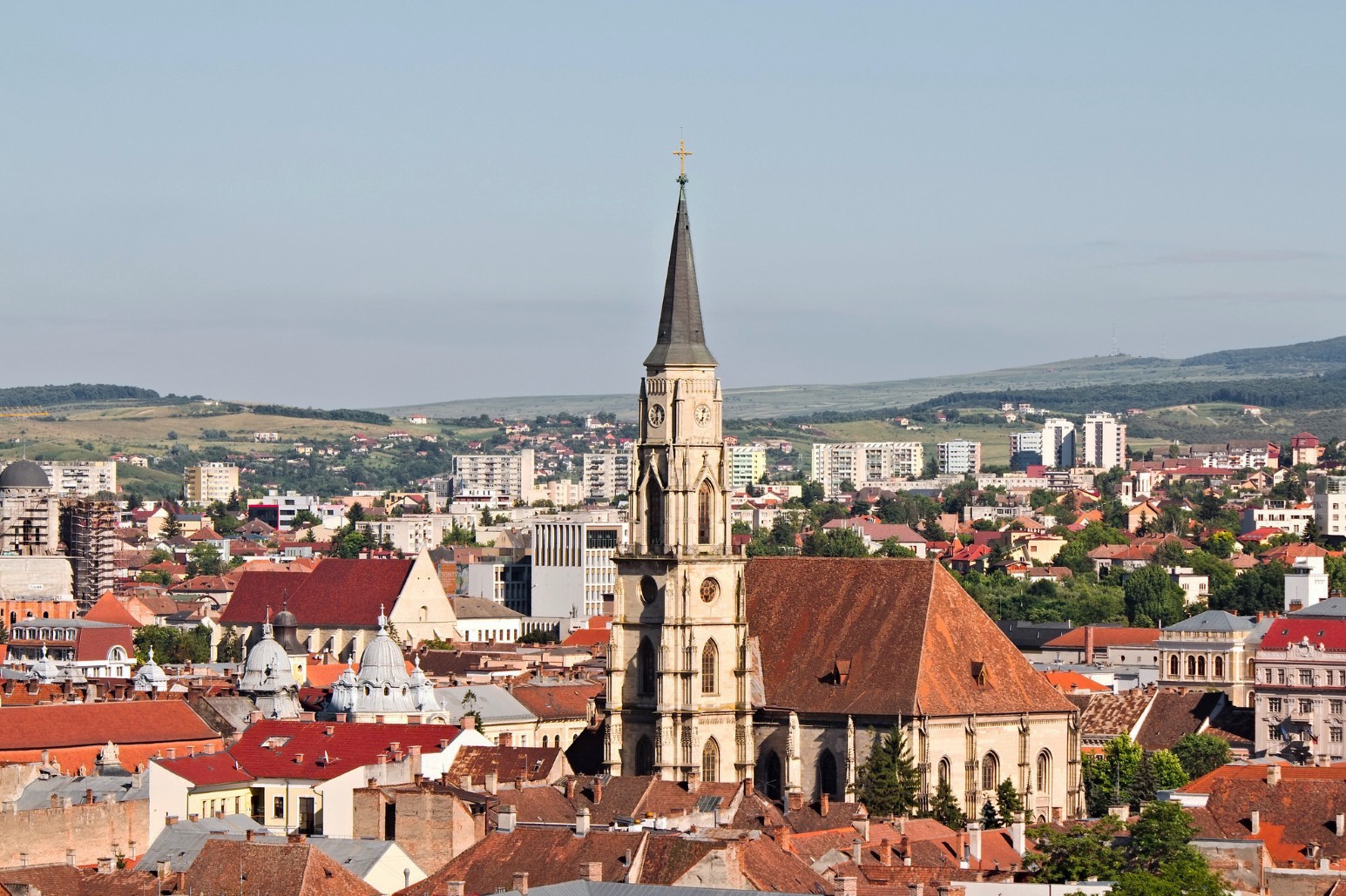
When you’re outside the classroom, there’s plenty to do in one of Europe’s most underrated cities. From the botanical gardens, Hoia-Baciu forest, National Museum of Transylvanian History and Jazz festivals, you can take life in Cluj-Napoca as slow or as quickly as you like.
TEFL Org Teacher Story
Want to hear it from the teachers themselves? Here’s what Louise had to say about her experience working at a summer camp in Romania.
Louise, Romania
“During my three weeks of teaching in Romania, I taught topics such as colours, animals, places and transportation. In addition to this on a Saturday afternoon I was able to have an arts and crafts workshop, where we made dream catchers, from various different materials.”
“As well as teaching, we participated in evening activities for the children such as discos, film nights, quiz nights and so much more. We also supervised the children in sporting activities such as swimming, hiking and zip-wiring! Hiking in the Romanian countryside was beyond stunning.”
Discover more stories from TEFL Org graduates.
Ready to Teach English Abroad? Don’t Forget Your TEFL Certificate
Before you start packing your bags to teach English abroad, you'll need to complete the TEFL course. A TEFL course gives you the practical skills employers are looking for. You'll learn how to plan lessons, manage a classroom and help students build confidence in English. You'll learn how to engage large groups, plan and deliver lessons effectively, and overcome common obstacles in classrooms where English isn't the first language.
Get started today with our 120-hour TEFL course to launch your teaching career abroad.
Frequently Asked Questions
Q. How much do English teachers in Romania earn?
TEFL teachers earning around 2,090L–9,420L ($460–$2,055 / £345–£1,535) per month, with private language centres and international schools offering the highest salaries.
Q. Can I teach English in Romania as a non-EU teacher?
It's possible but difficult. Non-EU teachers need to find a job with an employer that's willing to hire teachers from outside the EU to sponsor their visa and work permit.
Q. Can I teach in Romania as a non-native speaker?
Yes, you can teach English as a non-native speaker in Romania if you have a TEFL certificate, degree, and an EU passport. A TEFL certificate demonstrates that you can teach English effectively, but you might need proof of your English proficiency through an IELTS or CEFR certificate.