











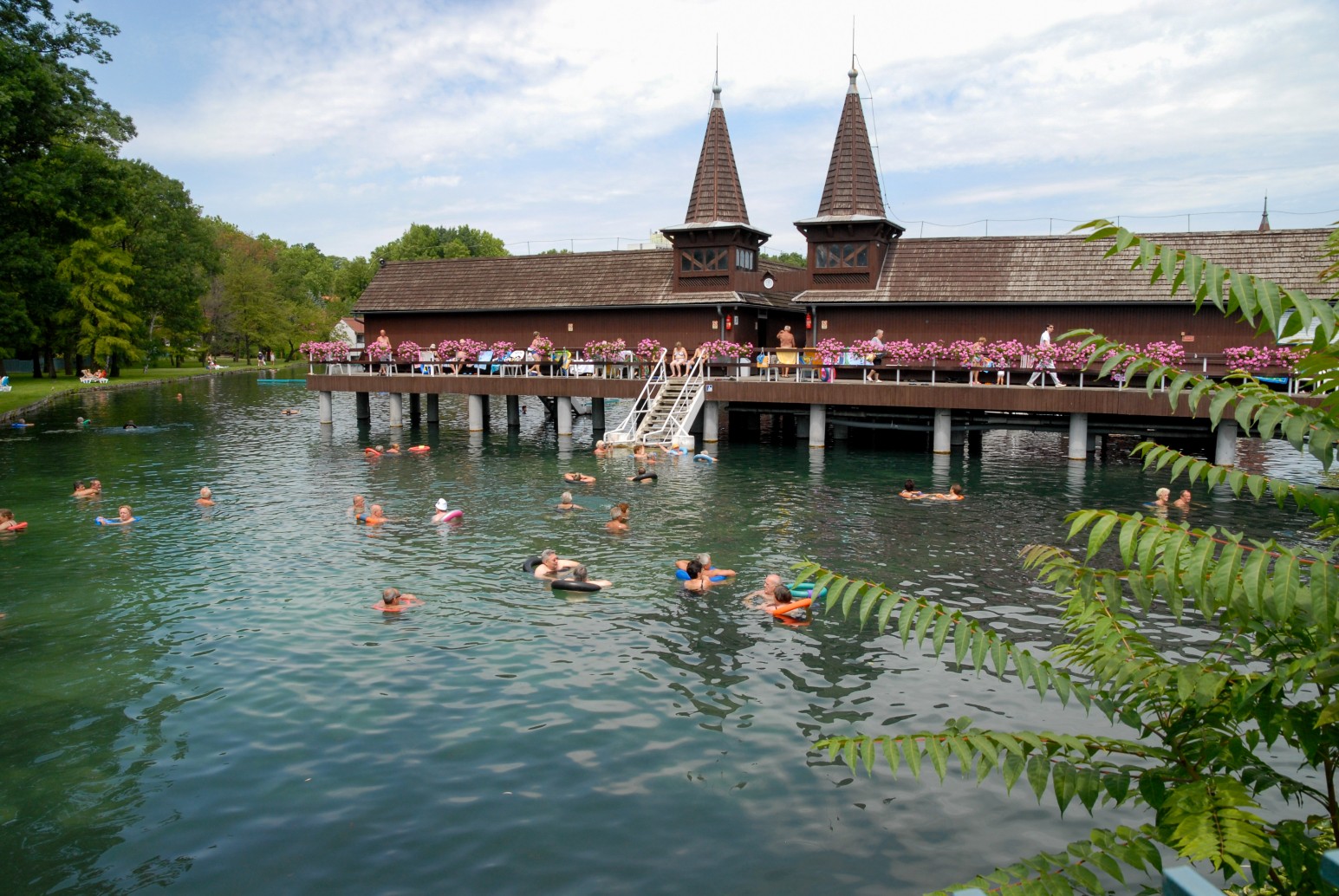
From medieval castles and Roman amphitheatres to its iconic thermal baths, Hungary draws millions of visitors each year. But beyond being a staple in your backpacking itinerary, opportunities for English teachers exist across this picturesque country.
There has been a growing emphasis on learning English in public schools since Hungary joined the EU in 2004, but despite Hungary’s high English proficiency, there’s a demand for English teachers to support an enormous tourism and hospitality sector. Read on for The TEFL Org’s guide on teaching English in Hungary, from the requirements, salary expectations, visas, top locations, and more.
Key Takeaways
- Hungary has a high level of English proficiency, but it still has a demand for English teachers due to its busy tourist sector.
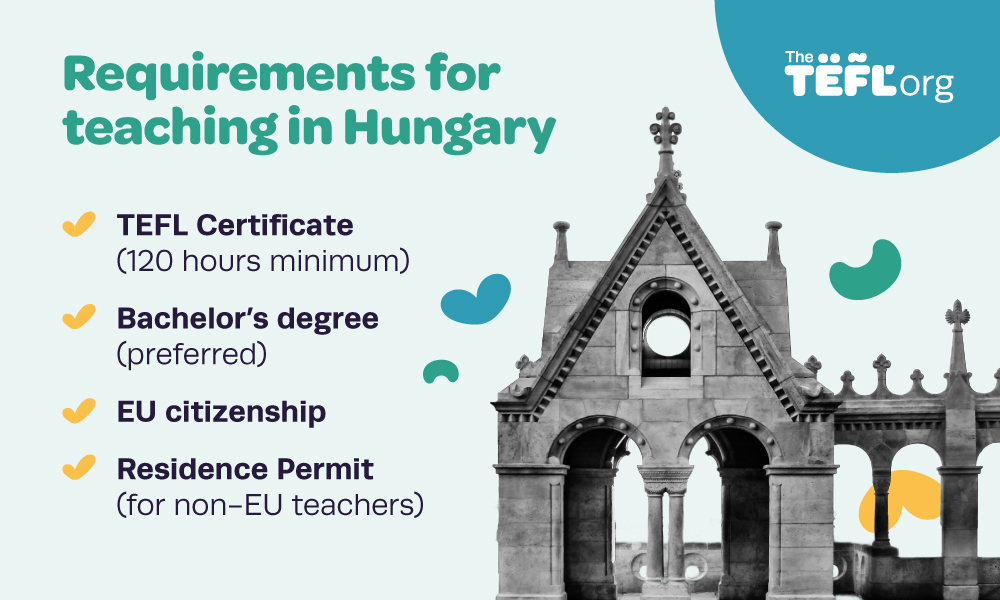
- Teachers generally need a TEFL certificate, and a bachelor’s degree is preferred.
- The average teaching salary in Hungary ranges from 280,000–450,000 Ft ($900–$1,445 / £680–£1,095) per month.
- Teachers with EU citizenship don’t need a visa, but non-EU teachers need a Residence Permit to work and live in Hungary.
- Top locations for teachers include Budapest, Debrecen, and Szeged.
Requirements for Teaching English in Hungary
English is taught as a foreign language in the national curriculum, with students learning the language from public school through to secondary school. This means that standards are high for foreign English teachers looking to break into the market.
Here’s everything you need to know about the teaching requirements in Hungary.
Do I need a TEFL certification to teach English in Hungary?
Yes, you need a TEFL certificate to teach English in Hungary. Teaching English in Hungary can be a competitive market, so you’ll need the right qualifications on-paper and practical skills to lead the classroom.
Most employers in Hungary generally require teachers with at least 120 hours of TEFL training, because you’ll learn the essentials from classroom management, lesson planning, teaching grammar, and so much more.
But a 120 hour TEFL course is often the minimum requirement – there are other courses like the 250 hour Level 5 TEFL which dive even deeper into teaching methodologies.
Can I teach in Hungary without a degree?
Legally, you can teach English in Hungary without a degree, but most employers list it as a requirement. Other jobs require teachers to hold a university degree in English or education, or even a teaching licence from their home country.
If you’re an EU citizen, you’ll have more opportunities teaching abroad without a degree than non-EU citizens provided that you have a TEFL certificate.
Can I teach in Hungary without experience?
Yes, it’s possible to teach English without experience in Hungary, especially if you’ve got a TEFL certificate and a bachelor’s degree. But some jobs, like in public education or at international schools, require previous teaching experience to qualify.
While it’s not impossible to teach in Hungary without experience, you’ll start with a lower salary unless you have advanced qualifications in ESP (English for Specific Purposes) subjects, a master’s degree in English or education, and so on.
Visa requirements for teaching English in Hungary
Hungary is a member of the European Union, which means EU teachers don’t need a work visa, they can start working as soon as their contract allows. EU law also ensures that local teachers have priority over non-EU teachers, giving them a significant advantage in the market.
If you’re not from the EU, you’ll need to apply for Residence Permit for the Purpose of Employment to teach in Hungary legally. But you’ll need to secure a job first, that way, your employer can sponsor your application.
To get the residence permit, you’ll need the following:
- Completed residence permit application form
- Proof of employment with Hungarian employer
- Clear criminal background check
- Proof of qualifications and experience
- Health insurance
Find out more about visa requirements for teaching English abroad.
Download our guide to teaching in Europe
Everything you need to know about teaching English in Hungary

Salary and Cost of Living
Hungary is known for being a budget travel destination, but how does its cost of living compare to teaching abroad salaries?
How much can you earn teaching English in Hungary?
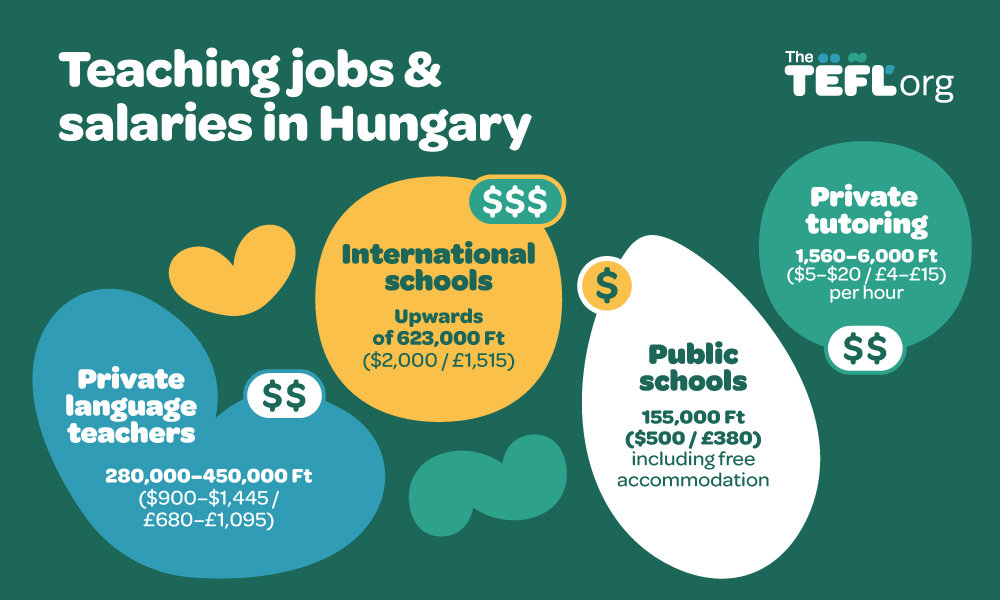
Teaching salaries in Hungary range from around 280,000–450,000 Ft ($900–$1,445 / £680–£1,095) per month. But this depends on a number of factors like the teacher’s experience, qualifications, nationality, and their specific job.
Here’s how teacher salaries compare across different teaching jobs in Hungary:
- Public schools: Most public school jobs come through the CETP programme, with salaries ranging from around 155,000 Ft ($500 / £380) per month including benefits like free accommodation, insurance, and more.
- Private language teachers: Private language school salaries vary depending on the contract, subjects, and the school’s reputation. Generally, salaries range from 280,000–450,000 Ft ($900–$1,445 / £680–£1,095).
- International school: Teachers at international schools can earn upwards of 623,000 Ft ($2,000 / £1,515) per month depending on the institution.
- Private tutoring: Teachers often supplement their salaries by private tutoring, charging around 1,560–6,000 Ft ($5–$20 / £4–£15) per hour depending on experience.
| Restaurants | HUF | USD | GBP |
|---|---|---|---|
| Inexpensive restaurant meal | |||
| Domestic beer (0.5 litre) | |||
| Regular cappuccino | |||
| Water (0.33 litre) | |||
| Markets | HUF | USD | GBP |
| Regular milk (1 litre) | |||
| Loaf of white bread | |||
| Regular eggs (1 dozen) | |||
| Apples (1 kg) | |||
| Transportation | HUF | USD | GBP |
| One-way ticket (local transport) | |||
| Monthly pass (regular price) | |||
| Taxi start (normal tariff) | |||
| Gasoline (1 litre) | |||
| Utilities | HUF | USD | GBP |
| Electricity, heating, cooling, water, and garbage (for a regular apartment) | |||
| Regular prepaid monthly mobile tariff with 10GB+ data | |||
| Internet (60 Mbps, unlimited data, cable/ADSL) | |||
| Clothing and shoes | HUF | USD | GBP |
| Pair of jeans (Levis 501 or something similar) | |||
| Summer dress in a chain store | |||
| Nike running shoes (mid-range) | |||
| Men's leather business shoes |
How much does it cost to live in Hungary?
Hungary is around 30–40% cheaper than the UK or the US, but living costs vary depending on where and how you live. A single person spends around 350,000–490,000 Ft ($1,120–$1,565 / £825–£1,155) per month including rent, but this depends on your lifestyle, location, job perks, and more.
For example, expect to spend more if you live in travel hubs like Budapest. Here’s how you can stretch your budget teaching English in Hungary:
- Consider job types: When searching for a teaching job in Hungary, don’t just consider salary. Keep in mind the benefits that each job provides. Teaching programmes like CETP offer low salaries but include benefits like free accommodation and health insurance.
- Look beyond Budapest: Budapest is the gold standard of backpacking cities, but it might not offer the best saving potential. Expat and tourist hubs are typically more expensive, so don’t rule out smaller cities like Debrecen, Szeged, and Eger.
- Split the rent: Many teachers split rent costs by sharing accommodation with other expats or teachers. While rent for a 1-bed apartment in Budapest costs around 245,000 Ft ($785 / £595), a 3-bed apartment costs around 160,000 Ft ($515 / £390) per person, per month.
- Factor in ‘common costs’: In Hungary, you’ll need to pay a common cost or közös költség which is a monthly maintenance fee, often ranging from around 30,000–50,000 Ft ($95–$160 / £70–£120). Don’t forget to factor this into your budget.
- Eat like a local: Local delights in Hungary like gulyás or pörkölt are not only delicious but also more affordable than imported food. You can also find eateries that offer set lunch menus or napi menü which is significantly cheaper than eating out in the evening.
- Use an international card: Using an international card like Wise, Revolut, or Monzo can help minimise transaction or withdrawal fees while your local bank account is being set up.
English Teaching Jobs in Hungary
English teaching jobs in Hungary can be found in the public and private sector depending on the teacher’s experience, passport, and local language proficiency. There’s a range of career paths for teachers to take, and it’s important to consider which will make the most of your TEFL experience.
If you’re from the EU, you can take the “boots on the ground” route by directly applying for school. But if you’re outside the EU, your best bet is to check for jobs online on The TEFL Org Jobs Centre and other platforms.
Public schools
Most public school jobs are found through the Central European Teaching Programme (CETP). Public school teachers typically teach for 22–26 hours per week from Monday to Friday, not including time spent grading, assigning homework, lesson planning and so on. Unlike public school programmes in other countries, teachers aren’t language assistants but take full responsibility over their classrooms.
What to expect at public schools in Hungary:
- Monday to Friday schedule
- 4–6 hours of teaching per day
- Following the national curriculum
- Teaching multiple subjects in English
Private language schools
Private language schools are the most accessible jobs for TEFL teachers because there’s flexibility between entry requirements, student ages, subjects, and so on across different schools. Some schools may specialise in teaching business English, young learners, or exam preparation, and may hire year-round. Many students attend language schools to qualify for studying abroad or improve career prospects.
What to expect at private language schools in Hungary:
- Evening and weekend work
- Goal-oriented learning and teaching English ESP (English for Specific Purposes) subjects
- Student ages ranging from young learners, teenagers, and adults
International schools
International schools or bilingual schools (gimnazia) offer a high standard of education with English as a main language. The key difference between international schools and bilingual schools is that bilinguals focus on two languages – in this case Hungarian – in addition to English.
Teachers teach mostly international students, but local students from wealthy families also attend these schools to study under an international curriculum. Salaries and benefits are among the best, but expectations are high.
What to expect at international schools in Hungary:
- Monday to Friday schedule
- Following an international curriculum or a blend of international and national Hungarian curriculum
- Advanced levels of English skills among students
- High entry requirements including a master’s, teaching licence, and 2–3 years of experience
Teaching Programmes in Hungary
If you’re looking for more support in your job search and experience, consider joining an English teaching programme in Hungary like the Central European Teaching Programme (CETP).
Central European Teaching Programme (CETP)
In Hungary, the Central European Teaching Programme (CETP) is the most popular teaching programme, offering job placement, pre-departure support, in-country orientation, and also visa sponsorship for non-EU teachers.
CETP teachers work at public schools as full-time teachers – not language assistants like other programmes in other countries. Partnered with over 100 schools across Hungary, CETP has sent hundreds of teachers to work in Hungary. While teachers need to pay a one-time programme fee, this goes towards in-country support, orientation, and accommodation.
Here are the requirements for joining the Central European Teaching Programme:
- Native speaker of English from the U.S., Canada, the U.K. or another EU country
- Clear criminal background check
- Be TEFL certified
- Minimum commitment of a semester
Find out how to teach English in Europe as an American.
Teaching English in Major Cities
Here are some of the most popular locations for teaching English in Hungary.
Teach English in Budapest

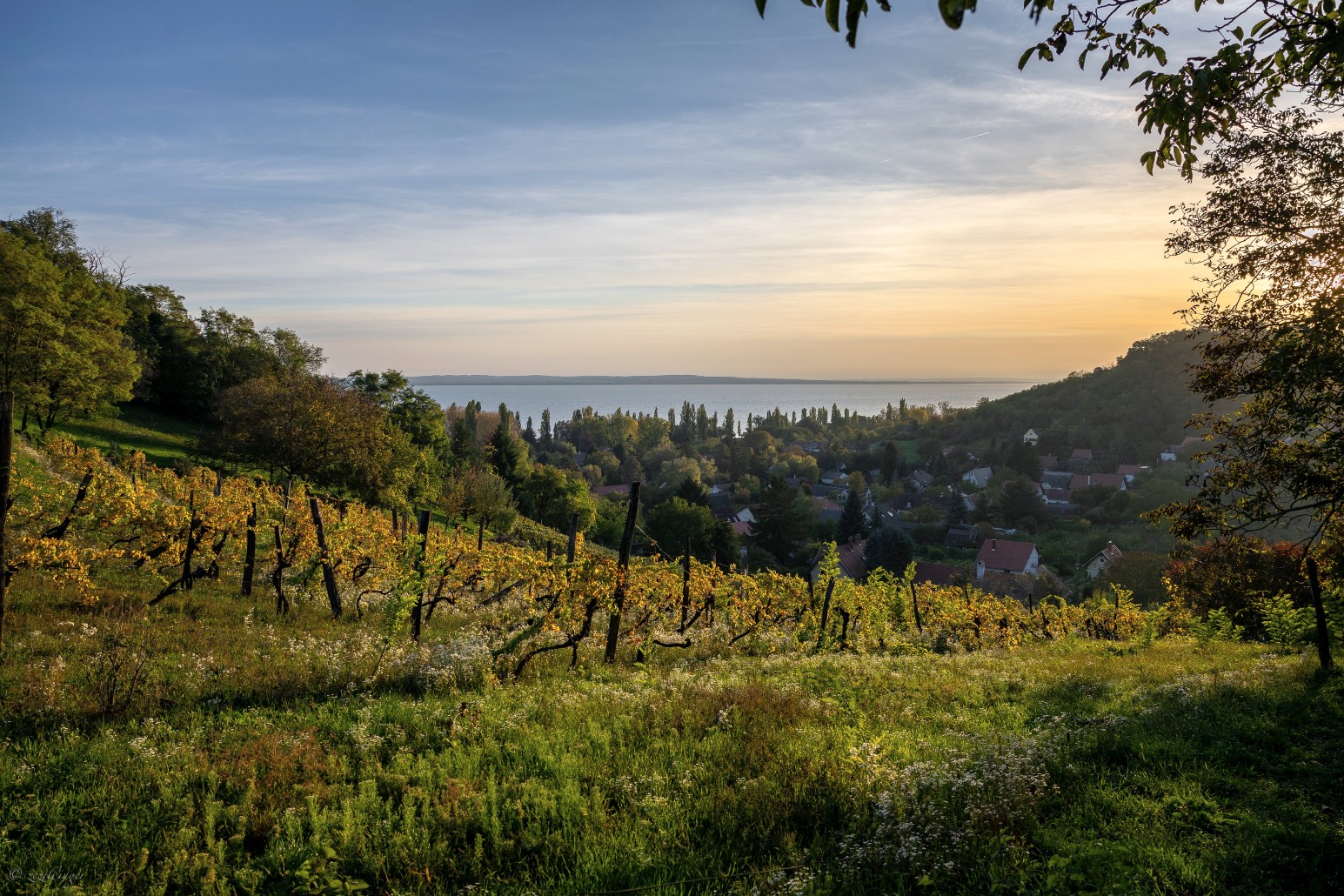
Budapest is considered one of the world’s most beautiful cities, packed with dynamic architecture, hearty cuisine, and a thriving arts and music scene. When you’re not teaching, spend your time visiting the Széchenyi Thermal Bath after hiking up to Castle Hill. Choose between heading to the Danube Bend or Lake Balaton, Europe’s largest lake (and warmest) for a serene landscape.
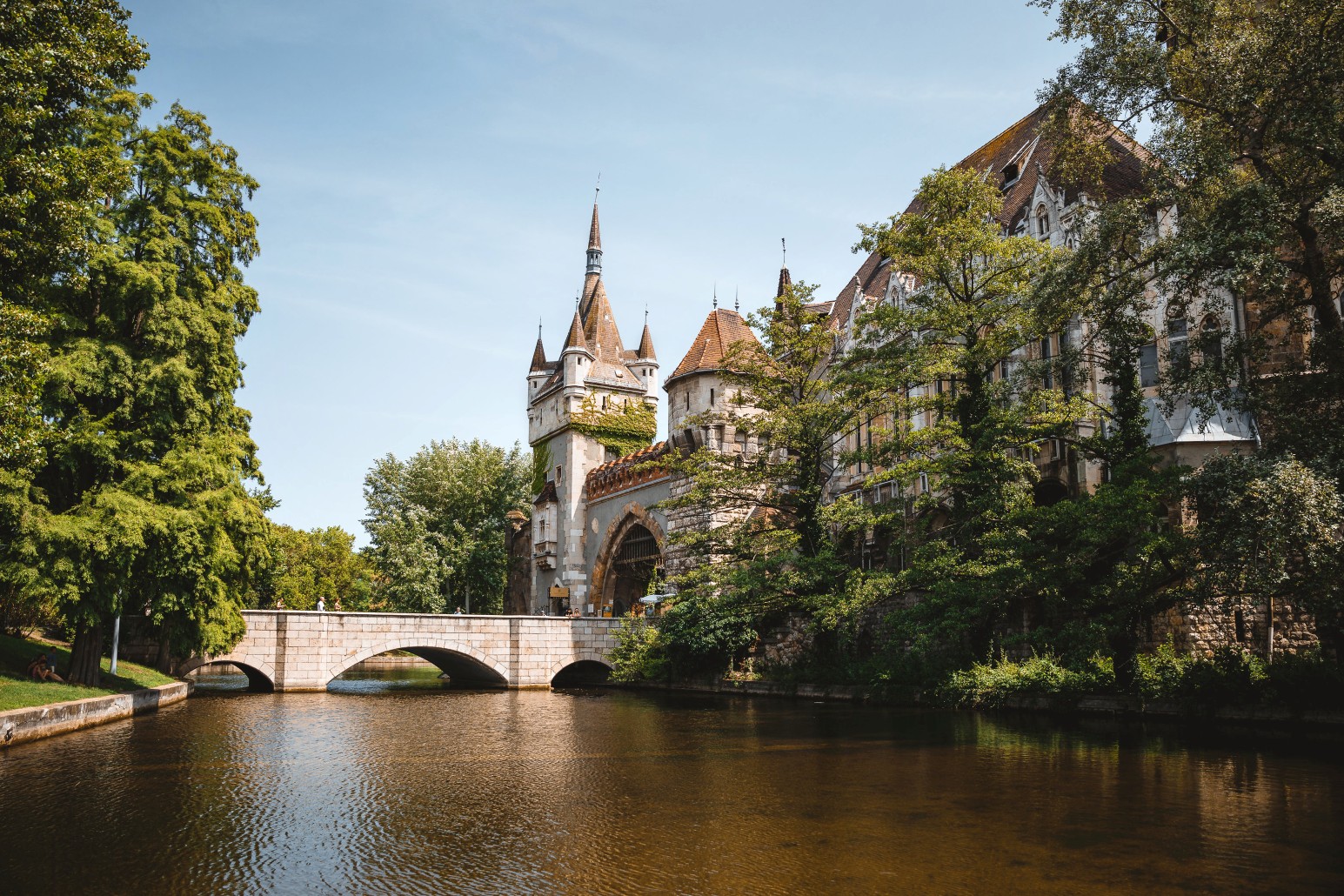
The city also hosts a huge expat community, which means there are plenty of international and language schools. English speaking locals are very common, so teachers don’t necessarily need to learn Hungarian to get by, but this also means that teaching jobs are competitive.
Teach English in Debrecen
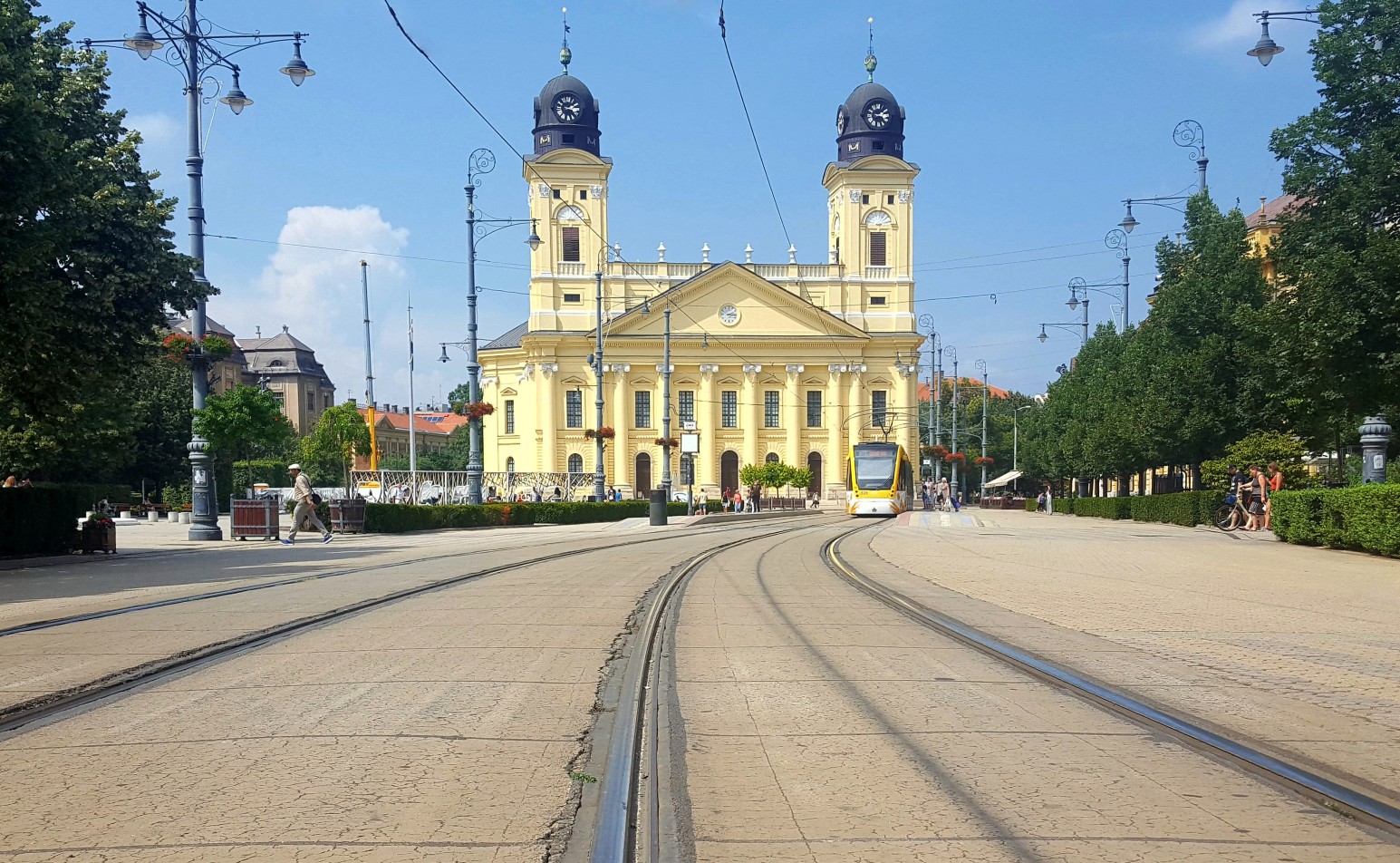
Many people’s European trip features Budapest, but there’s so much more to Hungary than the capital. Cities like Szeged, Pécs, Eger, and Debrecen offer similar highlights but a slower pace of life.
TEFL Org Teacher Story
Want to hear it from the teachers themselves? Here’s what The TEFL Org graduate Rachel says about her experience in Hungary.
Rachel in Sárospatak
“I work at Sárospataki Református Gimnázium (Sárospatak’s Reformed High School) in north-east Hungary. I was taking over the job from a friend who taught at this school for two years. She thoroughly enjoyed the experience and knew I would too.”
“A typical day is waking up around 6.30am and getting ready for school. The school day starts at 7.50am so it’s much earlier than UK schools. Arriving at school I then gather all my materials together and start teaching classes. My timetable varies from only three lessons on a Monday and a Friday, to eight lessons in a row on Thursdays! I teach students different topics and at the end I get them to prepare a speaking presentation, so I can see how well they have learned the topic and how well they are able to speak English.”
Discover more student stories from TEFL Org graduates.
Ready to Teach Abroad? Get TEFL Certified!
Before you book your flights to teach abroad in Central Europe, you’ll need to become TEFL certified. Not only does a TEFL certification help you find a job teaching English in Hungary or elsewhere, it’ll make you a more confident and skilled teacher, improving your teaching English abroad experience significantly.
You’ll learn how to teach grammar rules, manage large classrooms, plan lessons, and so much more. It’s not just a formality, but it’ll make sure that you enjoy and feel comfortable in your abilities to lead the classroom.
Get started today with our 120-hour TEFL course!
Frequently Asked Questions
Q. Are English teachers in demand in Hungary?
Yes, English teachers are in demand in Hungary. The country’s booming tourist industry means that TEFL teachers are needed to help sustain an English speaking workforce.
Q. How much does an English teacher earn in Hungary?
The average teaching salary in Hungary ranges from 280,000–450,000 Ft ($900–$1,445 / £680–£1,095) per month.
Q. Can I teach in Hungary speaking only English?
Yes, you can get by only speaking English in Hungary. English speakers are common in Hungary, especially Budapest, so you don’t need to speak the Hungarian language to work here.
Q. Can I teach English as a non-native English speaker in Hungary?
Yes, you can teach English abroad as a non-native speaker in Hungary, but you’ll need to have a TEFL certificate, bachelor’s degree, and proof of your English proficiency in the form of an IELTS or CEFR certificate, for example.