







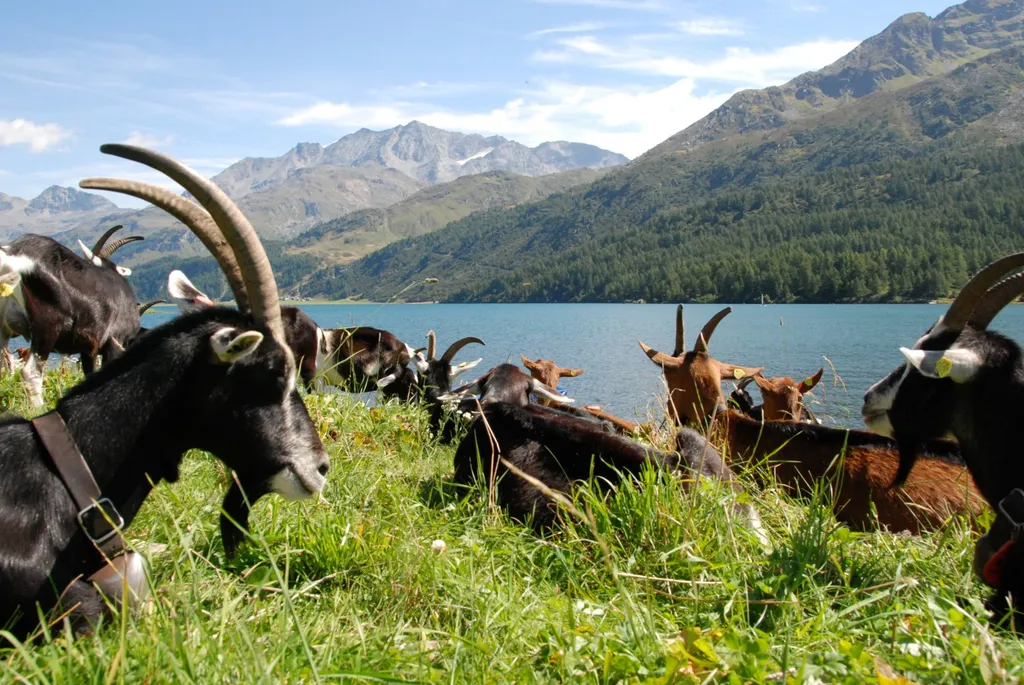
From the Swiss Alps to its famous chocolate and cheese, Switzerland caters to everyone’s taste. While most travellers head to bordering countries like France, Italy, or Germany, Switzerland can offer TEFL teachers an excellent salary in an awe-inspiring environment.
English is compulsory in Swiss schools, but it’s not an official language like German, French, Italian, or Romansh. However, English is the business language of the world and Switzerland is a global business hub. Read on for The TEFL Org’s guide on teaching English in Switzerland, from the different job types, requirements, salary, and more.
Key Takeaways
- English is a compulsory subject in education, so English speakers are very common — but it’s not an official language.
- Requirements are strict; teachers need a bachelor’s or master’s degree, TEFL or teaching licence, and experience is highly preferred.
- English teachers can earn a monthly salary of Fr. 3,500–Fr. 5,000 ($4,450–$6,360 / £3,310–£4,730), or more depending on where they work.
- Public school jobs require German speaking (or another language) licensed teachers; most TEFL teachers find work at private language schools, summer camps, or international schools.
- EU teachers don’t need a visa, but non-EU teachers will likely need a B permit to work in Switzerland.
Requirements for Teaching English in Switzerland
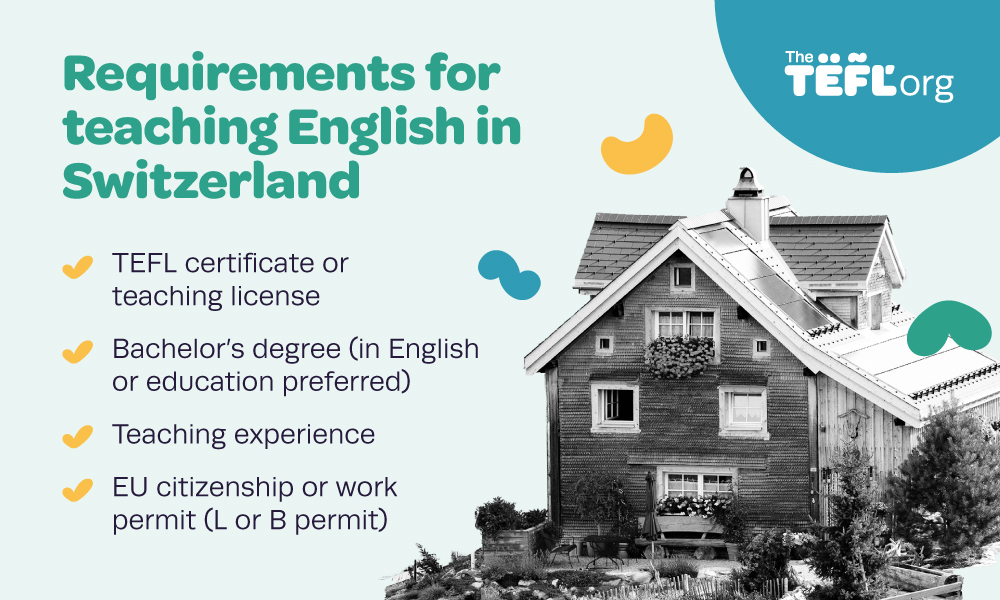
Education standards are high, so you’ll need to come to The Swiss Confederation prepared. In addition to academic and TEFL qualifications, some teaching jobs require you to be able to speak the local language, especially the case at public schools.
For non-EU teachers, finding a job can be difficult – but not impossible. Swiss law requires employers to prove that they’re hiring a non-EU or foreign worker because a local worker isn’t available, making it even more unlikely unless you have exceptional qualifications and experience for the job.
Do I need a TEFL certification to teach English in Switzerland
Yes, you need a TEFL certificate or a teaching licence to teach English in Switzerland. The standard of education is very high in Switzerland, and many schools even require a teaching licence.
While 120 hours of TEFL certification is the industry standard, teachers can enhance their knowledge and employability with a Level 5 TEFL course or advanced specialist courses.
Can I teach English without a degree in Switzerland?
You need a bachelor’s degree (in any subject) to teach English in Switzerland. Not only do employers prefer teachers that hold a minimum of a bachelor’s degree, it’s a requirement to get the work permit in Switzerland. Some schools may even require a master’s degree to teach.
Find out where you can teach English abroad without a degree.
Do I need experience to teach in Switzerland?
Although experience is highly preferred, it’s not impossible to teach abroad without experience in Switzerland if you have advanced qualifications like a bachelor’s or master’s in English or education and an EU passport. To find entry-level teaching jobs in Switzerland, you’ll have most luck looking at summer camps or private language academies that cater to adults.Non-EU teachers will need a university degree and “several” years of experience for the visa and work permit, making it an unlikely path for inexperienced TEFL teachers.
Tip: You can gain real teaching experience and valuable feedback before you land your first TEFL job with the 40-hour Observed Teaching Practice course.
Visa requirements for teaching English in Switzerland
Although not a member of the European Union, Switzerland falls into the border-free Schengen Area, so EU teachers don’t need a visa to work here.Non-EU citizens need either a B work permit (or L permit if your contract is temporary). To secure the correct visa and work permit, teachers must first secure a job contract with a Swiss employer before heading to Switzerland.
To qualify for these work permits, you’ll need the following:
- Proof of several years of experience in your field
- A completed application form
- Bachelor’s degree certificate
- Employment contract with Swiss employer
Find out more about teaching in Europe as an American
Download our Teaching English in Europe Guide
Everything you need to know about teaching English abroad in Europe
Salary and Cost of Living
Switzerland is one of the most expensive countries in the world, but it also offers some of the highest salaries.
How much can you earn teaching English in Switzerland?
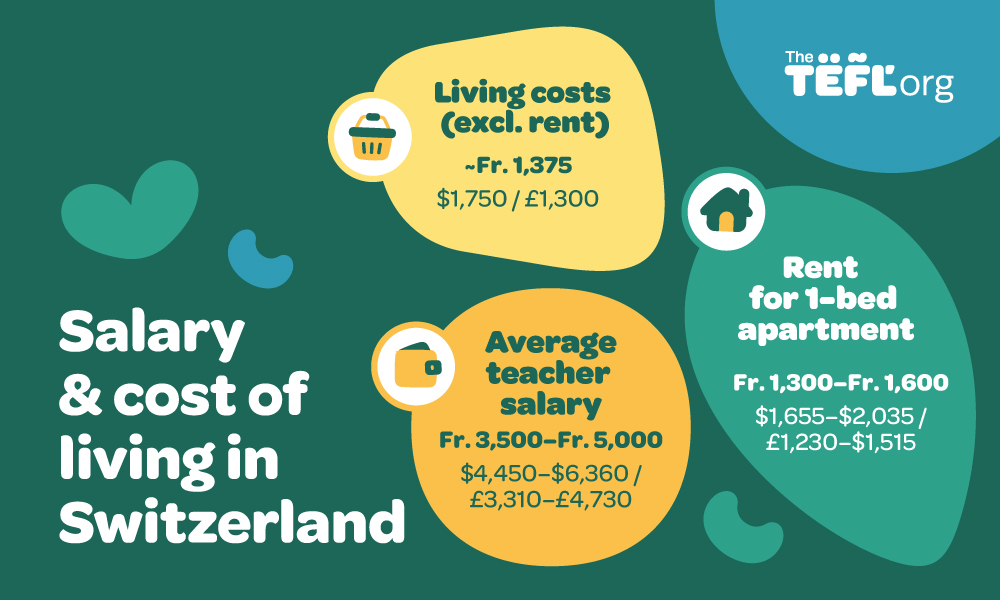
Salaries vary, as most English teacher jobs in Switzerland are freelance. However, a foreign English teacher can expect to earn around Fr. 3,500–Fr. 5,000 ($4,450–$6,360 / £3,310–£4,730) per month — or more — teaching in Switzerland. This is very high compared to other countries, but so is its cost of living.
Public school salaries are high, but most foreign teachers aren’t qualified enough to work in these jobs. Instead, they typically find work at private language academies or international schools. Often, these contracts are offered on a freelance basis, meaning that teachers are self-employed and are paid per hour rather than a monthly or annual salary.
Read more about teaching salaries abroad.
How much does it cost to teach English in Switzerland?
The Playground of Europe is one of the most expensive countries in the world. The average person spends around Fr. 1,375 ($1,750 / £1,300) per month, excluding rent. Rent for a 1-bed apartment ranges from Fr. 1,300–Fr. 1,600 ($1,655–$2,035 / £1,230–$1,515) per month across the country, but can be significantly higher in cities like Zurich.
Here are some of our best budgeting tips for teachers in Switzerland:
- Shared housing: The average rent for a 1-bed sits at Fr. 1,500 ($1,910 / £1,420), while a 3-bed can cost around Fr. 835 ($1,060 / £790) per person per month.
- Don’t rule out smaller cities: A higher salary doesn’t necessarily mean that you’ll save more. Rent in smaller cities and towns, like Basel, Bern, or Lucerne, are up to 50–70% cheaper than in Zurich and Geneva, allowing for greater saving potential.
- Consider summer camp jobs: Starting out at a summer camp — where your food and accommodation are included — is a great way to save money while teaching in Switzerland. Summer camp jobs are ideal for those seeking experience or teachers filling their schedules between semesters.
- Cook at home: Consider shopping at local markets or budget-friendly supermarkets like Denner, Aldi Suisse and Lidl to get the most bang for your buck. Eating out can be very expensive in Switzerland, with an “inexpensive” meal costing around Fr. 30 ($38 / £28).
- Use loyalty cards: The average Swiss household has 4–5 loyalty cards, so should you! Accumulating savings will make a huge difference when you shop at supermarkets across the year.
| Restaurants | CHF | USD | GBP |
|---|---|---|---|
| Inexpensive restaurant meal | |||
| Domestic beer (0.5 litre) | |||
| Regular cappuccino | |||
| Water (0.33 litre) | |||
| Markets | CHF | USD | GBP |
| Regular milk (1 litre) | |||
| Loaf of white bread | |||
| Regular eggs (1 dozen) | |||
| Apples (1 kg) | |||
| Transportation | CHF | USD | GBP |
| One-way ticket (local transport) | |||
| Monthly pass (regular price) | |||
| Taxi start (normal tariff) | |||
| Gasoline (1 litre) | |||
| Utilities | CHF | USD | GBP |
| Electricity, heating, cooling, water, and garbage (for a regular apartment) | |||
| Regular prepaid monthly mobile tariff with 10GB+ data | |||
| Internet (60 Mbps, unlimited data, cable/ADSL) | |||
| Clothing and shoes | CHF | USD | GBP |
| Pair of jeans (Levis 501 or something similar) | |||
| Summer dress in a chain store | |||
| Nike running shoes (mid-range) | |||
| Men's leather business shoes |
English Teaching Jobs in Switzerland
While the standard of education is exceptionally high and the market competitive, there are various paths for English teachers to consider in Switzerland. The Swiss school year runs from around August to June/July, with many schools looking to hire teachers in the spring ahead of the academic year.
Check out the TEFL Org Job Centre for teaching jobs in Switzerland, or consider joining the English Teachers Association of Switzerland (ETAS) which connects English language teachers with jobs across the country.
Here are the most common teaching jobs in Switzerland for foreign English teachers.
Public schools
Public school jobs in Switzerland are reserved to teachers with advanced qualifications (like master’s or postgraduate teaching certificate) and proficiency in German or French depending on the school. Compared to many other countries, salaries are excellent for public school teachers, but responsibilities are also high. In rare cases like the British Council’s programme, you can teach as a language assistant part-time at a local school.
Typical expectations of teaching at a public school in Switzerland:
- Typical teaching schedule
- Excellent standard of education, high teaching requirements
- High requirements, including a master’s, postgraduate teaching certification, and local language proficiency
Private language schools
With so much business and economic activity, TEFL teachers who have specialised in a niche like business English or exam preparation can find opportunities in teaching adults in Switzerland. Many language schools cater to adults who want to improve their English skills within the workplace. TEFL teachers in Switzerland can work at hospitality schools or hotel schools which train people to improve their English in the industry.
Typical expectations of teaching at a private language school in Switzerland:
- Evening and weekend work to cater for working schedules
- Smaller classrooms
- Teaching adults and aspiring professionals ESP (English for Specific Purposes)
International schools
In fact, the International Baccalaureate (IB) was founded in Geneva, and Switzerland is home to many elite international schools. International schools offer excellent salaries and benefits for English teachers in Switzerland. Teachers typically deliver lessons through an international curriculum, working with both local Swiss students and children from international or expat families.
Typical expectations of teaching at an international school in Switzerland:
- Typical teaching schedule
- Teaching Swiss and international students following an international baccalaureate curriculum
- High entry requirements, including a master’s, postgraduate teaching certification, and previous teaching experience
Teaching English in Major Cities
From global economic and diplomatic hubs to idyllic riverside cities, Switzerland is home to many unique cities.
Teaching English in Zurich
Switzerland doesn’t have a capital city, and although Bern is the administrative centre, Zurich is as close to a capital city as you can get. It’s an economic powerhouse, startup hub, multicultural environment and trading centre – and it’s Switzerland’s largest city with ~450,000 residents.
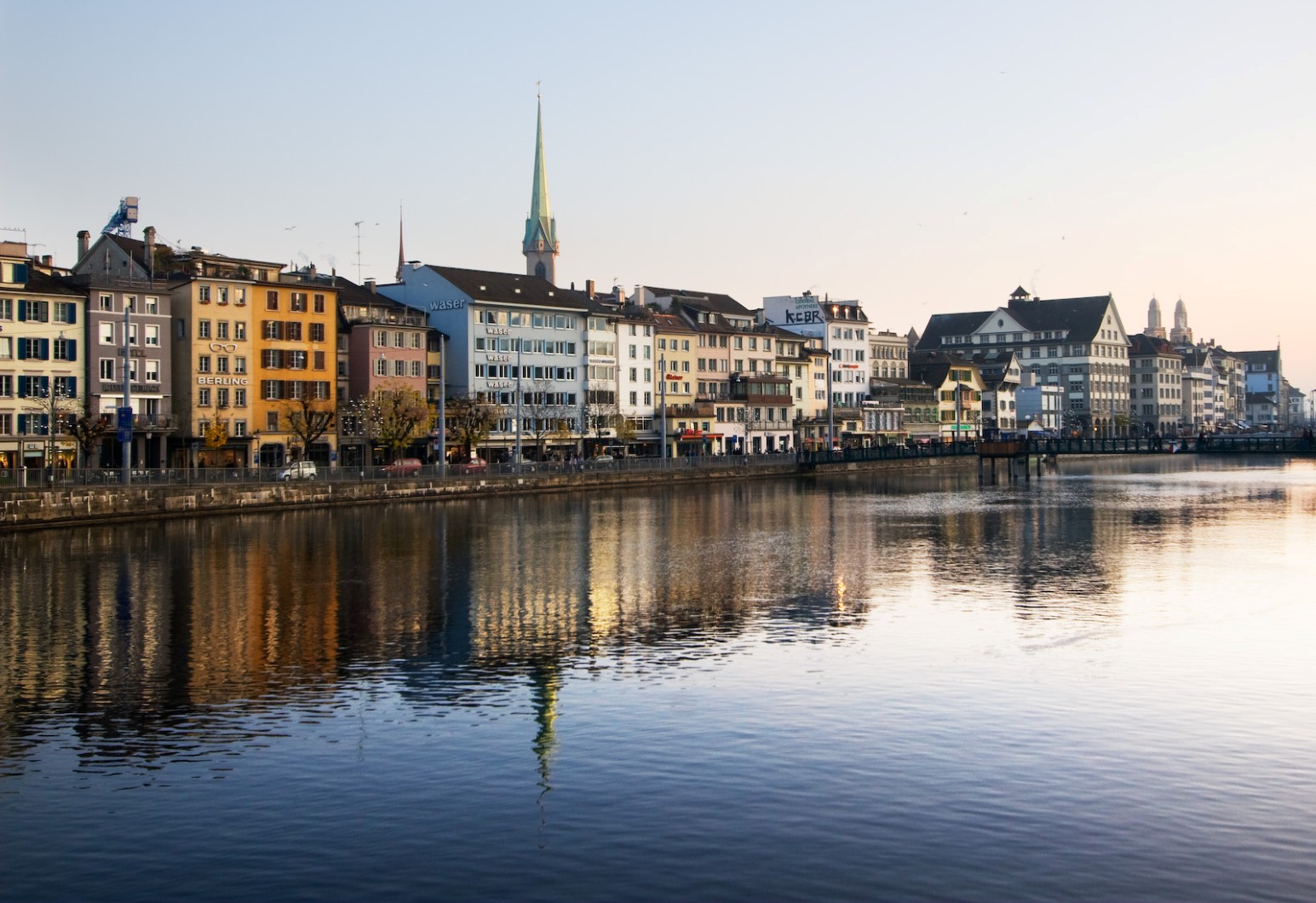
But, it’s not all business in Zurich. With medieval architecture, a quaint cobblestoned old town, independent cafes, boutiques, and rowdy bierkellers, there’s plenty on offer in this prosperous city.
Naturally, such an important economic hub hosts some of the brightest students from Switzerland and internationally. With excellent English language schools, renowned universities, and international schools, qualified TEFL teachers can establish a rewarding career in Zurich. Some of the most popular schools include:
- Language schools: Sprachen Akademie, ILS-Zürich, The Professional Language Center
- International schools: Zurich International School (ZIS), Inter-Community School Zurich (ICS), British International School Zurich (ISZN), SIS Swiss International School
Teaching English in Basel
While Zurich is Switzerland’s sprawling metropolis, Bern is its administrative centre, and Geneva a global governance and diplomatic hub, Basel is considered by many as Switzerland’s cultural capital. From the romantic St. Alban Quarter – or Little Venice – to its medieval architecture, Basel evokes fairy tale imagery and charm.
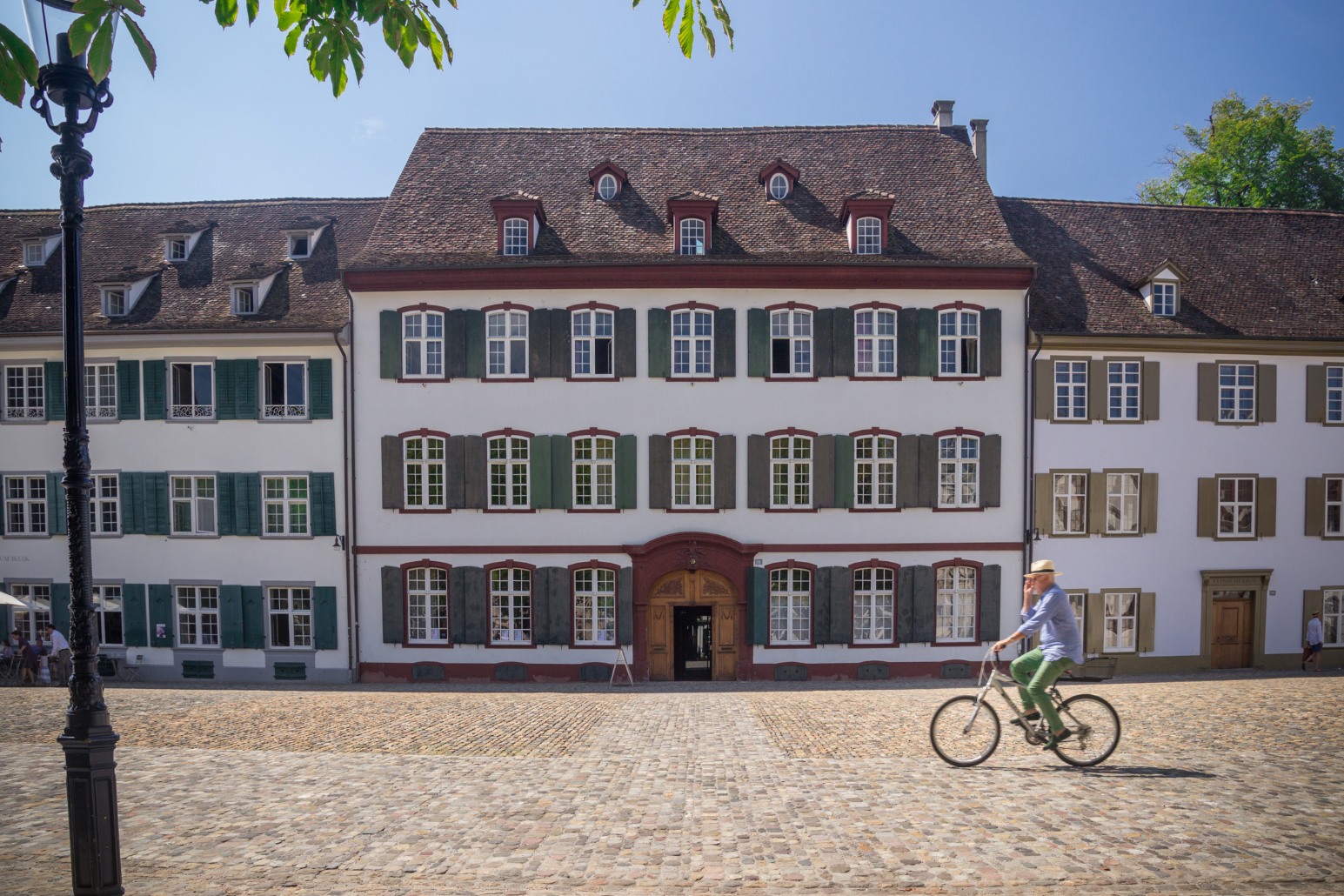
The teaching market may not be as strong as somewhere as Zurich, but opportunities exist for TEFL teachers at language academies and international schools.
When you’re done teaching for the day, soak up knowledge at one of its 40+ museums, swim in the Rhine, or gaze at France and Germany – you can see both from this picturesque town.
Ready to Teach English as a Foreign Language?
Don’t forget your TEFL! Teaching abroad isn’t just about culture immersion and weekend trips, it’s also about improving language skills in the classroom. Whether you’re teaching at public or private institutions, private tutoring, or online, a TEFL course ensures that you are confident and can excel in your job.
Whether you want to teach in Switzerland, one of its neighbouring countries, or beyond, a TEFL certification stays with you for life. Get TEFL certified today for access to jobs around the world and a sense of belonging in the classroom!
Get started today with our 120-hour TEFL course.
Frequently Asked Questions
Q. Are English teachers in demand in Switzerland?
Switzerland has one of the world’s best education systems, and English speakers are common, which means English teachers aren’t in demand like they are in other countries. However, it’s still possible to find a job with the right qualifications and experience, especially if you hold an EU passport.
Q. How much does an English teacher earn in Switzerland?
English teachers can earn Fr. 3,500–Fr. 5,000 ($4,450–$6,360 / £3,310–£4,730) per month, or more, depending on their job. Public school and international school jobs typically pay the highest salaries in Switzerland.
Q. Can a UK teacher teach in Switzerland?
Yes, a UK teacher can teach in Switzerland. However, it can be very difficult obtaining a work permit to teach in Switzerland if schools can hire readily available EU teachers with similar qualifications.
Q. Can I work in Switzerland if I only speak English?
It’s possible to teach in Switzerland if you only speak English, however, your job prospects will be limited to private language schools or international schools.
Q. Can I work in Switzerland if I’m a non-native speaker?
Yes, you can teach English in Switzerland as a non-native English speaker. But, you’ll need to have qualifications like a master’s, teaching licence, EU passport, and proof of your English proficiency.