








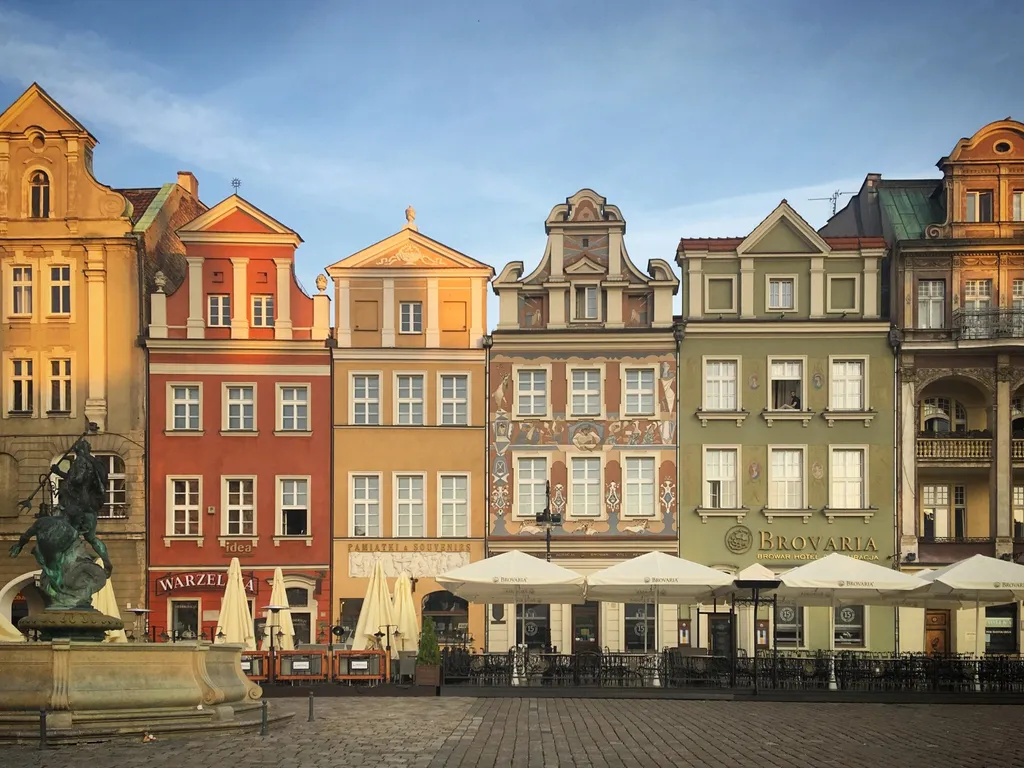
From fortified castles, idyllic lakes, beer and vodka (or wódka), Poland has something for everyone. If you're into history, Poland's medieval towns, Catholic heritage, and communist influence has a lot to offer. Nature enthusiasts can expect lakeside walks and mountain hikes, while extroverts can enjoy a buzzing nightlife.
But Poland doesn't have to be a short stop in your travel itinerary. Despite its high level of English proficiency, conversational skills lag behind reading and writing, so TEFL teachers are in demand across the country. Read on for The TEFL Org's guide to teaching English in Poland, from the requirements, top locations, salary, visa process, and more.
Key Takeaways
- Poland has a moderate English proficiency, but a high demand for English teachers.
- English teachers need a TEFL certificate; a bachelor's degree and native English proficiency is preferred.
- The average salary for English teachers in Poland ranges from 4,000zł–8,000zł ($1,100–$2,200 / £815–£1,630)
- Top locations include Warsaw, Kraków, and Wrocław.
- EU teachers don't need a visa; non-EU teachers need the D-Type Visa and a work permit to legally teach in Poland.
Requirements for Teaching English in Poland
English is the foreign language that most students learn in Polish education, and it's a big part of the school curriculum. So while there's a high demand for English teachers, it also means schools can be selective of who they hire.
Here's everything you need to know about the requirements for teaching English in Poland.
Do I need a TEFL certification to teach English in Poland?
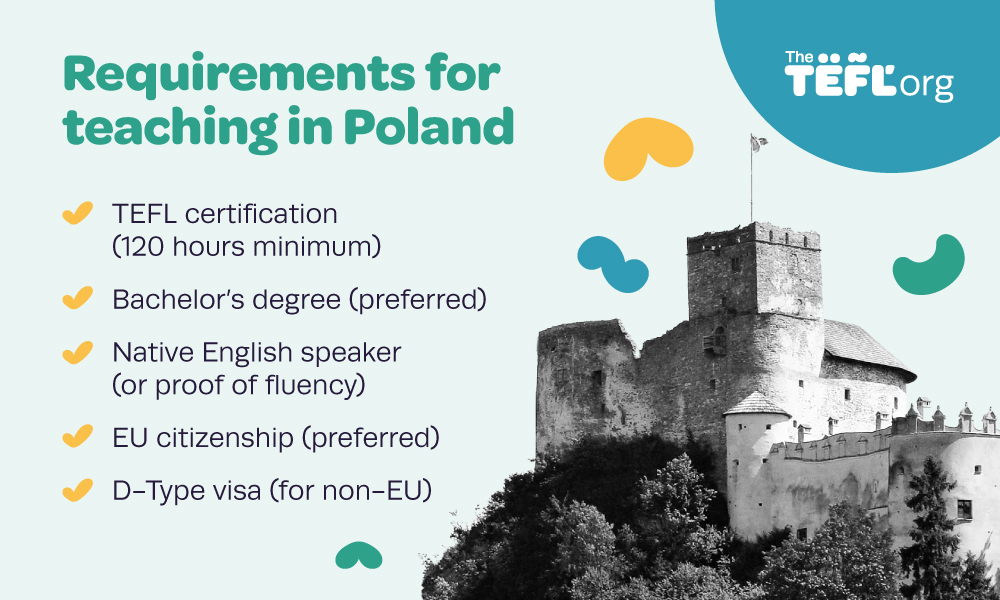
Yes, you'll need a 120-hour TEFL certificate from an accredited provider to teach English in Poland. 120 hours of training is usually enough for most teaching jobs in Poland, but some employers might require teachers with a Level 5 TEFL qualification.
Here's why you need a TEFL certificate to teach in Poland:
- Develop teaching skills: Speaking English isn't the same as teaching it to foreign students. With a TEFL course from an accredited provider, you'll develop classroom management, lesson planning, and adaptability skills.
- Learn from experts: The TEFL Org's courses curricula are developed and consistently updated by a team of expert teachers who have experience around the world.
- Improve your employability: You'll not only gain skills but employers will gain confidence in your abilities at first glance on your resume alone.
Tip: Teaching business English is a growing market in Poland, and many international companies in Poland teach their workers corporate English.
Can I teach English without a degree in Poland?
Yes, you can teach English without a degree in Poland if you're TEFL certified, but your options might be more limited. It also depends on your nationality and other qualifications and experience. EU teachers have an easier time finding teaching jobs in Poland, and it helps if you're a native English speaker too.
While a TEFL certificate is enough for some jobs, most employers in Poland require a bachelor's degree or even a master's degree, especially at international schools. If you don't have a degree, check out opportunities at private language schools where the entry-requirements are usually more flexible.
Can I teach English without experience in Poland?
Yes, you can teach English without experience in Poland as long as you're TEFL certified. You can find plenty of jobs in major cities like Warsaw, Kraków, and Wrocław, but smaller towns also welcome inexperienced teachers due to lower competition. If you'd like to build your confidence before applying for full-time roles, teaching at a summer camp in Poland is a great way to gain classroom experience.
Visa requirements for teaching English in Poland
Poland is a member of the European Union, so EU citizens don't need a visa to work in Poland. It's as easy as getting TEFL certified, finding a job, and packing your bags!
But non-EU citizens need to get the right work visa and temporary residence permit to teach English in Poland legally. To do this, you'll need the D-Type Visa and a work permit – most likely Type A. But, you'll need to secure a job offer from a Polish employer so they can sponsor your visa application and apply for your work permit on your behalf.
To get the D-Type Visa, you'll need the following:
- Proof of employment with a Polish employer
- Completed application form (through the e-Konsulat system)
- Clear criminal background check
- Proof of qualifications, including university degree and TEFL certificate
- At least €30,000 ($35,000 / £26,000) of travel health insurance cover
- Valid passport
Tip: Important: Immigration rules can change; be sure to check the official government website for updated rules. The information above is not intended as legal or visa advice.
Salary and Cost of Living
You've probably heard that Poland is an affordable country for travellers, but how about for English teachers? Here's everything you need to know about teaching salaries, living costs, and saving potential in Poland.
How much can you earn teaching English in Poland?
The average salary for English teachers in Poland ranges from 4,000zł–8,000zł ($1,100–$2,200 / £815–£1,630) per month before tax. But this depends on factors like your experience, TEFL training, and school type.
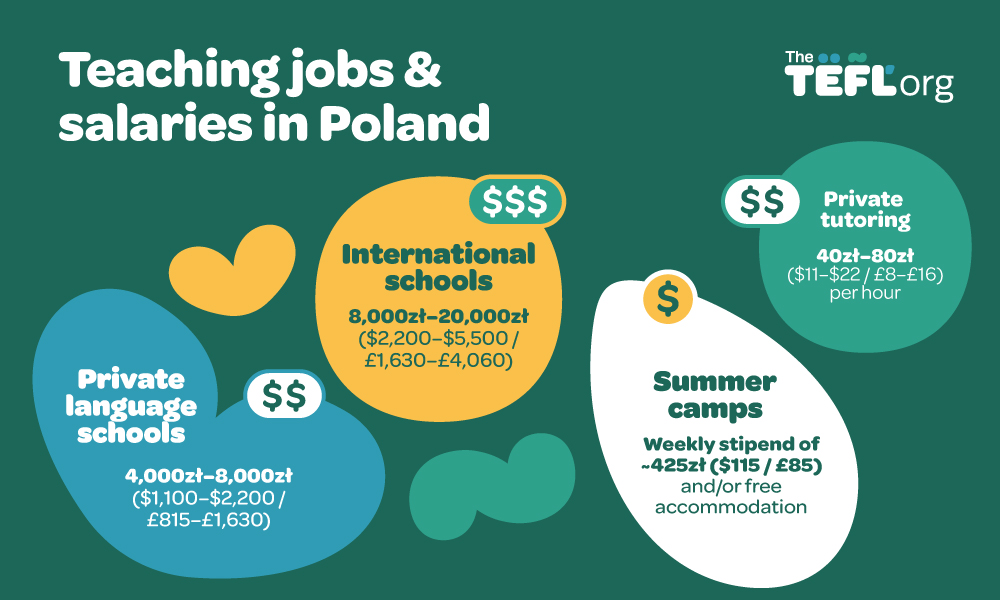
Here's how salaries compare between different teaching jobs in Poland:
- Private language school: Private language schools or language academies are the most common jobs for foreign English teachers. Salaries at these schools range from around 4,000zł–8,000zł ($1,100–$2,200 / £815–£1,630) depending on the institution.
- International school: International schools usually offer the highest salary and benefits, ranging from 8,000zł–20,000zł ($2,200–$5,500 / £1,630–£4,060).
- Private tutoring: Some teachers supplement their income through private lessons, earning around 40zł–80zł ($11–$22 / £8–£16) per hour depending on the client. If you have specific skills, like teaching young learners or business English qualifications, you can earn more.
Some schools might offer benefits like visa reimbursement and health insurance, or even free accommodation or an allowance (but this is rare).
How much does it cost to live in Poland?
Poland is an affordable country, especially when compared to western countries like the UK or the U.S. English teachers can expect to spend around 5,000zł ($1,380 / £1,020) per month on rent, food, and other expenses in Poland.
Entry-level teaching salaries might not be enough to keep up with average living costs in some cases, but living costs also depend on lifestyle preferences and the location. If you're an inexperienced teacher, you'll need to plan ahead to live comfortably and make the most of your salary.
Here's how to get more bang for your buck in Poland:
- Have an open mind: Before you zone in on Warsaw, consider other smaller cities and towns. Salaries may be lower, but low costs can increase your saving potential. Additionally, living outside the city centre can save you up to 1,000 zł ($275 / £200).
- Split the rent: Sharing an apartment with other teachers or expats can save you plenty of money; a 1-bed apartment costs around 2,500 zł ($690 / £510), but a 3-bed apartment costs around 1,335 zł ($365 / £270) per person, per month.
- Consider job benefits: Consider whether your job contract includes additional benefits. One job may offer a higher salary, but another might cover accommodation so you won't have to worry about rent.
- Eat like a local: Local Polish food, like pierogi (dumplings) or soups like żurek and barszcz aren't only hearty but they're much more affordable than imported food. These dishes cost around 30 zł ($8 / £6).
- Use public transport: Public transport in Poland is convenient and affordable, with monthly passes costing around 120 zł ($33 / £24). Cities like Warsaw and Krakow have high speed trains, metros, trams, and bus networks to help you get around.
- Travel domestically: You could travel to Rome or Paris on the weekend, but Polish attractions can easily fill your calendar with cities like Krakow, Warsaw, Gdańsk, to the Tatra Mountains and the Baltic Coast.
| Restaurants | PLN | USD | GBP |
|---|---|---|---|
| Inexpensive restaurant meal | |||
| Domestic beer (0.5 litre) | |||
| Regular cappuccino | |||
| Water (0.33 litre) | |||
| Markets | PLN | USD | GBP |
| Regular milk (1 litre) | |||
| Loaf of white bread | |||
| Regular eggs (1 dozen) | |||
| Apples (1 kg) | |||
| Transportation | PLN | USD | GBP |
| One-way ticket (local transport) | |||
| Monthly pass (regular price) | |||
| Taxi start (normal tariff) | |||
| Gasoline (1 litre) | |||
| Utilities | PLN | USD | GBP |
| Electricity, heating, cooling, water, and garbage (for a regular apartment) | |||
| Regular prepaid monthly mobile tariff with 10GB+ data | |||
| Internet (60 Mbps, unlimited data, cable/ADSL) | |||
| Clothing and shoes | PLN | USD | GBP |
| Pair of jeans (Levis 501 or something similar) | |||
| Summer dress in a chain store | |||
| Nike running shoes (mid-range) | |||
| Men's leather business shoes |
English Teaching Jobs in Poland
English teaching jobs in Poland come mostly in the private sector, with most contracts lasting 1–2 years. Generally, inexperienced teachers find jobs in private language schools, whereas advanced teachers can find work at international schools.
Private language schools
Private language schools are the most common route for English teachers due to their year-round hiring and flexible entry-requirements. These schools cater to students and professionals, so classes take place in the evenings and on weekends. With a high number of students and workers looking to study/work abroad, subjects like IELTS exam preparation and business English are frequently taught at the language centres.
What to expect teaching at a private language school in Poland:
- Evening and weekend work
- Young learners, teenagers, and adult professionals
- Wide range of subjects, from exam preparation to business English
- Lower entry requirements depending on the institution
International schools
International schools are private bilingual schools for local and international students who learn English as a primary language in subjects like maths, science, arts, and more. While the jobs offer the highest salaries and benefits for teachers, competition is stiff and teachers often need a master's, TEFL or teaching licence, and a few years of teaching experience.
What to expect teaching at an international school in Poland:
- Smaller class sizes, modern facilities
- Polish students and international students
- Teaching English as a primary language from an international curriculum
- High salary and benefits, but also high entry requirements and workload
Summer camps
Summer camp jobs are popular in Poland, especially among inexperienced teachers who want to gain experience or even experienced teachers filling their summers. Teaching English at a summer camp like Angloville or TEIP typically involves more activity-based learning, team building exercises, and so on.
What to expect teaching at a summer camp in Poland:
- Volunteer roles, potentially receive a stipend
- Active-based learning
- Large groups of students
- Adventure and team-building activities
Private tutoring
Teachers have many private tutoring opportunities in Poland due to the high demand for academic and business English. Many tutors teach business English at in-house classes for companies in IT, tourism or finance. Teachers can supplement their income well to avoid dipping into their savings, earning around 40zł–80zł ($11–$22 / £8–£16) or more depending on their experience.
Teaching English in Major Cities
Teaching jobs and placements exist all over Poland, here are some of the most popular among teachers.
Teach English in Warsaw
Hailed as one of Europe's most underrated capitals, Warsaw is a charming city that offers plenty of teaching jobs for English teachers. Despite a turbulent history, the city's rapid modernisation paired with cobblestone streets, royal castles, and Masovian Gothic cathedrals creates a dynamic visual.
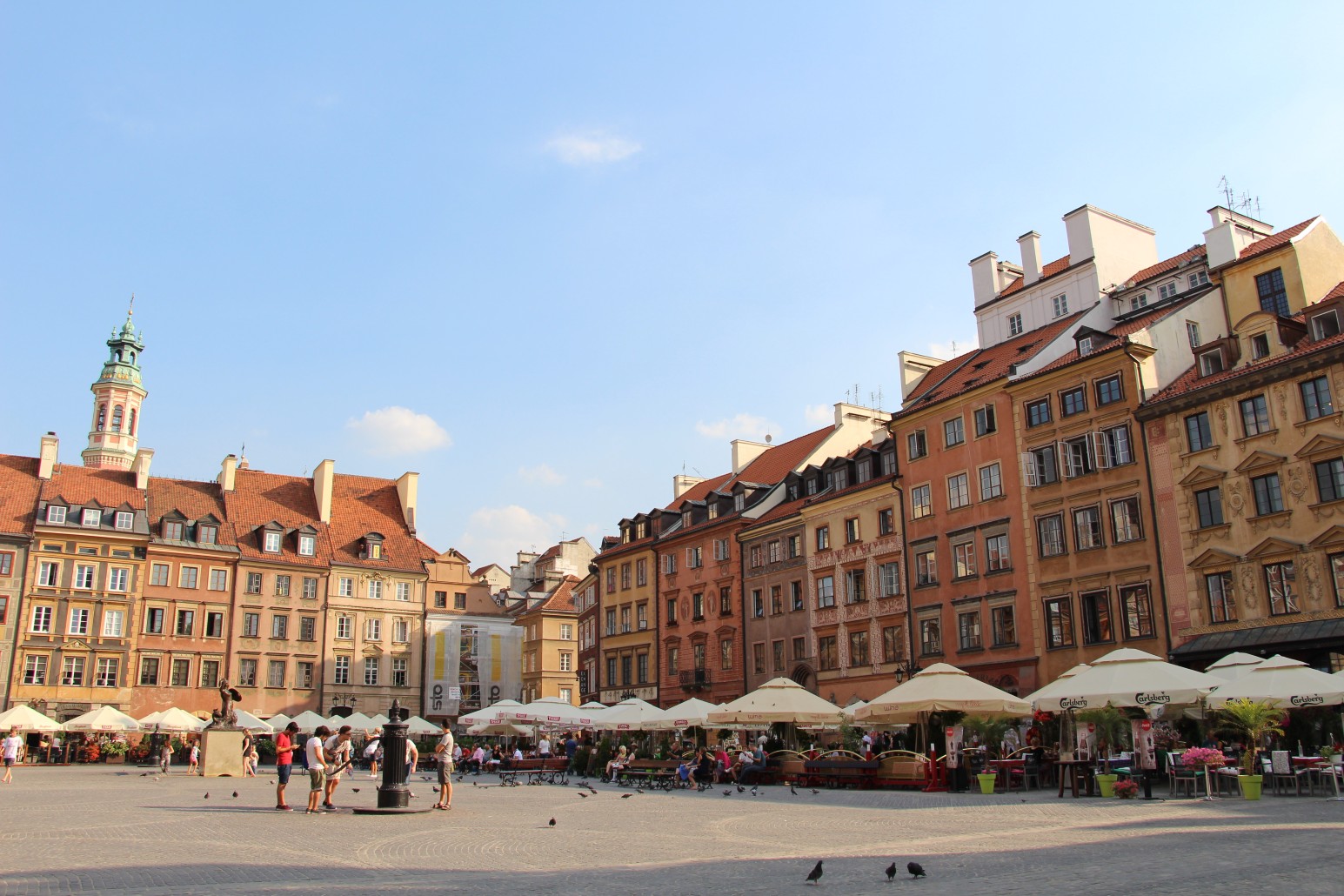
With a student population that exceeds Berlin and Prague, English teachers have plenty of opportunities, everywhere from kindergartens to the city's international schools and universities. Business English is also in demand, creating even more opportunities for private school and freelance teachers.
While you're relaxing outside the classroom, head to the Powiśle district by the Vistula River, where you'll find some hipster restaurants and bars, like 60s-themed must-visit Syreni Spiew. Stroll through the UNESCO-listed Old Town and the Museum of Modern Art, or soak up information at the National Museum or sobering Warsaw Ghetto Museum; Warsaw has it all.
Teach English in Kraków
Popular for its medieval architecture and gorgeous Old Town, the cultural capital Kraków attracts travellers and teachers alike.
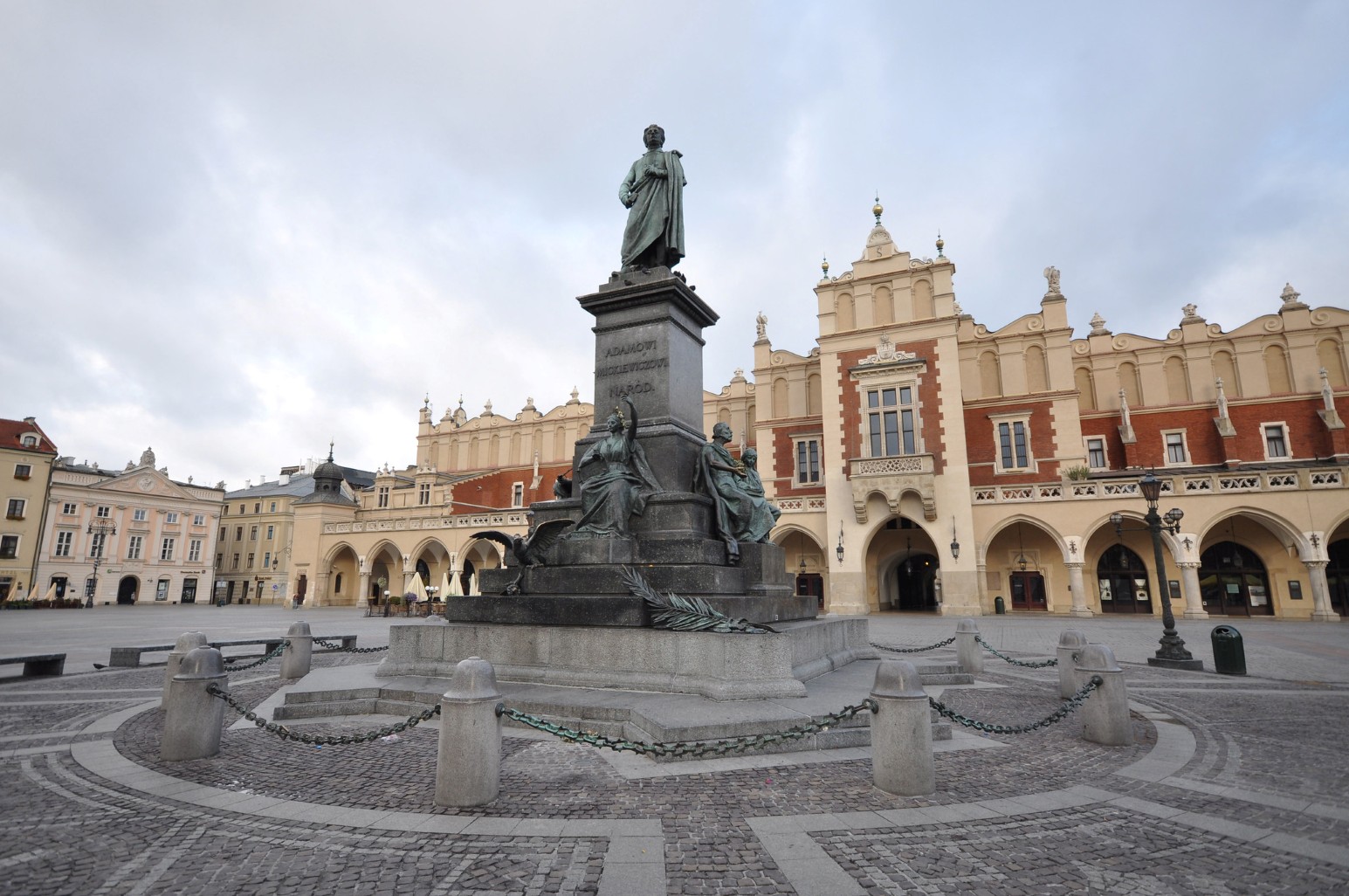
This former capital is the second-largest city (and one of the oldest) in Poland, and while Warsaw offers a more cosmopolitan feel, Kraków offers a more laid-back and historical environment. Once you've seen everything that the Old Town Rynek Główny has to offer, head to Wawel Castle or the Underground Museum.
But the city also hosts over 200,000 university students, with plenty of restaurants, cafes, bars, and more to cater to a young and thrifty population. With language schools, summer camps, top international schools, and high-ranking affordable universities, there are plenty of teaching opportunities in this thriving city.
Teach English in Wrocław
Poland's third-largest city, Wrocław, is over 1,000 years old and has been under Bohemian, Austrian, Prussian and German rule, until the end of World War II. Lined with river-side cobbled streets and colourful buildings, Wrocław, or the Venice of Poland, is an unsung destination.
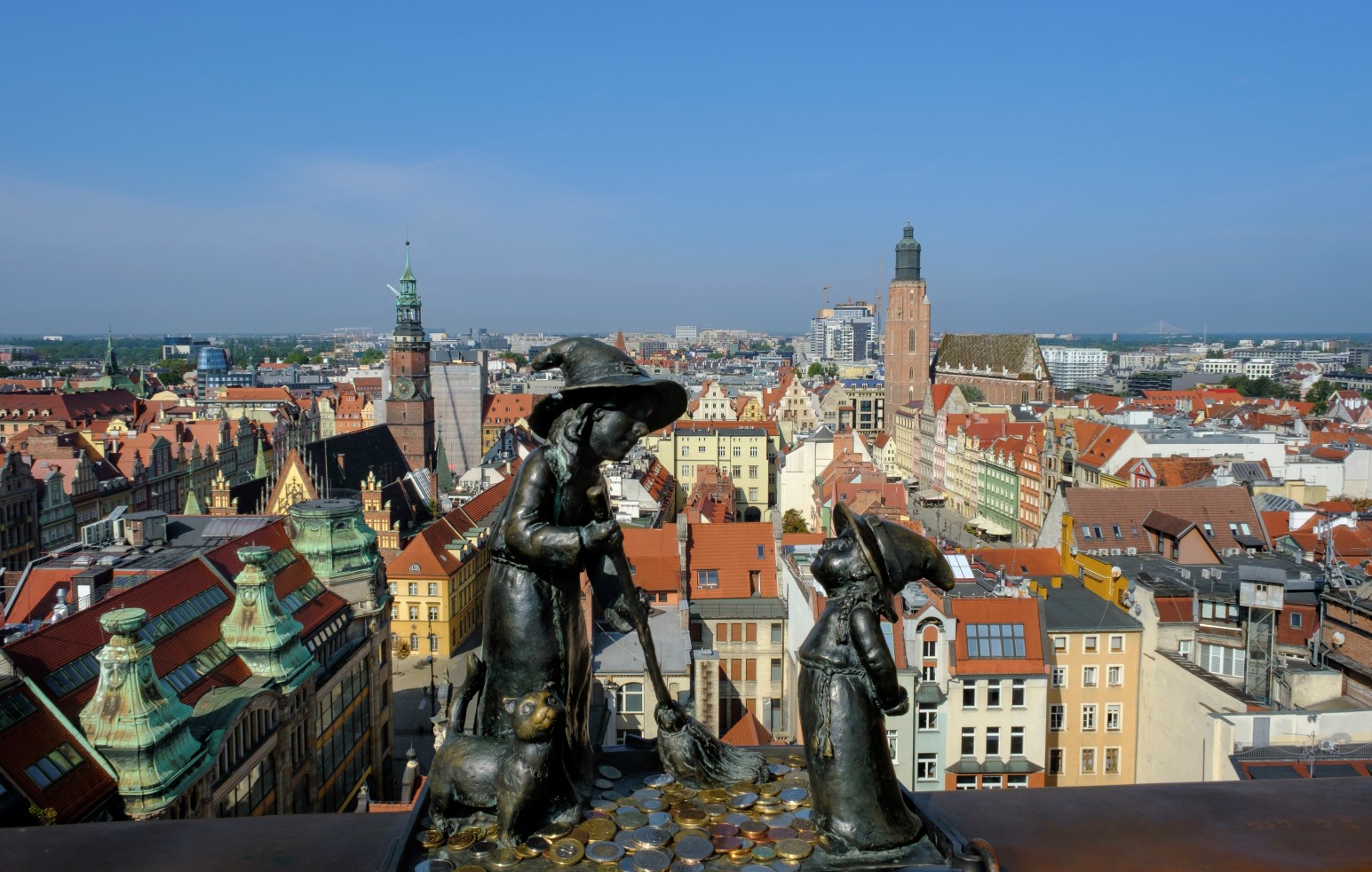
With a total population of around 675,000 but a student population of 130,000 – around 1 in 6 of Wrocław's residents are students. Teaching jobs exist in private language schools, universities, international schools, and especially in private tutoring.
Download our Teaching English in Europe Guide
Everything you need to know about teaching English abroad in Europe
The TEFL Org Teacher Story
Want on-the-ground insight? Read about Katie's experience teaching English in the town of Bielsko-Biała, Poland.
Katie in Bielsko-Biała, Poland
"In 2017, I finished the 120-Hour TEFL course. After a few weeks of looking I applied for a job in Southern Poland and after a successful interview I got on the plane and I haven't looked back since! I currently teach in the small city of Bielsko-Biała, known as 'Little Vienna', about an hour away from the bustling city of Krakow. Poland has taken me completely by surprise. I couldn't have asked to live in a better location.
I have loved learning about the culture in Poland, from its history of communism and war, right down to more fun cultural lessons like food. Pierogi, oscypek, żurek, and amazing potato pancakes... each of these is delicious.
In a normal week, I teach children, adults, groups, one-to-one, and in companies. Each person has a different level of English, which is great, and it feels so rewarding when you teach a new language to people."
Read more on-the-ground insights about teaching English abroad on our Graduate Stories page.
Ready to Teach Abroad? Don't Forget Your TEFL
A TEFL certificate is so much more than just a box to tick for employers or visa applications. Studying a TEFL course will give your teaching career a strong foundation built on confidence and refined skills.From lesson planning to classroom management, TEFL training equips you with practical skills that will make your experience abroad more fulfilling. Start your journey today with our internationally recognised 120-hour TEFL course!
Frequently Asked Questions
Q. Teaching English in Poland as a non-native speaker
You can work in Poland as a non-native English speaker. You'll need to prove your English skills by taking an English proficiency test like the IELTS or TOEFL. A degree from an English-speaking university can also help.
Q. Do you need a TEFL certificate to teach in Poland?
Yes, you need a TEFL certificate to teach English in Poland. Although it's not a legal requirement for the visa, employers list the TEFL certification as a requirement for teaching jobs.
Q. Do you need teaching experience?
You can teach English in Poland without teaching experience, particularly at private language schools. Public schools, international schools, and universities require teachers to have previous teaching experience.
Q. Do you need to speak Polish to teach English in Poland?
No, you don't need to speak the Polish language to teach in Poland. However, learning basic phrases can improve your cultural immersion while living in Poland.
Q. What is the cost of living like in Poland?
While the cost of living in Poland is considered low, especially compared to western European countries, you'll still need to be mindful of your budget. The average monthly expenditure is around 5,000zł ($1,380 / £1,020), but it can increase or decrease significantly depending on your lifestyle.
Q. Do I need a visa to teach English in Poland?
EU teachers don't need a visa, but non-EU teachers need a visa and work permit to teach English in Poland legally. Teachers typically work in Poland on the D-Type Visa and Type A work permit.
Q. Where is the best place to teach English in Poland?
There are many places to consider for teaching in Poland, with Warsaw, Kraków, and Wrocław being among the best. However, don't rule out smaller cities and towns for teaching in Poland.