









Key Takeaways
- Mexico has a low level of English proficiency and a high demand for English teachers.
- A TEFL certificate is essential for teaching English in Mexico; a university degree is preferred (but not essential), as is previous teaching experience.
- Teachers earn a monthly salary of around MXN 8,765–MXN 26,290 ($500–$1,500 / £375–£1,120), but the highest paid jobs can be found at international schools.
- Teaching positions can be found in public schools, private language schools, and international schools.
- Teachers need a Temporary Resident Visa and work permit to teach in Mexico legally.
Requirements for Teaching English in Mexico
Despite Mexico's half a century of English learning in public education, proficiency levels are still low. This creates a high demand for English speakers, and employers are more flexible when it comes to teaching requirements and the hiring process.
Do I need a TEFL certification to teach English in Mexico?
Mexico has a high demand for English teachers, but you'll still need a TEFL certificate. Because Mexico is a popular spot for teachers and travellers, you'll face plenty of competition when applying for jobs.
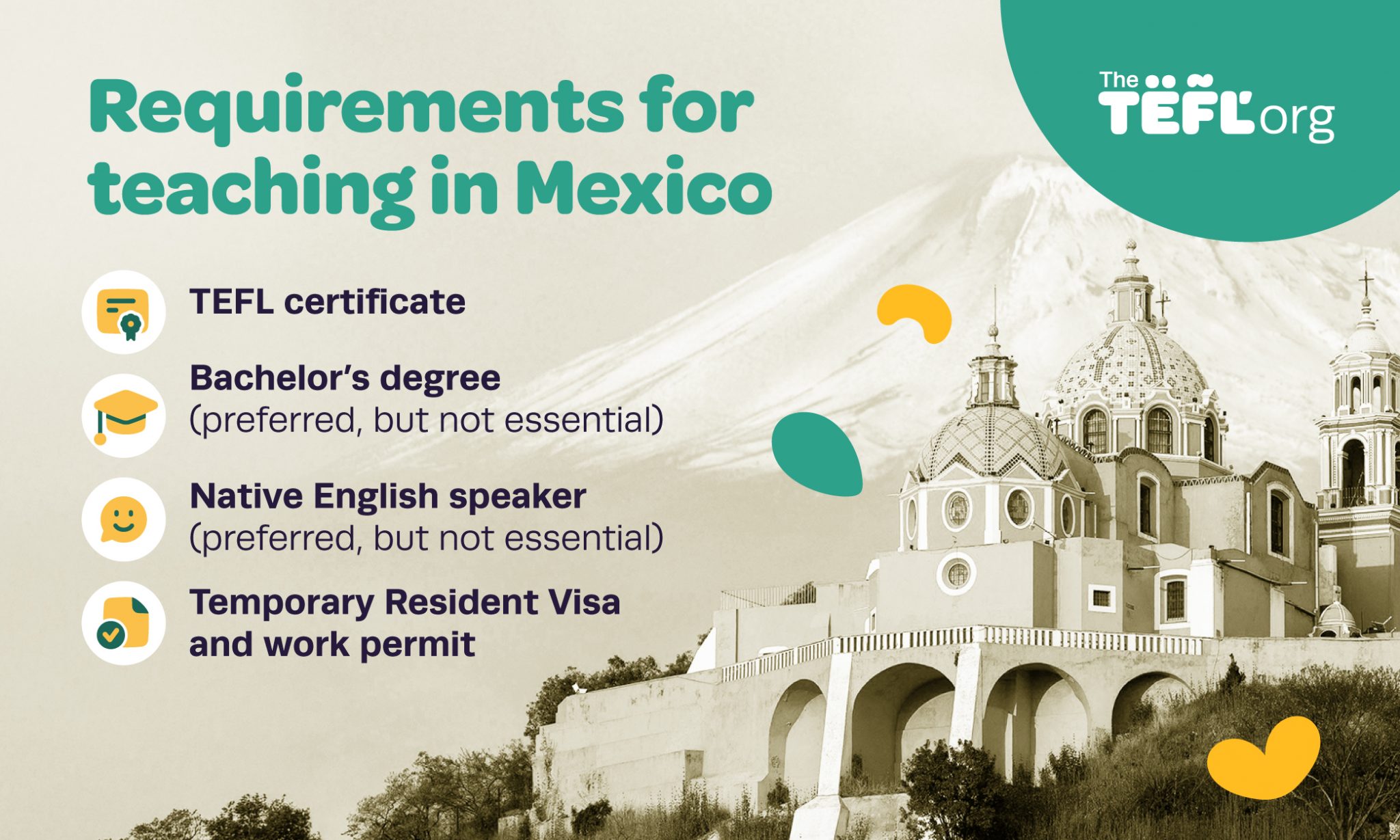
It's not a legal requirement, but most employers in Mexico expect teachers to have at least 120-hours of TEFL training.
Studying a TEFL course shows employers that you can plan and deliver engaging lessons, teach complex grammar rules, and more. It goes a long way for you and your students in the classroom, even if you don't have previous teaching experience.
Tip: Studying abroad is a growing market for Mexican students, and teaching English for Academic Purposes is an excellent skill to cater to this audience.
Can I teach English without a degree in Mexico?
Unlike many other countries, non-degree holders can teach English in Mexico and earn a salary legally (no loopholes required!). But not all schools hire non-degree holders.
If you want to teach abroad without a degree, you'll need a TEFL certificate to show that you're serious about teaching. But your salary and job opportunities will be limited compared to degree holders, so you'll likely need to spend more time searching for jobs.
Do I need teaching experience to teach in Mexico?
You can teach English without experience in Mexico, but again — you'll need to be TEFL certified to show employers that you have the core understanding of teaching English as a foreign language.
A TEFL certificate reassures employers that you've been trained to teach English, even if it's your first job in the classroom.Can I teach in Mexico as a non-native speaker?
Non-native speakers can teach English in Mexico, especially with qualifications like a degree and a TEFL certificate. You might need to prove that you have fluency in English, either through university education in English or an IELTS or CEFR certificate.
Tip: Speaking Spanish at a high level can boost your application, regardless of your nationality.
Visa requirements for teaching English in Mexico
To teach English in Mexico legally, you'll need the right visa and work permit. This can be a tricky process, because some employers want to "pay under the table" for teachers who are actually on tourist visas. Don't do this — it risks fines, deportations, and blacklisting from the country.
You'll need the Temporary Resident Visa with a work permit (Residente Temporal con Permiso para Trabajar). But you'll need to find a job first — that way, your employer can sponsor your visa and work permit.
After your employer has sponsored your application, you can book an appointment to apply for your visa at your local Mexican consulate in your home country. Once you get to Mexico, you'll need to apply for your residence card at the immigration office within 30 days of arrival.Here's what you'll need to get the right visa and residence permit:
- Proof of job contract with a Mexican employer
- Clear criminal background check
- Passport with 6 months validity beyond visa end date
- Proof of academic and professional qualifications
- Health insurance
Download our guide to teaching English in Latin America
Everything you need to know about teaching English in Latin America
Salary and Cost of Living
Mexico is an affordable country, but it also depends on where you live. Your teaching salary depends on your location and experience level, but most teachers live comfortably rather than save large amounts of money.
How much can you earn teaching English in Mexico?
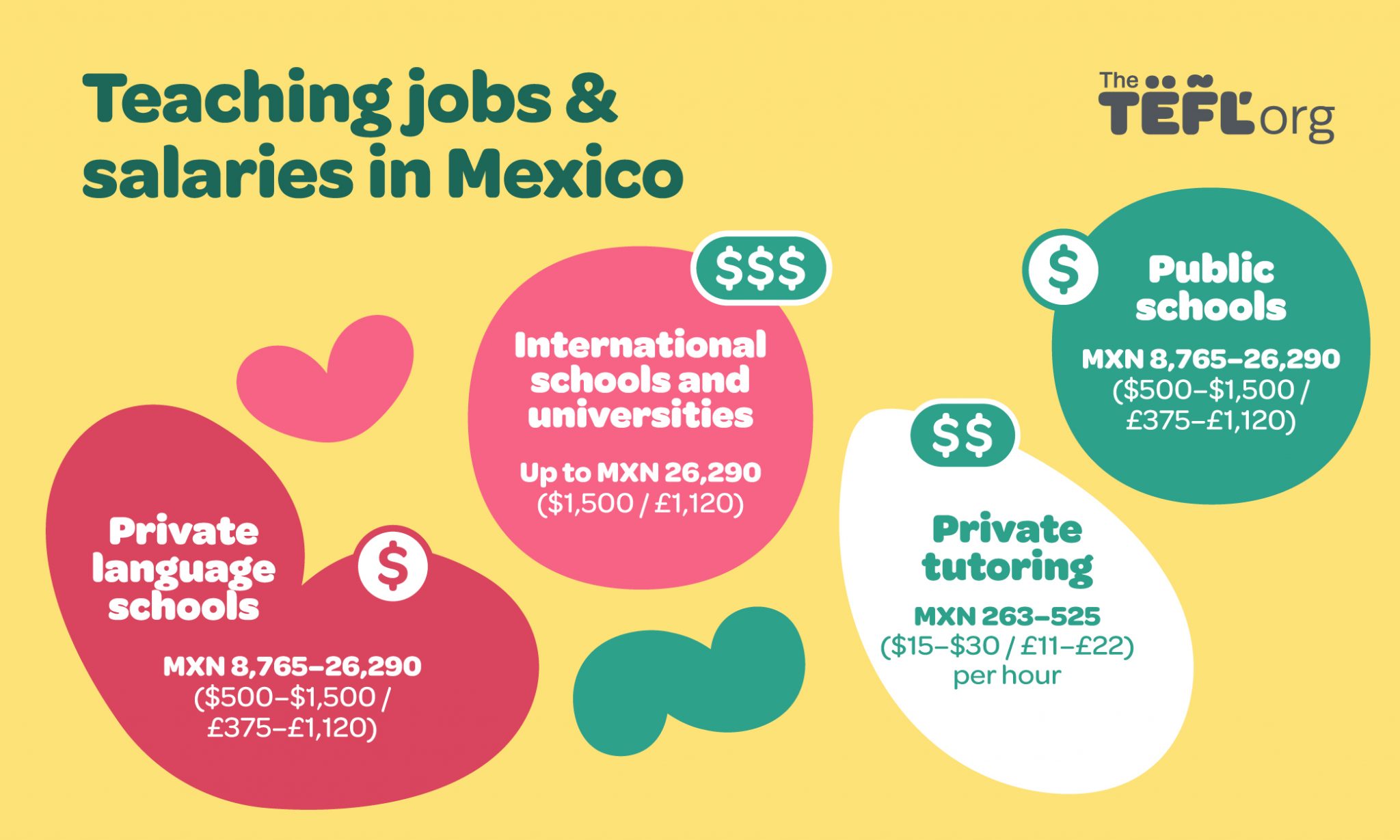
English teachers in Mexico usually earn around MXN 8,765–26,290 ($500–$1,500 / £375–£1,120) per month, but this is a broad scale that depends on your experience, qualifications, and job type.
Generally, public school jobs pay less than other teaching jobs. There's a wide salary scale when it comes to working at private language schools — some might pay low salaries, whereas other reputable schools or ESP (English for Specific Purposes) might offer higher salaries.
International schools offer the best salaries, upwards of MXN 26,290 ($1,500 / £1,120) per month. But teachers at these schools often need teaching licences and years of experience.
Tip: Many teachers in Mexico supplement their income by teaching online or private tutoring, with hourly rates for private lessons ranging from MXN 263–525 ($15–$30 / £11–£22) per hour.
How much does it cost to live in Mexico?
The cost of living in Mexico is around 30–50% cheaper than it is in the UK or US, but it's steadily increasing — eating out is ~67% more expensive in 2026 than it was in 2018.
English teachers can expect to spend around MXN 23,675 ($1,345 / £1,005) per month (including rent) to get by. This figure is higher in tourist spots like Puerto Vallarta and Cabo San Lucas, and while Mexico City is also slightly more expensive than the national average, you can still get by on a low budget.
If you're just starting out in the TEFL world or you're simply budget-minded, here's how you can save money while living comfortably in Mexico:
- Look beyond Mexico City: Don't be afraid to consider smaller cities. Although major cities will typically offer higher salaries, they'll also come with higher living costs. You can save just as much by teaching in a quieter city or town.
- Live outside the centre: Living outside the city centre can save you up to MXN 5,000 ($285 / £215) per month, this can go towards other expenses like your gym membership, monthly transport pass, restaurant meals, and then some!
- Split the rent: Some teachers choose to share housing with other teachers or expats not just because it's sociable, but also because it's much cheaper. A 1-bedroom apartment in Mexico City costs MXN 16,000 ($910 / £680), while a 3-bed apartment costs MXN 11,000 ($630 / £470) per person, per month.
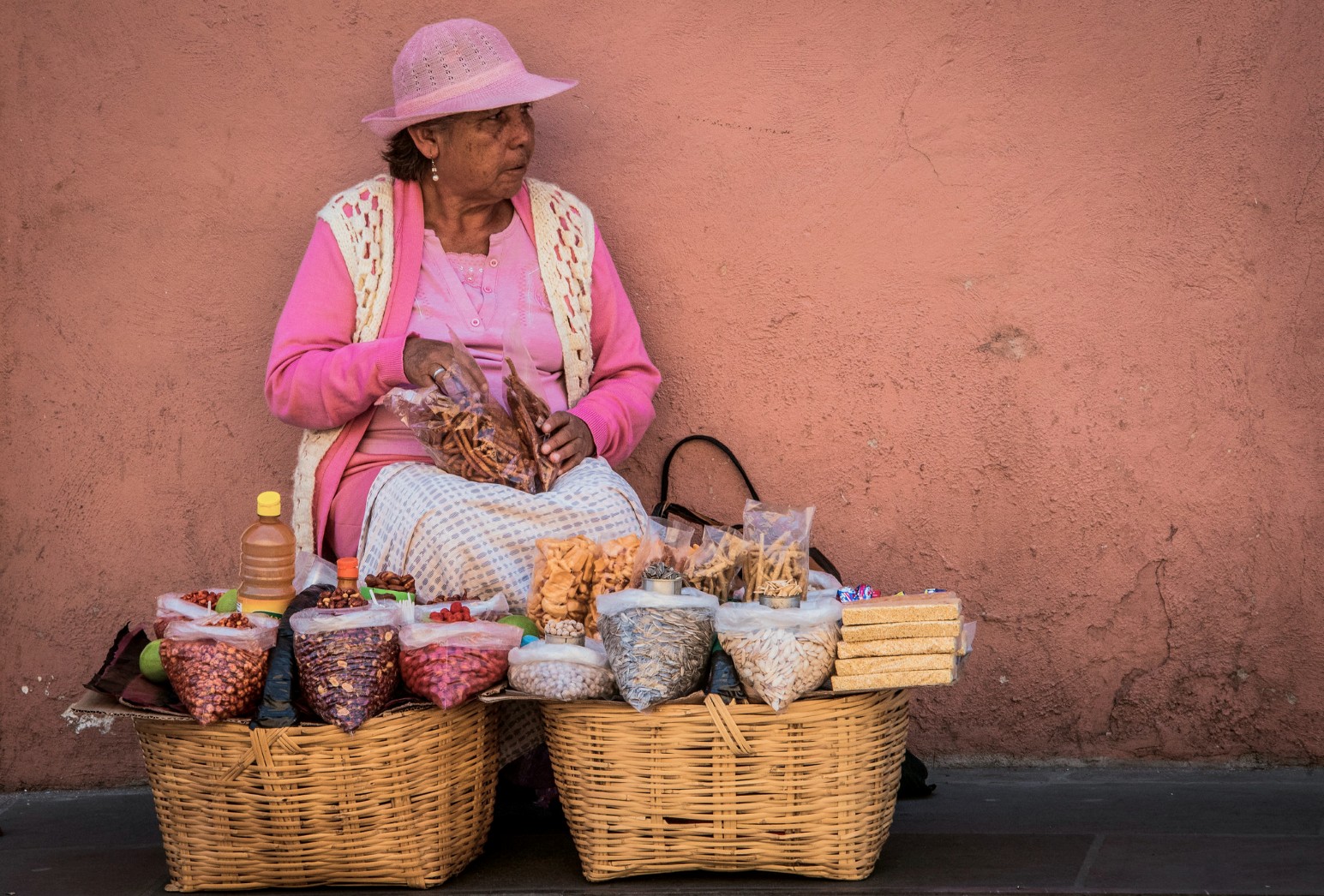
- Eat like a local: Avoid expensive western restaurants or imported food. From street markets (tianguis) to local eateries like fondas and cenadurías, you can find plenty of affordable and delicious food in Mexico. Street food stalls usually offer pozoles, quesadillas, and enchiladas for around MXN 50–85 ($3–$5 / £2–£3.75).
- Refill your water: Don't keep buying water bottles when you run out in Mexico. Consider buying large 20 litre water jugs — or garrafones — and refill those instead.
| Restaurants | MXN | USD | GBP |
|---|---|---|---|
| Inexpensive restaurant meal | |||
| Domestic beer (0.5 litre) | |||
| Regular cappuccino | |||
| Water (0.33 litre) | |||
| Markets | MXN | USD | GBP |
| Regular milk (1 litre) | |||
| Loaf of white bread | |||
| Regular eggs (1 dozen) | |||
| Apples (1 kg) | |||
| Transportation | MXN | USD | GBP |
| One-way ticket (local transport) | |||
| Monthly pass (regular price) | |||
| Taxi start (normal tariff) | |||
| Gasoline (1 litre) | |||
| Utilities | MXN | USD | GBP |
| Electricity, heating, cooling, water, and garbage (for a regular apartment) | |||
| Regular prepaid monthly mobile tariff with 10GB+ data | |||
| Internet (60 Mbps, unlimited data, cable/ADSL) | |||
| Clothing and shoes | MXN | USD | GBP |
| Pair of jeans (Levis 501 or something similar) | |||
| Summer dress in a chain store | |||
| Nike running shoes (mid-range) | |||
| Men's leather business shoes |
English Teaching Jobs in Mexico
Most English teaching jobs in Mexico come in private language schools, but teaching opportunities also exist in public schools and international schools.
You can also join teaching programmes that partner with the Mexican government, but the salary is usually lower than at language centres and international schools. If you have a master's or a PhD in a specific subject and teaching experience, you're in contention for a university job in Mexico.
Most jobs are advertised locally, but some can be found online on The TEFL Org Job Centre or other job platforms.
Public schools
Most public school teaching jobs typically involve foreign teachers working as a language assistant. These supporting roles are ideal for entry-level teachers because you'll work alongside the local teacher, supporting lesson activities and students practising their English skills. English is a mandatory subject in public education, and the school calendar typically runs from September to July.
What to expect teaching at public schools in Mexico:
- Language assistant roles — supporting the local teacher with lesson activities
- Monday to Friday schedule, September to July
- Teaching large classrooms with modest equipment and materials
Private language schools
Private language schools are often the go-to for English teaching in Mexico. You'll find opportunities across the country, particularly in larger cities like Mexico City, where students of all ages learn English for studying or business purposes. Many schools teach children and teenagers after school, while others focus on adult learners looking to improve their career prospects or prepare for English-language exams.
What to expect teaching at private language schools in Mexico:
- Evening and weekend classes
- Year-round hiring, especially in major cities
- Teaching children, teenagers and adults
- Courses divided into general English or ESP (English for Specific Purposes) like Business English and exam preparation
International schools
International schools offer some of the highest salaries and most structured teaching environments in Mexico. These schools typically follow an American, British or International Baccalaureate (IB) curriculum and teach most subjects in English. As a result, they're often looking for qualified teachers with classroom experience and recognised teaching credentials.
What to expect teaching at international schools in Mexico:
- Monday to Friday timetable
- Teaching an international curriculum in English
- Competitive salaries and benefits packages
- Higher entry requirements, often including a bachelor's degree, teaching licence and previous classroom experience
Universities
Nearly 50% of universities in Mexico include English-taught programmes (full-time or partial), which means there are opportunities for foreign teachers in higher education. If you have a master's degree or PhD in a subject alongside a TEFL or teaching licence, you can become a lecturer at a university in Mexico, teaching a special subject with English as the primary language.
What to expect teaching at universities in Mexico:
- Lecture-based teaching
- Focus on academic research, mentorship and career guidance
- Fewer teaching hours, but more preparation
Teaching Programmes in Mexico
English teachers can join teaching programmes like the Mexican Government's National English Programme (PRONI or Programa Nacional de Inglés in Spanish). This programme partners with agencies like Projects Abroad or COMEXUS, so teachers can apply through them to teach in public schools.
Through the PRONI programme, teachers work as an English language assistant at public schools across primary and secondary in Mexico, working around 20–25 hours per week.
As a language assistant, you'll work in public education for 9 months promoting not just English language development but also cultural exchange. You'll work with a local teacher who is the main teacher, but your responsibilities include supporting classroom activities, inspiring confidence in students when using English, organising workshops, and other duties.To teach as a language assistant on the PRONI programme, you'll need to meet the following requirements:
- Hold a bachelor's degree (in any subject)
- Be qualified with a TEFL certificate (minimum 120 hours)
- Show proof of your English proficiency (if you're a non-native speaker)
Teaching English in Major Cities
From the Caribbean Sea to the Pacific Ocean, to everything in between, there are so many places for teachers to consider as their launching pad or second home in Mexico.
Teach English in Mexico City

Home to some 25 million people, this capital city is one of the largest metropolises in the world, and if you love the chaos of the crowds — teaching English in Mexico City is for you. Even if not, you'll discover a city of friendly locals, a lively expat scene, and seemingly endless places to eat and drink after overcoming the initial culture shock.
Mexico City has the largest number of schools and teaching opportunities, and while its top international schools are highly competitive, you can find private language schools to get you on your feet.
You'll never run out of tourist attractions to visit on your time off from school either. The city is packed with historic sites and museums from Templo Mayor to the Zócalo. If you want to up the tempo, head to a local stadium to watch lucha libre or hike to the peak of Nacional Cumbres del Ajusco. Want a city break? Take a day trip to see the ancient ruins of Teotihuacán or Tula.
Tip: Traffic is famously heavy in Mexico City. Allow plenty of time to get around!
Teach English in Oaxaca
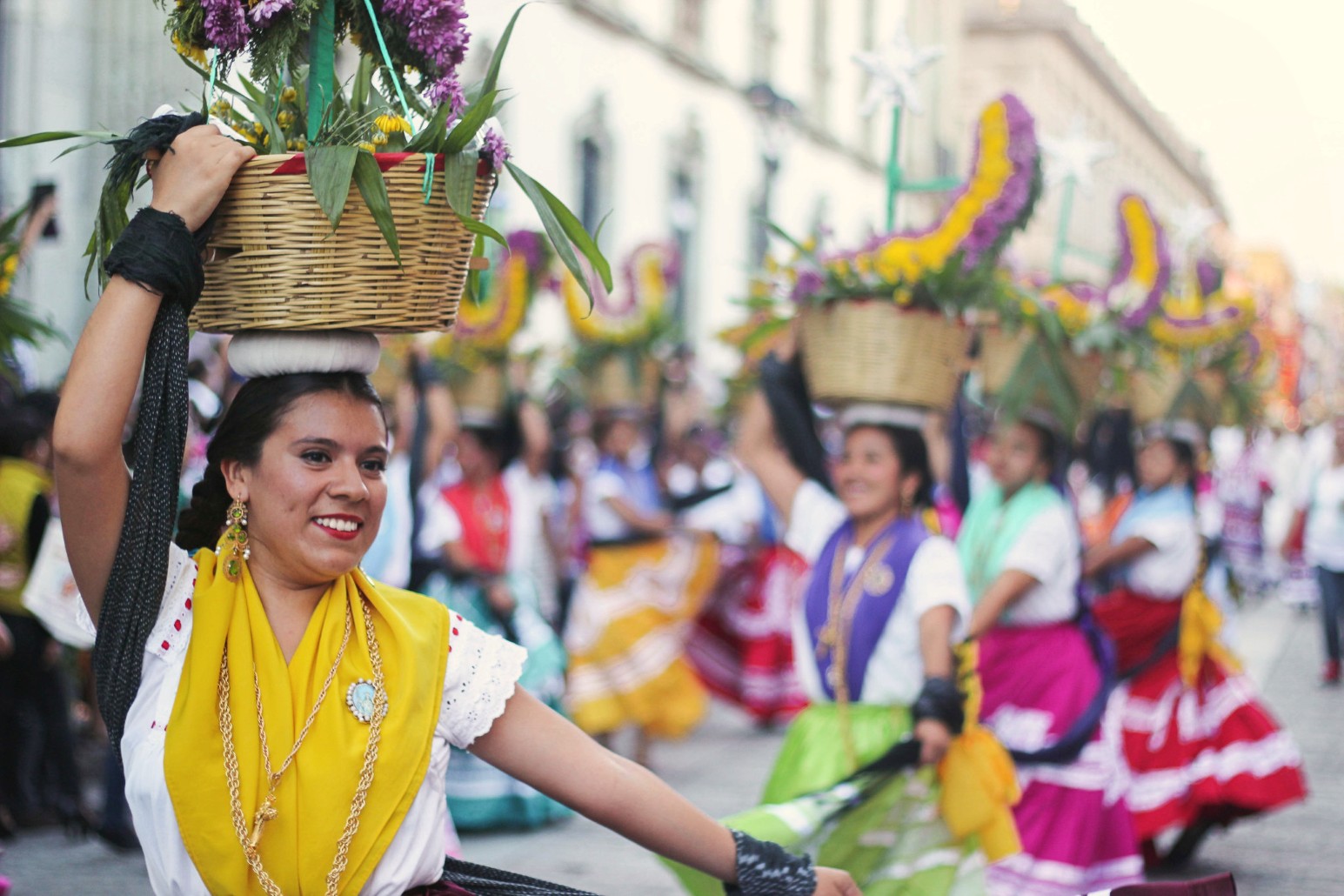
Oaxaca offers a slower pace of life compared to Mexico City's frantic energy. In Oaxaca, you can enjoy all of the benefits that the capital city offers, from its food, history, and colourful festivals.
With ~300,000 residents, Oaxaca has just a fraction of the population of Mexico City, and despite having a smaller teaching market, it also means that you can enjoy a more laid-back environment beyond the classroom.
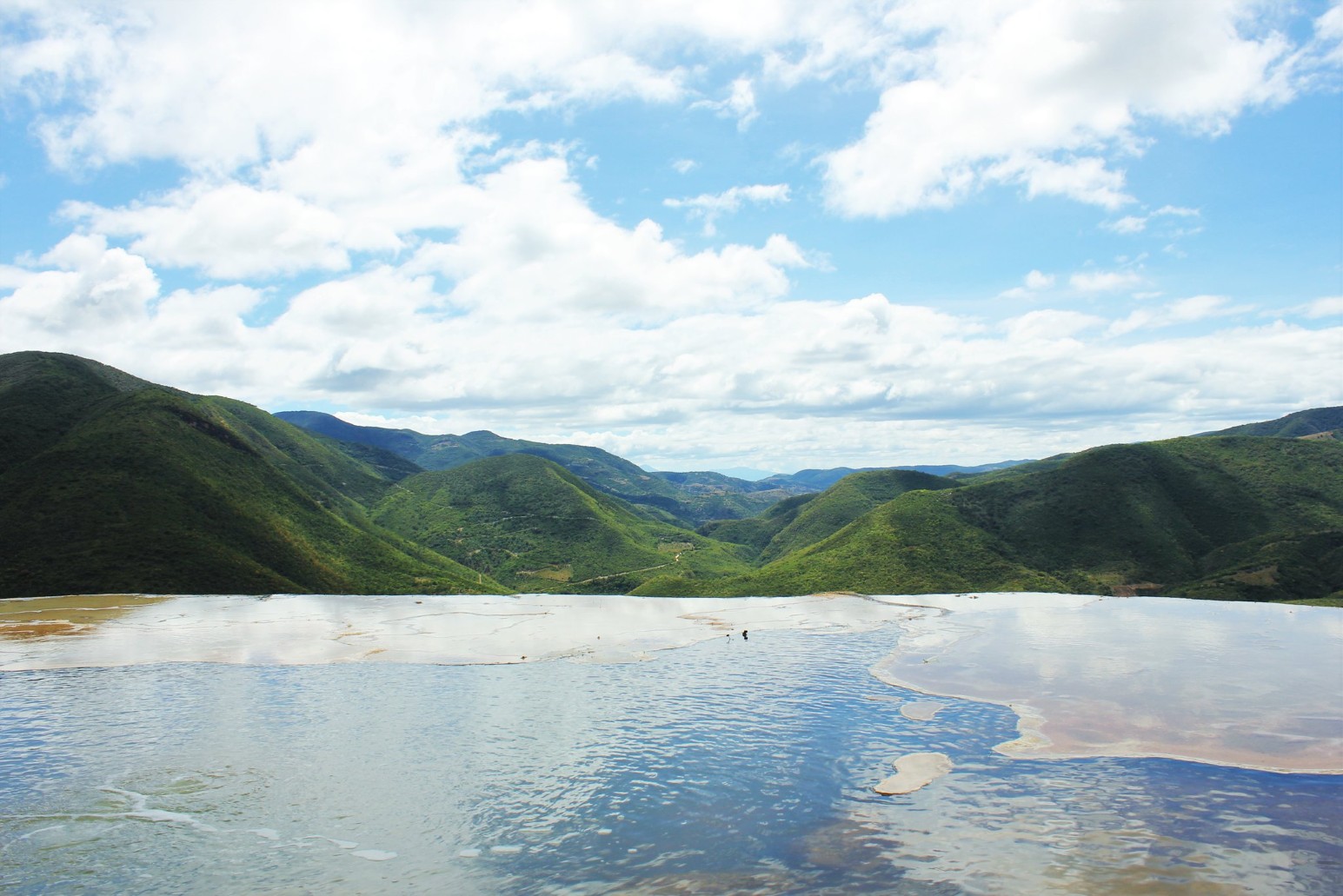
When you're not teaching enthusiastic students English, you can soak up history at the archaeological site of Monte Albán, embrace festivals like the Day of the Dead or La Guelaguetza. If you're looking for a day-trip, you can head further afield to the surfer's paradise — Puerto Escondido.
TEFL Org Teacher Story
Want to hear it from the teachers themselves? Here's what Harriet had to say about her adventure in Mérida, Mexico!
Harriet, Mérida
"I didn't know how businessmen and women would react to a 23-year-old English girl attempting to teach them English by using episodes of Friends, playing lyrics to Ed Sheeran songs and showing them pictures of the Devon countryside. My timetable is a little bizarre. I teach at 7 in the morning and then return later to teach from around 4pm. This is definitely made bearable by the other teaching staff and the enthusiasm of the students who come to learn.
I'm regularly reminded that I'm creating opportunities by teaching English. It's the most amazing feeling when they pass their exams at the end of the year, and a student comes up to tell you that they got their place on a master's course in Canada thanks to your hard work.
Life in Mexico is also fantastic. I live in a beautifully colourful and relaxed city, close to the beach and surrounded by cenotes (clear water sinkholes created by the meteor that killed the dinosaurs) and ancient Mayan ruins. Perhaps the best bit is that it's just a few hours' drive from the Caribbean. Every day, it's warm and sunny and lovely, and I have met some of the most amazing people in this surprisingly safe and friendly area of Mexico."
Ready to Teach English Abroad? Don't Forget Your TEFL Certificate
Ready to teach English abroad? Whether you're hoping to teach in Mexico City, Oaxaca, or beyond, a recognised TEFL qualification is the best place to start.
While a TEFL certification will help you find jobs abroad, it's also an essential step towards becoming a confident teacher in the classroom. From learning how to plan and deliver lessons and navigate complex grammar structures, you'll become confident in your ability to help students learn English language skills.
Get started today with our 120-hour TEFL course.
Frequently Asked Questions
Q. How much can you make teaching English in Mexico?
The teaching salary depends on your location, experience, and teaching job. Generally, English teachers in Mexico earn around MXN 8,765–26,290 ($500–$1,500 / £375–£1,120) per month. International school teachers can earn upwards of MXN 26,290 ($1,500 / £1,120) per month.
Q. Can I teach English in Mexico without a degree?
Yes, you can teach English without a university degree in Mexico, especially at private language schools. But you'll need a TEFL certificate, and teaching experience will boost your application.
Q. Is there a demand for TEFL teachers in Mexico?
Yes, there's a high demand for TEFL teachers in Mexico. Home to the offices of international companies, and also bordering the United States of America, plenty of companies need English-speaking workers, and Mexican university students need to speak English to study abroad.
Q. Do you need a visa to teach English in Mexico?
Yes, you'll need the work visa (Temporary Resident Visa) and work permit to teach English in Mexico legally. But you can only get this once you've found a job, and then your employer can sponsor your application.