









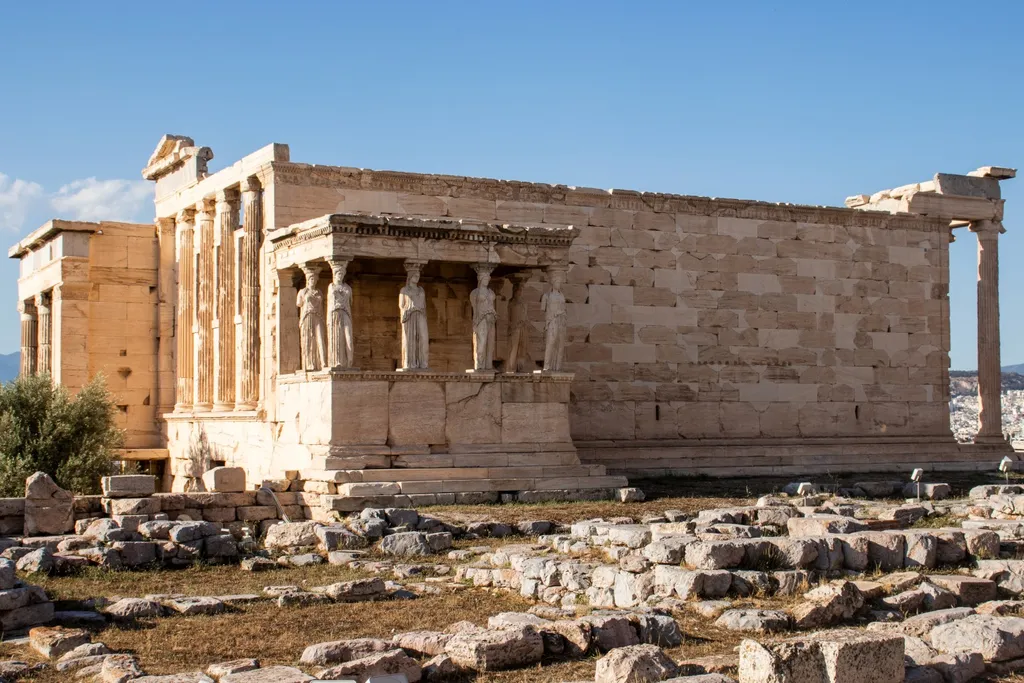
Whether you're a history buff, interested in biodiversity or island-hopping, there's a spot for everyone in Greece. From Mount Olympus, scattered islands, and Greek mythology, there's plenty to indulge on whether you're looking for a quick getaway or you're a TEFL teacher looking to build a career in the Mediterranean.
Greece has a high level of English proficiency, which means it can be tricky for foreign English teachers to find work – but your efforts will pay off with the right preparation. Read on for The TEFL Org guide to teaching English in Greece, from the top jobs, requirements, salary expectations, visas, and more.
Key Takeaways
- English speakers are common in Greece, but teachers are still in demand.
- Teachers generally need a TEFL certificate and a bachelor's degree to teach in Greece.
- The average teaching salary ranges from €700–€1,200 ($795–$1,365 / £600–£1,030) per month.
- Most teaching jobs come in the private sector, at language schools, summer camps, and international schools.
- Athens and Thessaloniki are among the most popular locations for teachers.
- EU teachers don't need a visa, but non-EU teachers need the National Visa and Residence Permit for employment to teach in Greece legally.
Requirements for Teaching English in Greece
Greece is a go-to spot for travellers chasing the sun and light blue coastline. Its international status also means that English speakers are common, so how does this affect the requirements for teaching abroad in Greece?
Do I need a TEFL certification to teach English in Greece?
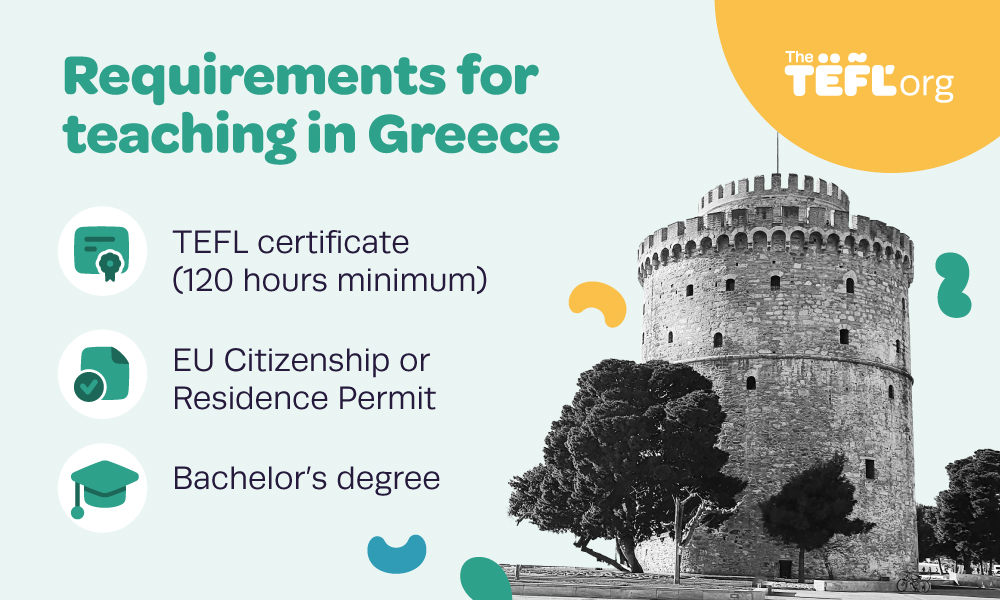
Greece has a competitive TEFL market, so you'll need an internationally-recognised certificate to compete with other teachers. Most employers require at least 120 hours of TEFL training – this teaches you how plan and present lessons, teach complex grammar, and overcome common obstacles in the foreign-language classroom.
Can I teach English in Greece without a degree?
Alongside your TEFL certificate, most employers seek teachers with a bachelor's degree (in any subject). If you're from the EU, you can technically teach English abroad without a degree in Greece at language schools or summer camps or through private tutoring, but non-EU teachers need a bachelor's degree to get the visa for teaching abroad.Tip: A private language school in Greece is known as a frontistiria.
Can I teach English in Greece without experience?
Yes, you can teach English abroad without experience in Greece if you have a TEFL certificate and a degree.
If you're TEFL certified, you're not starting from scratch – employers recognise that you've put in the hours to study essential aspects of teaching English as a foreign language. Most employers are welcoming of entry-level teachers if they have an internationally-recognised TEFL certification – like those from The TEFL Org.
Visa requirements for teaching English in Greece
Greece is a member of the European Union, which means that teachers with EU citizenship don't need a visa to legally work in Greece. Non-EU teachers, need the National Visa and Residence Permit for employment, but EU law makes this difficult.
Greek employers need to justify hiring non-EU teachers over local or EU teachers, but it's still possible if you have the right qualifications and experience.
To get the right paperwork, you'll need to find a job first. Your employer will get approval from the Ministry of Labour, before you can apply for the Type D National Visa at your local Greek embassy. Once you arrive into Greece, you'll submit your biometrics (fingerprints) to receive your Residence Permit.
Here's what you'll need to get the visa and residence permit:
- Proof of contract with a Greek employer
- Clear criminal background check
- Travel/Health insurance
Find out how to teach English in Europe as an American.
Download our Teaching English in Europe Guide
Find out how teaching English in Greece compares to other European countries.

Salary and Cost of Living
Greece is very affordable compared to other European countries, but the cost of living and teaching salaries depends on where you are. Here's everything you need to know about salaries and living costs in Greece.
How much can you earn teaching English in Greece?
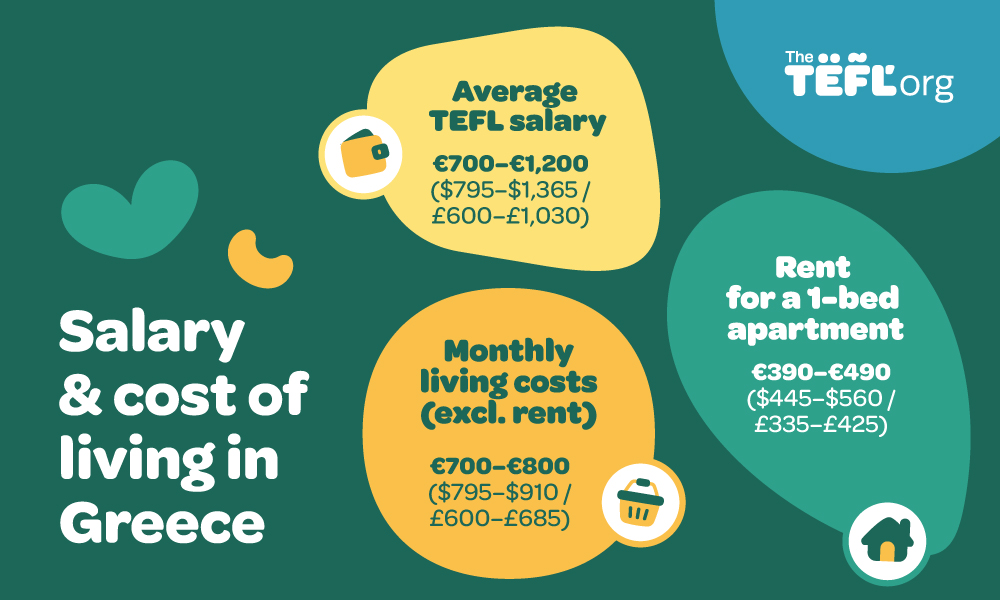
The salary for TEFL teachers in Greece is relatively low compared to other European countries. Average teaching salaries range from around €700–€1,200 ($795–$1,365 / £600–£1,030) per month, but this depends on several factors.
- Experience & qualifications: Teachers with TEFL qualifications, teaching licenses, or years of teaching experience can earn a higher salary teaching in Greece. Being a native English speaker can also influence your salary, but non-native speaker with advanced qualifications can still earn a high salary.
- Teaching job: With a greater level of experience and qualifications, teachers can work at more prestigious schools that offer higher salaries and benefits. Generally, international schools pay teachers the highest salaries, whereas public and private language schools pay something more consistent with the average salary.
- Location: Tourist destinations and expat hubs like Athens, Crete, and Thessaloniki typically offer higher salaries for teachers, but this may also come with higher costs of living.
How much does it cost to live in Greece?
Greece is known for being an affordable travel destination, but some areas like Mykonos, Santorini, and Corfu can be expensive. You can expect to spend around €1,000–€1,200 ($1,140–$1,370 / £850–£1,020) per month if you're living within your means.
Teachers on lower salaries will struggle to save up in Greece unless they adopt mindful spending habits. Here's how you can stretch your salary as an English teacher in Greece:
- Be flexible with location: Living outside the city center can save you around €100 ($115 / £85) per month, and it's also a great way to live somewhere that's less "touristy" or commercialised.
- Share housing: Some teachers prefer to share accommodation with other teachers or expats, and this can reduce your monthly rent by up to €200 ($230 / £170) per month.
- Stick with local products: VAT is high in Greece, so expect to pay a lot for products that have been imported. With a delicious and famously healthy national cuisine like the gyros, moussaka, and souvlaki, indulging in Greek food is friendly on your wallet.
- Consider job perks: Don't just focus on salary – some jobs may offer benefits like accommodation or an allowance for teachers.
| Restaurants | EUR | USD | GBP |
|---|---|---|---|
| Inexpensive restaurant meal | |||
| Domestic beer (0.5 litre) | |||
| Regular cappuccino | |||
| Water (0.33 litre) | |||
| Markets | EUR | USD | GBP |
| Regular milk (1 litre) | |||
| Loaf of white bread | |||
| Regular eggs (1 dozen) | |||
| Apples (1 kg) | |||
| Transportation | EUR | USD | GBP |
| One-way ticket (local transport) | |||
| Monthly pass (regular price) | |||
| Taxi start (normal tariff) | |||
| Gasoline (1 litre) | |||
| Utilities | EUR | USD | GBP |
| Electricity, heating, cooling, water, and garbage (for a regular apartment) | |||
| Regular prepaid monthly mobile tariff with 10GB+ data | |||
| Internet (60 Mbps, unlimited data, cable/ADSL) | |||
| Clothing and shoes | EUR | USD | GBP |
| Pair of jeans (Levis 501 or something similar) | |||
| Summer dress in a chain store | |||
| Nike running shoes (mid-range) | |||
| Men's leather business shoes |
English Teaching Jobs in Greece
English Teaching Jobs in Greece come in different forms, so it's best to consider which teaching environment suits you best based on your experience, teaching style, and goals. EU teachers can try their luck finding jobs in-country, but most teaching opportunities can be found online on job forums – like The TEFL Org Job Centre – or by applying directly to schools.
Public schools
Teaching jobs at public schools in Greece is typically reserved for local teachers or EU teachers with Greek fluency. Teachers at public schools follow the national curriculum, and English is a mandatory subject from primary education. The academic calendar starts in September and ends in early July.
Typical expectations of teaching English at public schools:
- Teaching a range of subjects in addition to English
- Following the national curriculum
- Large classroom sizes and modest facilities when compared with private schools
Private language schools
Private language schools – also known as frontistiria in Greece – cater to students looking to study English beyond their work or current study schedule. These jobs are most common in bigger cities like Athens and Thessaloniki, and student ages range from young learners to adults.
While many private language schools welcome entry-level teachers, others may seek teachers experienced or qualified in ESP (English for Specific Purposes) subjects like business English, exam preparation, and so on.
Typical expectations of teaching English at private language schools:
- Teaching evening and weekend classes
- Wide range of subjects from general English, business English, exam preparation
- Variety of student ages and levels
- Flexible entry requirements and year-round hiring
International schools
International schools in larger cities and hubs offer a US, UK, or IB (international baccalaureate) curriculum to foreign students, but Greek students from wealthy families also study here for its high quality of education. International schools are very competitive, and offer high salaries and benefits, but teachers need advanced qualifications to work here.
Typical expectations of teaching English at international schools:
- Monday to Friday schedule
- Teaching from a UK, US, or international (IB) curriculum
- Higher level of English among students
- Excellent salary and benefits – but high requirements including master's degree, teaching license, and/or minimum 2–3 years of experience
Private tutoring
Private tutoring is a common way for teachers to supplement their income, but it's also a main source of income for other teachers. Depending on your experience and qualifications, you could earn upwards of €15 ($17 / £13) per hour, but those teaching ESP subjects can earn significantly more. You'll have to market yourself and find your own students.
Teaching English in Major Cities
Here are the most popular spots for English teachers to consider for their Greek adventure.
Teaching English in Athens
From amphitheatres that hosted Greek plays by Sophocles and Euripides to its shining 48km coastline, Athens is perfect getaway destination for travellers and teachers alike. It's one of the oldest cities in the world, so you can imagine the sheer number of relics you'll encounter, from ancient Doric temples like The Acropolis to the birthplace of democracy – Agora.

It's also an excellent place to launch your TEFL career, with teaching opportunities in international schools, language centres, and summer schools. After you've finished planning lessons and setting homework, you can head to one of Athens's best beaches or indulge in Greek food and grab coffee at the Monastiraki Square.

Teaching English in Thessaloniki
With relics of Roman, Byzantine, and Ottoman history at every corner, Thessaloniki is just as historic as its Athenian southern counterpart. This northern metropolis is slightly cooler in temperature than Athens, but its scenic waterfront, picturesque streets, and ancient ruins form a dreamy and laid-back environment.
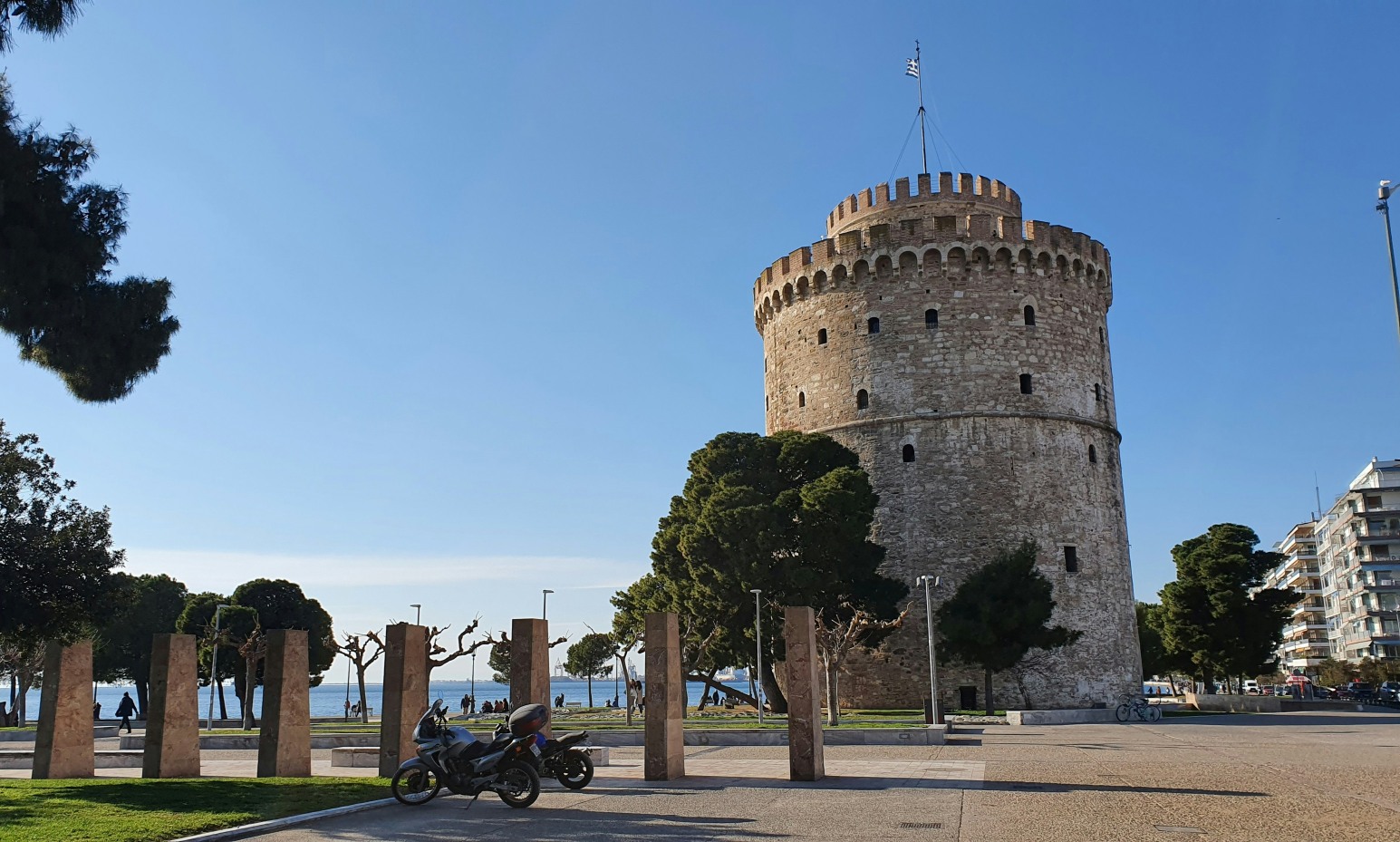
Thessaloniki has a lower population than Athens, which also means that the teaching market is slightly smaller, but TEFL teachers can still find jobs here. On your way to work, you can grab an invigorating Greek coffee, or try the chilled frappé in its birthplace. Beyond teaching, you can embrace Thessaloniki's status as the first UNESCO city of gastronomy in Greece every day, whether you dine at its famous bakeries or centuries old food markets.
TEFL Org Teacher Story
Want to hear it from the teachers themselves? Read about Jennifer – The TEFL Org Managing Director and co-founder – and her experience teaching abroad in Greece!
Jennifer in Greece
"My TEFL journey began while at university with the dawning realisation, in my final year, that I wasn't going to achieve my ambition of joining the Diplomatic Service straight from there. But I knew, without a doubt, that I wanted to experience living and working abroad, not just travelling. So I investigated how I could gain the right kind of experience that would enable me to achieve my goal of working abroad.
I did my TEFL course in June; went home, worked all the hours I could, saved money, applied for every job I saw going in Spain, got offered one in a small mountain town in Greece and decided 'what the heck, I come from a small town in the mountains of Scotland, how different can it be?'.
I never did join the Diplomatic Service, instead I found my dream job teaching in a small school in a mountain town in Greece (one hour by moped to the beaches in the summer, half an hour to the ski slopes in the winter – what wasn't to like?).
This was the first step in my TEFL journey that took me from the Highlands of Scotland and around Europe. To this day it offers me opportunities to travel to amazing and fascinating places around the world. Now, my goal is to give this opportunity to others; from the best courses, to the right advice, to the most awesome jobs, The TEFL Org strives to deliver the greatest opportunities!"
Discover more TEFL experiences over on our blog!
Ready to Teach English Abroad? Don't Forget Your TEFL Certificate
Before you book your flights to teach English abroad, it's important that you're not only qualified but that you feel confident in the classroom. With a TEFL course, you'll learn about lesson planning, classroom management, grammar rules, and so much more. Not only will it help you gain access to some of the best teaching jobs, but you'll feel confident in your abilities to lead a classroom. And once you're certified, you're certified for life!
Get started today with our 120 hour TEFL course.
Frequently Asked Questions
Q. Is there a demand for English teachers in Greece?
Yes, there's a moderately-high demand for English teachers in Greece. Greece has a booming tourist industry, and English speaking workers are needed to accommodate travellers.
Q. Can I be an English teacher in Greece?
Yes, you can be an English teacher in Greece especially if you have a TEFL certificate and a bachelor's degree. If you have an EU passport, you'll have a significant advantage over non-EU teachers in the job market.
Q. How much are English teachers paid in Greece?
TEFL teachers earn an average salary of around €700–€1,200 ($795–$1,365 / £600–£1,030) per month at public or private schools, but international school teachers can earn much more.
Q. Do I need to know Greek to teach English in Greece?
No, you don't need to speak the Greek language to teach English in Greece. If you want to work at public schools, then speaking Greek is a huge advantage, but TEFL teachers can find jobs in the private sector by only speaking English.
Q. Can I teach in Greece as a non-native speaker?
Yes, you can teach English as a non-native speaker in Greece, especially if you have a non-EU passport. Non-native English speakers will often need proof of their fluency in the form of an IELTS or CEFR certificate, or a degree from an English-speaking university.