








From its Alpine landscapes, Habsburg legacy, and Wiener Schnitzel, Austria is a haven for foodies, adventurers, history buffs, and more. But beyond surface level attractions, Austria ranks in the top 5 for its quality of life and safety globally, and also English proficiency among non-English speaking countries.
So, where does that leave TEFL teachers? The teaching market is competitive, but not impossible to break into. Read on for The TEFL Org's guide to teaching English in Austria, from the top jobs, salary expectations, visa requirements, and much more.
Key Takeaways
- Austria has a high level of English proficiency, but TEFL teachers can still find work at private schools, summer camps, and international schools.
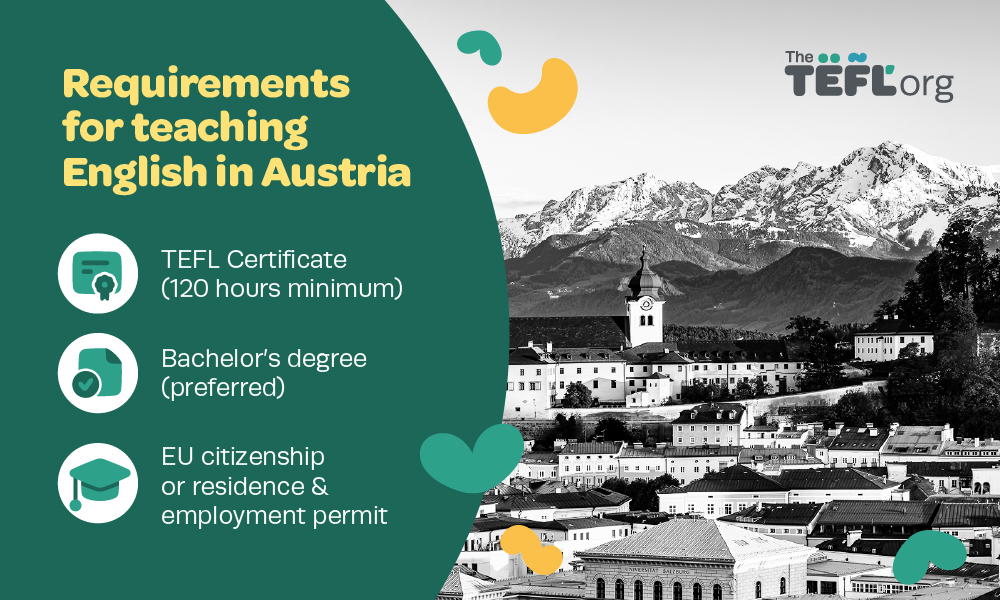
- Teachers generally need a TEFL certificate, degree, and an EU citizenship is highly preferred.
- TEFL teachers in Austria earn an average salary of around €1,600–€2,800 ($1,820–$3,190 / £1,375–£2,115) per month, but many factors will influence this.
- EU teachers don't need a visa to work in Austria, but non-EU teachers need visa sponsorship and a residence permit, which makes it difficult to find work.
- Top locations for teaching in Austria include Vienna and Salzburg.
Requirements for Teaching English in Austria
English is widely spoken in Austria, with children learning it from primary school onwards. The country also invests heavily in invests heavily in education (they're 3rd in the world!), so employers expect teachers to arrive with the right qualifications. Before you apply, it's worth understanding the teaching requirements that schools are looking for.
Do I need a TEFL certification to teach English in Austria?
Most employers expect you to have at least a 120-hour TEFL certificate. Some schools also prefer candidates with a Level 5 TEFL course or a teaching licence from their home country.
If you're already TEFL certified, you can improve your teaching knowledge and job prospects by specialising in an ESP course (English for Specific Purposes) with The TEFL Org.
Tip: Business English is in demand, particularly among professionals. If you have experience or a qualification in teaching business English, you could qualify for higher-paying roles than general English teaching.
Can I teach English in Austria without a degree?
Yes, it's possible to teach English without a degree in Austria. While many employers prefer candidates with a bachelor's degree, some private language schools and tutoring opportunities are open to teachers without one. Having a TEFL qualification is essential, and an EU passport will make finding work much easier.
Employers at private language schools – as well as students looking for private tuition – are more likely to hire non-degree holders than public schools or international schools in Austria.
Can I teach English in Austria without experience?
Yes, you can teach English abroad without experience in Austria if you have a TEFL certificate and a bachelor's degree. Some institutions like international schools prefer teachers with previous teaching experience, but inexperienced teachers can find work at private language schools or summer camps to get started.
Visa requirements for teaching English in Austria
Non-EU teachers face more difficulty when trying to find teaching jobs in Austria. This is because EU law dictates that employers must justify the hiring of a non-EU teacher over a local or EU-based teacher. However, it's still possible if you have the right qualifications.
Teachers without EU citizenship will need a residence and employment permit. This is typically done through the Red-White-Red (RWR) Card, where teachers accumulate points based on their education, experience, and professional qualifications.
To quality for the residence and employment permit, you'll need the following:
- Proof of contract with Austrian employer
- Clear criminal background check
- Proof of qualifications and experience
- Health insurance
Download our Teaching English in Europe Guide
Everything you need to know about teaching English abroad in Europe
Salary and Cost of Living
Austria offers an excellent quality of life, but also a relatively high cost of living compared to surrounding countries. So, how do teacher salaries match up against living costs in Austria?How much can you earn teaching English in Austria?
Teachers can earn a high salary in Austria, with average monthly salary ranging from €1,600–€2,800 ($1,820–$3,190 / £1,375–£2,115) depending on a number factors like your experience, teaching job, and contract type.
- Experience & qualifications: Teachers with advanced qualifications like a bachelor's or master's in English or education, a TEFL certificate and teaching experience can earn a higher salary than non-degree holders or entry-level teachers.
- Teaching job: Typically, international school jobs offer the highest salary and benefits. But these positions are highly competitive and have high entry requirements.
- Contract: Since many TEFL teachers in Austria come from the EU, they can work without having a work permit tied to a specific employer, so most private language schools hire teachers on a freelance basis. Be sure to check whether the salary quoted is gross or net, and whether you get paid per hour or monthly.
If you are working freelance, be sure to ask about additional costs that are or aren't covered. You might need to travel between schools for class, so you'll need to know if this is reimbursed or not. Also, make sure to ask when you get paid – some schools will pay you at the end of a course rather than monthly.
How much does it cost to live in Austria?
Austria isn't the most expensive country in the world, but you'll still need to be mindful of your budget if you want to save up. Teachers can expect to spend around ~€1,900 ($2,170 / £1,625) per month including rent. To play it safe, it's important to arrive into Austria with a safety net until your first paycheck.Here's how you can stretch your salary or maximise savings as a teacher in Austria:
- Be flexible with location: Although Vienna and Salzburg offer high salaries, they'll also come with higher costs of living. Teaching in smaller cities might end up saving you more money in the long run.
- Live outside the city centre: Living beyond the city centre can save you around €150 ($170 / £130) per month, and it also allows you to live in neighbourhoods that are considered to be more authentic and less "touristy".
- Share accommodation with others: You can split the rent by sharing accommodation with other teachers and expats. While a 1-bed apartment costs around €800 ($910 / £670) per month, a 3-bed apartment costs around €465 ($530 / £400) per person, per month.
- Use public transport: Public transport in Austria is cheap and efficient – arguably among the best in Europe. You can buy monthly passes that cost around €54 ($60 / £45), or download the ÖBB App to buy day tickets and plan your routes.
| Restaurants | EUR | USD | GBP |
|---|---|---|---|
| Inexpensive restaurant meal | |||
| Domestic beer (0.5 litre) | |||
| Regular cappuccino | |||
| Water (0.33 litre) | |||
| Markets | EUR | USD | GBP |
| Regular milk (1 litre) | |||
| Loaf of white bread | |||
| Regular eggs (1 dozen) | |||
| Apples (1 kg) | |||
| Transportation | EUR | USD | GBP |
| One-way ticket (local transport) | |||
| Monthly pass (regular price) | |||
| Taxi start (normal tariff) | |||
| Gasoline (1 litre) | |||
| Utilities | EUR | USD | GBP |
| Electricity, heating, cooling, water, and garbage (for a regular apartment) | |||
| Regular prepaid monthly mobile tariff with 10GB+ data | |||
| Internet (60 Mbps, unlimited data, cable/ADSL) | |||
| Clothing and shoes | EUR | USD | GBP |
| Pair of jeans (Levis 501 or something similar) | |||
| Summer dress in a chain store | |||
| Nike running shoes (mid-range) | |||
| Men's leather business shoes |
English Teaching Jobs in Austria
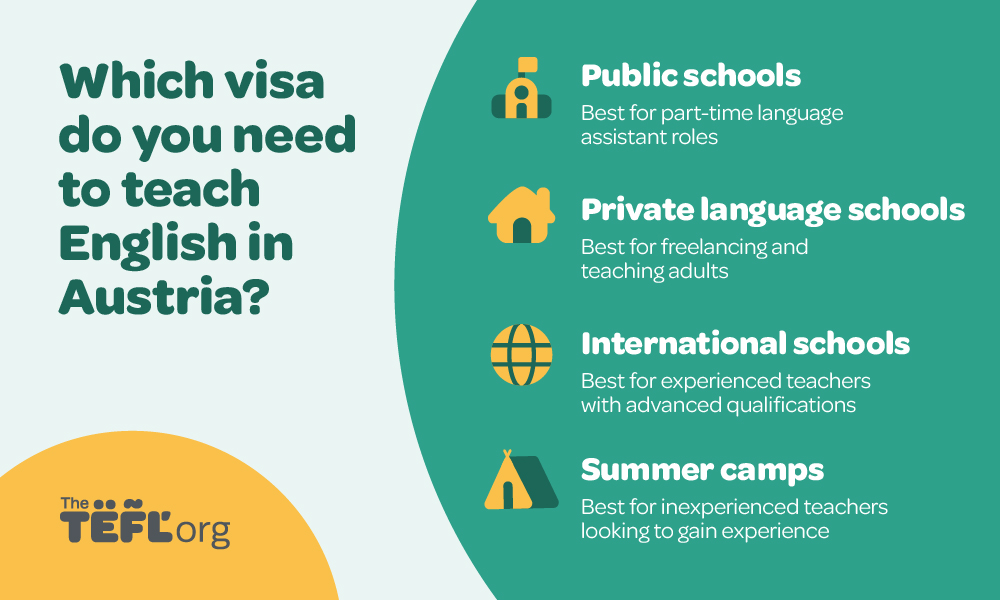
English teaching jobs in Austria exist in public and private sectors, but most TEFL teachers find teaching opportunities in private schools, international schools, and 1-1 tutoring.
Most jobs can be found on job forums like The TEFL Org Jobs Centre or Serious Teachers, but you can also apply directly to schools. If you're an EU teacher, you can search for jobs in-country, whereas non-EU teachers need to secure a job before entering Austria on the right work and residence permit.
Many teachers – especially those from the EU – work as freelance teachers. Because they can work for multiple employers without being tied to a specific sponsored visa or job, schools tend to hire teachers on a freelance basis. Most teachers have a number of part-time contracts which they weave together to make a full wage, and they organise and pay tax as a self-employed workers.
Public schools
At a public school, teachers will support Austrian students with language development while following the national curriculum, and students start learning English at Grade 1 (6 years old).Public school teaching jobs are rare, unless you have fluency in German. Teachers who speak German at a high enough level can apply directly to jobs or work as a language assistant through programmes like British Council's or USTA's language assistant programme.
What to expect teaching at public schools in Austria:
- Teaching large classrooms
- Following the national curriculum
- Language assistant roles – unless you have German fluency and a teaching licence from your home country
Private language schools
Private language schools cater to students who have a specific goal in mind, whether they want to learn business English, prepare for IELTS exams, and so on. Because of this, teachers who have advanced TEFL courses or niche industry knowledge have advantages in the market.
Most lessons take place in the evening and on weekends to cater to busy schedules. Student ages vary according to the unique course, and entry-requirements are more flexible than at public or international schools.
What to expect teaching at private language schools in Austria:
- Teaching in the evening and on weekends
- Wide variety of student ages
- Focus on teaching ESP (English for Specific Purposes)
- Smaller classrooms
International schools
International schools offer high-quality education, more often to foreign students from expat families, although local students do sometimes study here. At an international school, teachers follow a US, UK, or IB (international baccalaureate) curriculum where English is taught as a main language. Salaries and benefits are excellent, but entry-requirements are strict, with teachers often needing a master's degree, teaching licence, and years of prior teaching experience.
What to expect teaching at international schools in Austria:
- Teaching English as a main language from an international curriculum
- Small classroom sizes
- Teaching multiple subjects in English
- Excellent salary and benefits, but high entry-requirements
Summer camps
Summer camps are an excellent way for inexperienced teachers to gain experience, or for seasoned teachers to fill the gaps during the school break. At a summer camp, students learn English in a more active and informal environment, although some summer schools do offer traditional classroom settings too.
Popular summer camps for TEFL teachers in Austria include Berlitz, Village Camps, English Action Camp, English Camp Austria.
Typical expectations of teaching at summer camps in Austria:
- Emphasis on active-based learning and team-building activities
- Short-term contracts
- Teachers often receive a stipend and free accommodation
Teaching Programmes in Austria
It's possible to teach English in Austria through programmes that partner with Austria's official Ministry of Education. These programmes hire native English speakers as language assistants to teach for 13–17 hours per week at public schools, and some of the most popular partners include British Council in the UK and USTA in America. The school year runs from September to May/June, so the hiring season peaks around October-January.

British Council
With the British Council programme in Austria, you can teach English at public schools as a language assistant, teaching around 13–17 hours a week. This means that you'll work alongside another local teacher rather than leading classes independently. Undergraduates with a year abroad in their education are prioritised in the application process, but graduates are also welcome to apply. Language assistants are paid €1,630 ($1,860 / £1,395) per month.
Here are the requirements for the British Council programme:
- Hold a UK, Irish, EU, Canadian, Australian or New Zealand passport
- Have an A2 level of German language
- Be aged 20–35
USTA (US Assistant Teaching Programme)
The US Assistant Teaching Programme (USTA) allows American teachers to work in Austria as assistant language teachers at secondary schools. Like the British Council programme, language assistants earn around €1,630 ($1,860 / £1,395), teaching 13–17 hours a week. One key difference to note is that German language fluency isn't essential to the USTA programme, but it's highly preferred.
Here are the requirements for the USTA programme:
- Be a US citizen
- Have a bachelor's degree
- Be available for 8 months from September to May/June
Teaching English in Major Cities
Here are some of the best places for English teachers to consider for their Austria adventure, whether they're after the highest salaries or want to embrace Austrian culture.
Teaching English in Vienna
From grand palaces, enlightening museums, and Baroque architecture, Vienna oozes charm and sophistication. Voted among the most liveable cities in the world, Vienna is known for its excellent healthcare, infrastructure, green spaces, and more.

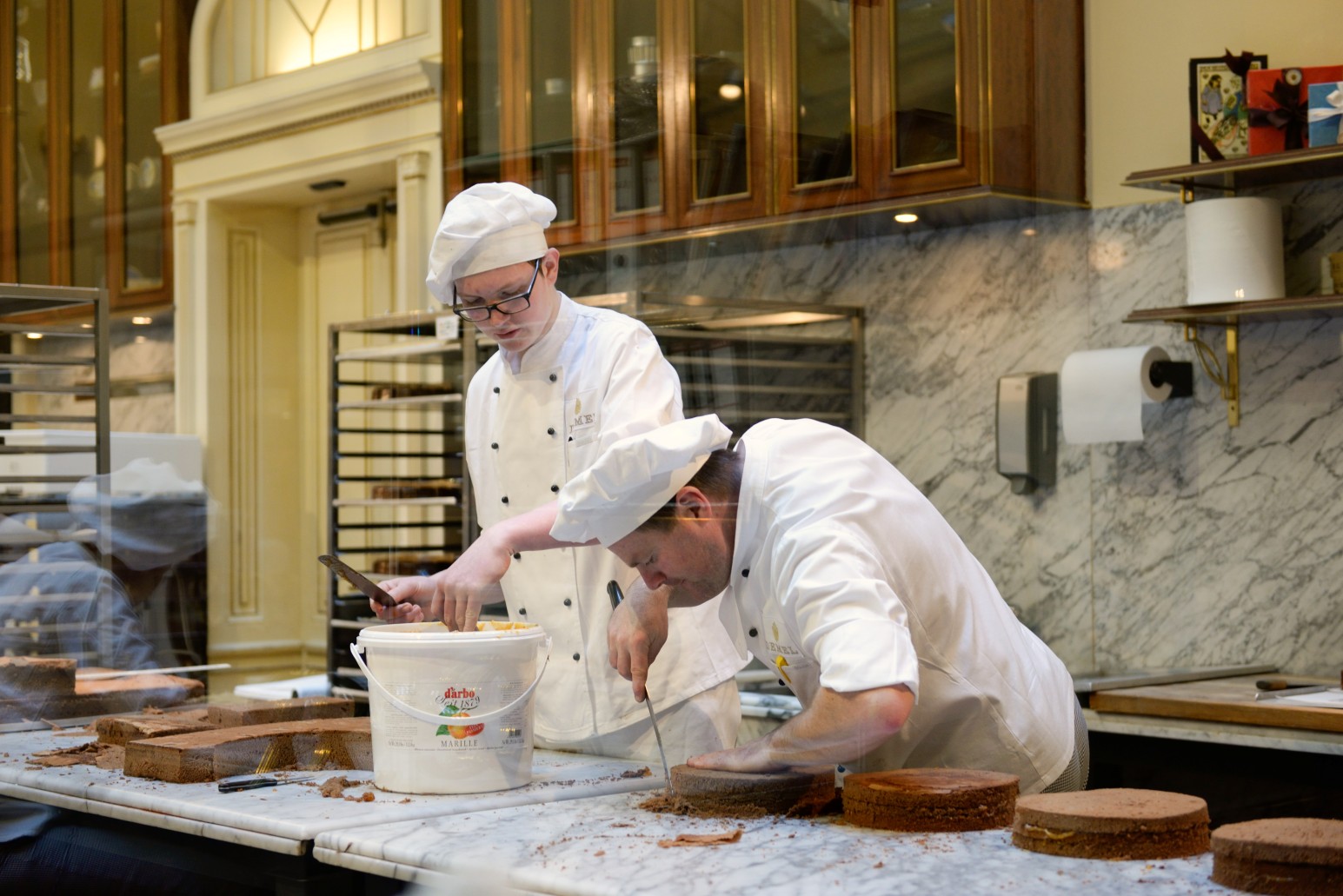
Beyond the classroom, there's so much to do in Vienna. If you're craving knowledge and history, seek out one of its 100+ museums – Vienna was home to Mozart, Beethoven, Sigmund Freud, and other figures. If you want to unwind, sip on coffee next to Hofburg Palace or by the Danube Waterfront, or head to one of the city's finest vineyards.
Teaching English in Salzburg
Although Vienna became Mozart's home, Salzburg is where he was born. With hill-top fortresses, UNESCO World Heritage palaces, and Baroque architecture with the backdrop of Alpine peaks, Salzburg perfectly encapsulates Austria in a single image.
With a much lower population than Vienna, the teaching market is significantly smaller in Salzburg, although teaching opportunities still exist. But for the laid-back introvert, this also means that you'll prefer its more relaxed and calming atmosphere than the busy capital.
However, adventurers and extroverts can still live life to the fullest in this dreamy city, from rooftop drinks overlooking the Danube River to mountain hikes that take you to the German border. If you want to slow things down, soak up medieval history at Hohensalzburg Fortress or stroll through its idyllic old town.
Ready to Teach English Abroad? Don't Forget Your TEFL Certificate
Before you book your flights to teach English abroad, you'll need to get TEFL certified! With a TEFL certification, not only will you qualify for teaching positions across the world, but you'll feel confident in your abilities in the classroom. You'll understand how to engage large groups of students, teach complex grammar structures, plan lessons effectively, and much more. Not only will your students benefit, but you'll enjoy the time you spend in the classroom.
Get TEFL certified today with our 120-hour TEFL course.
Frequently Asked Questions
Q. Can I teach English in Austria as a non-native speaker?
Yes, you can teach English as a non-native speaker in Austria. This is especially true if you have a TEFL certificate, bachelor's degree, and an EU citizenship. You may need to prove your English fluency with an IELTS or CEFR certificate.
Q. Can I teach in Austria as an American?
It can be tricky teaching English in Austria as an American, but it's possible. You'll need to have qualifications like a TEFL, bachelor's degree, and teaching experience to find an employer who will sponsor your work permit. Alternatively, there are other countries you can teach English in Europe as an American.
Q. How much do TEFL teachers earn in Austria?
TEFL teachers in Austria earn around €1,600–€2,800 ($1,820–$3,190 / £1,375–£2,115) per month, but many factors will influence this. Many TEFL teachers work as freelance workers, which means that their salary may vary from one week to another depending on work availability.